TorqueMaster Garage Door Spring Part List 142074: Complete Guide to Parts, Components, Compatibility, and Maintenance
Introduction
The TorqueMaster Garage Door Spring Part List 142074 is a useful topic for homeowners, garage door technicians, repair professionals, and anyone researching replacement components for a TorqueMaster garage door system. Garage door springs are essential mechanical components because they help balance the weight of the door and make opening and closing easier. Without a properly functioning spring system, even a relatively lightweight residential garage door can become difficult to operate.
TorqueMaster garage door systems are known for their enclosed spring design. Unlike conventional torsion spring systems, which generally have visible springs mounted above the garage door, TorqueMaster systems place their springs inside a protective metal tube. This arrangement provides a different appearance and requires specific components designed to work together.
Understanding the TorqueMaster Garage Door Spring Part List 142074 involves learning about the spring assembly, metal tube, cable drums, end brackets, winding mechanisms, and supporting hardware. Each component has a particular purpose, and choosing the correct replacement parts requires attention to the garage door model and system configuration.
The number 142074 is an important keyword when researching this subject, but it should not automatically be considered a verified spring specification or complete replacement-kit number. Before purchasing any component, it is important to confirm its identity through the original product label, manufacturer documentation, or a qualified replacement-parts supplier.
This detailed guide explains the TorqueMaster system, its main components, replacement considerations, common problems, maintenance practices, and other important information that can help readers understand the TorqueMaster Garage Door Spring Part List 142074.
What Is TorqueMaster Garage Door Spring Part List 142074?
The TorqueMaster Garage Door Spring Part List 142074 refers to a parts-identification topic associated with TorqueMaster garage door spring assemblies. People searching for this term may be interested in identifying a particular spring, finding related hardware, understanding the purpose of individual components, or researching replacement options.
A garage door spring assembly is not made up of a single component. It consists of several connected parts that work together to counterbalance the door. Depending on the configuration, these components can include one or two springs, a protective tube, end brackets, cable drums, support brackets, and winding-related hardware.
The number 142074 should be checked against reliable product information before it is used to purchase replacement hardware. A number appearing in an online listing, product description, or parts document may represent an individual component, an assembly reference, or another identification code. These possibilities should not be confused.
A proper parts list should explain the name of each component, its purpose, quantity, and compatibility with the relevant garage door model. It should also distinguish between standard components and optional accessories.
For anyone researching this keyword, the most useful starting point is the original garage door identification label. This information can help establish which TorqueMaster generation is installed and which replacement components are appropriate.
Understanding the TorqueMaster Garage Door Spring System
TorqueMaster is a specialized garage door counterbalance system associated with Wayne Dalton garage doors. Its enclosed design distinguishes it from many conventional garage door spring arrangements.
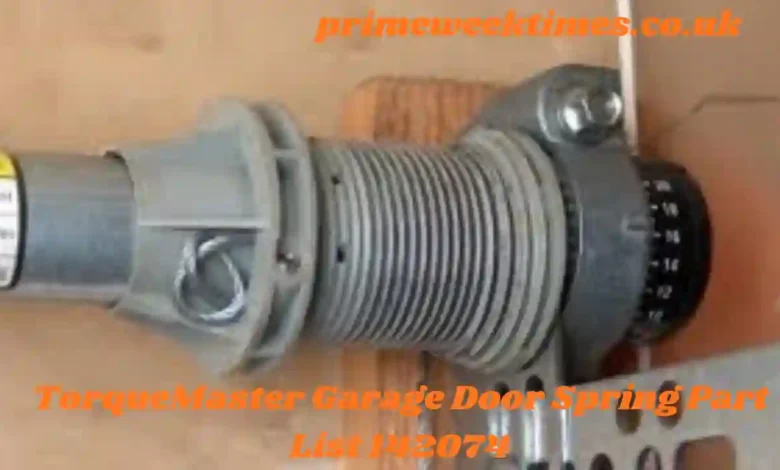
In a traditional torsion spring system, the springs are generally visible on a metal shaft above the garage door. In a TorqueMaster system, the springs are housed inside a long metal tube. This protective arrangement keeps the spring mechanism less exposed and creates a more enclosed appearance.
The spring system stores mechanical energy when the garage door closes. When the door opens, the stored energy is released to assist the lifting process. Cable drums and lifting cables help transfer the spring force to the garage door.
The system depends on several components working together correctly. The spring provides the counterbalancing force, the tube houses the mechanism, and the associated brackets and drums support the assembly and manage cable movement.
Different TorqueMaster generations have different designs. TorqueMaster Original and TorqueMaster Plus should not automatically be treated as interchangeable systems. Their spring dimensions, winding mechanisms, and hardware arrangements may vary.
Understanding these differences is particularly important when researching replacement parts because an incorrectly selected component can affect the operation and safety of the garage door.
Main Components of TorqueMaster Garage Door Spring Part List 142074
A TorqueMaster garage door spring assembly contains several mechanical components. The exact parts depend on the system generation and whether the garage door uses a single-spring or double-spring arrangement.
1. TorqueMaster Spring Tube
The TorqueMaster spring tube is the protective metal housing that contains the spring mechanism. It is generally installed horizontally above the garage door opening.
Its main purpose is to house and support the internal spring components while maintaining their alignment. It also provides the mounting arrangement for the associated end brackets and other hardware.
The spring tube is an important part of the overall assembly because its condition can influence the alignment and stability of the system.
A bent, damaged, or incorrectly installed tube may create problems with the connected components. Therefore, its condition should be examined during professional maintenance or replacement work.
When identifying a replacement tube, the garage door model, tube dimensions, system generation, and bracket compatibility should all be considered.
2. Left-Hand Spring Assembly
The left-hand spring assembly is used in certain TorqueMaster configurations. In double-spring arrangements, it works alongside the right-hand spring to provide the required counterbalancing force.
The spring must have the correct specifications for the garage door. Important characteristics include its dimensions, wire diameter, length, and winding direction.
The left-hand designation is important because spring assemblies are not always interchangeable between the two sides. Selecting an incorrect spring can affect the performance of the complete counterbalance mechanism.
Before ordering a replacement, the existing spring information should be checked against manufacturer documentation or verified by a qualified technician.
3. Right-Hand Spring Assembly
The right-hand spring assembly works with the other components of the TorqueMaster system to balance the garage door.
In a double-spring arrangement, the right-hand spring works together with the left-hand spring. Both must have the correct specifications and configuration.
In certain single-spring arrangements, the spring system uses a different hardware configuration. Therefore, buyers should not assume that every TorqueMaster assembly contains two springs.
Spring identification should always be based on the original system specifications rather than physical appearance alone.
4. Center Bracket Bushing Assembly
The center bracket bushing assembly helps support the spring tube near its central mounting position.
Because the spring tube extends across the garage door opening, proper support helps maintain alignment and stability. The center bracket and bushing form part of the mounting arrangement.
A worn or damaged bushing may contribute to unwanted movement or noise. The mounting area should be inspected for visible damage, looseness, and other signs of wear.
The correct replacement bushing must match the particular TorqueMaster system.
5. Left-Hand End Bracket
The left-hand end bracket supports the designated end of the spring tube. Its design depends on the TorqueMaster generation and spring configuration.
Certain TorqueMaster Plus double-spring arrangements use a specific left-hand end bracket as part of their hardware configuration.
The bracket helps secure and position the assembly. Its correct installation is important for maintaining the alignment of the system.
A damaged bracket should be inspected by a professional before the garage door is returned to normal operation.
6. Right-Hand End Bracket
The right-hand end bracket is another important component of the TorqueMaster spring assembly.
Depending on the system generation, it may contain features related to the winding mechanism, gears, or other operating hardware.
TorqueMaster Plus systems have identifying bracket features that distinguish them from certain earlier designs. This is one reason why checking the system generation is important when researching replacement parts.
The bracket should be compatible with the existing tube, spring arrangement, and related components.
7. Left-Hand Cable Drum
The left-hand cable drum helps manage the movement of the lifting cable during garage door operation.
As the garage door moves, the cable winds and unwinds around the drum. This allows the spring system to transfer counterbalancing force to the door.
Correct cable drum alignment is essential for smooth operation. A damaged or incorrectly positioned drum can contribute to uneven door movement and cable-related problems.
8. Right-Hand Cable Drum
The right-hand cable drum performs a similar function on the opposite side of the spring tube.
It works with the lifting cable and spring assembly to help maintain balanced garage door movement.
Both cable drums should be compatible with the installed system. They should also be inspected for visible wear or damage during professional maintenance.
9. Idler Bracket
The idler bracket is associated with certain single-spring TorqueMaster Plus configurations.
It supports the relevant hardware arrangement and is not necessarily required for every TorqueMaster system.
This distinction is important when using a parts list because ordering unnecessary hardware can create confusion. The exact garage door configuration should be established before selecting this component.
10. Drum Wraps
Drum wraps are optional components identified in certain TorqueMaster Plus parts arrangements.
They are associated with the cable drum area and form part of the hardware configuration in applicable systems.
Their use depends on the specific garage door model and manufacturer design. They should not automatically be assumed to be required in every installation.
11. Winding Components
Winding components are associated with the mechanism used to manage spring tension.
Different TorqueMaster generations use different winding arrangements. Earlier systems may include winding shafts, winding ends, counter gears, and related covers.
TorqueMaster Plus uses an updated winding design in applicable models.
These components are directly associated with the spring mechanism and should only be handled by qualified professionals.
TorqueMaster Garage Door Spring Part List 142074: Parts Reference Table
The following table summarizes the main components commonly associated with TorqueMaster systems. It is a general educational reference, not a verified manufacturer-issued parts breakdown for number 142074.
| Part or component | Main purpose |
|---|---|
| Spring tube | Houses the spring mechanism |
| Left-hand spring | Provides counterbalancing force |
| Right-hand spring | Provides counterbalancing force |
| Center bracket bushing | Supports the spring tube |
| Left-hand end bracket | Supports one end of the assembly |
| Right-hand end bracket | Supports the opposite end |
| Left-hand cable drum | Manages cable movement |
| Right-hand cable drum | Manages cable movement |
| Idler bracket | Supports certain configurations |
| Drum wraps | Optional drum-related hardware |
| Winding components | Support the spring winding mechanism |
| Counter gear and cover | Used in certain earlier designs |
The number and type of components depend on the original garage door configuration. A single-spring system may require different brackets and supporting hardware from a double-spring arrangement.
Difference Between TorqueMaster Original and TorqueMaster Plus
Understanding the difference between TorqueMaster Original and TorqueMaster Plus is essential when selecting replacement components.
TorqueMaster Original
TorqueMaster Original is an earlier generation of the enclosed spring system.
It uses a metal tube to house the springs and related hardware. The system was designed to provide a different spring arrangement from conventional exposed torsion systems.
Earlier TorqueMaster Original versions used springs with a 0.721-inch inside diameter, while later versions used a 0.650-inch inside diameter following design changes.
These differences demonstrate why spring dimensions should be checked before replacement.
Some older Original systems also use winding-related components that differ from those found in later TorqueMaster Plus designs.
TorqueMaster Plus
TorqueMaster Plus is a later version with updated hardware and a different winding arrangement.
Certain models use a ratchet and socket-based winding mechanism. The end brackets also contain identifying features that help distinguish the Plus system from earlier TorqueMaster designs.
The right-hand end bracket in applicable TorqueMaster Plus configurations includes a disconnect cable guide.
These differences matter because the components of the two systems should not automatically be considered interchangeable.
Single-Spring and Double-Spring Configurations
TorqueMaster garage door systems can use different spring configurations depending on the door’s design and counterbalance requirements.
Single-Spring System
A single-spring system uses one primary spring inside the protective tube.
The spring works with the associated end brackets, cable drums, and other hardware to provide the required counterbalancing force.
This arrangement has its own component requirements, and certain TorqueMaster Plus single-spring systems use an idler bracket.
The spring must be selected according to the original garage door specifications.
Double-Spring System
A double-spring system uses two springs inside the spring tube.
The left-hand and right-hand springs work together to provide the required counterbalancing force.
The system uses appropriate end brackets and other supporting hardware designed for the double-spring arrangement.
Both springs must match the manufacturer’s specifications. Selecting replacement components without confirming the original configuration can create compatibility and operating problems.
How to Identify the Correct TorqueMaster Replacement Spring
Identifying the correct spring is one of the most important steps when researching TorqueMaster Garage Door Spring Part List 142074.
The first step is to locate the identification label attached to the spring tube. Depending on the system, the label may contain information about the spring specifications and garage door configuration.
Important identification details may include:
- Manufacturer name.
- Garage door model.
- Spring part number.
- Spring wire diameter.
- Spring length.
- Inside diameter.
- Winding direction.
- Single-spring or double-spring configuration.
These details should be recorded before discussing replacement options with a supplier.
Understanding Wire Diameter
Wire diameter describes the thickness of the metal wire used to manufacture the spring.
It is an important measurement because it influences the spring’s mechanical characteristics.
Two springs with similar appearances may have different wire diameters and different performance specifications.
Understanding Spring Length
Spring length is another important characteristic.
The correct length depends on the original spring design and garage door requirements. Selecting a replacement based only on approximate appearance can result in an unsuitable component.
Understanding Inside Diameter
The inside diameter describes the internal opening of the spring.
Different TorqueMaster generations have used different spring inside diameters, making system identification particularly important.
Understanding Winding Direction
The left-hand and right-hand designations identify different spring arrangements.
These specifications should be confirmed through the original identification label or manufacturer documentation.
Common Signs of TorqueMaster Spring Problems
Garage door springs and supporting hardware experience mechanical stress during normal operation. Over time, different components may wear out or develop problems.
Recognizing the warning signs can help homeowners arrange professional inspections.
Garage Door Becomes Difficult to Open
A garage door that suddenly feels heavier than usual may have a spring or counterbalance problem.
The spring system helps support the weight of the door. When it stops functioning correctly, the lifting process may become more difficult.
Other mechanical issues can also cause this problem, so professional inspection is recommended.
Garage Door Moves Unevenly
Uneven movement may indicate a problem with the spring system, cable drums, lifting cables, or door alignment.
If one side moves differently from the other, continuing to operate the garage door may increase mechanical stress.
Unusual Noise During Operation
Grinding, rattling, scraping, or sudden popping noises can indicate damaged or misaligned hardware.
A professional technician can inspect the spring tube, brackets, rollers, cables, and other components to identify the cause.
Damaged or Frayed Cables
Lifting cables are important parts of the counterbalance system.
Visible fraying, loose cables, or other damage should be treated seriously. A damaged cable can affect the movement and stability of the garage door.
Garage Door Does Not Stay Balanced
A properly functioning spring system helps maintain controlled movement.
If the garage door becomes unusually difficult to keep in position or behaves differently during operation, the spring assembly may require professional attention.
Important Factors Before Purchasing Replacement Parts
Buying replacement components requires careful attention to several details.
Check the Garage Door Model
The garage door manufacturer and model are useful starting points.
Different models may use different spring configurations and supporting hardware.
Verify the System Generation
Confirm whether the installed system is TorqueMaster Original or TorqueMaster Plus.
This distinction helps prevent confusion between incompatible components.
Confirm the Spring Configuration
Determine whether the garage door uses a single-spring or double-spring arrangement.
The parts list can vary significantly depending on this configuration.
Verify Part Number 142074
The number 142074 should be checked against manufacturer documentation or a reliable supplier’s catalog.
Do not assume that it represents a complete replacement kit or a universal spring specification.
Inspect Related Hardware
A replacement spring may not resolve every problem if other components are damaged.
Cable drums, end brackets, the center support, and lifting cables should also be professionally inspected.
Check Product Compatibility
Before purchasing, confirm the spring dimensions, winding direction, and intended system generation.
A physically similar part is not necessarily a compatible replacement.
Importance of Professional Installation
TorqueMaster garage door springs contain stored mechanical energy. Incorrect handling can cause sudden movement and serious injuries.
Even though the springs are enclosed inside a metal tube, the assembly should not be considered harmless or suitable for inexperienced repairs.
Homeowners should not attempt to dismantle the spring tube, release stored spring tension, remove winding components, or adjust spring mechanisms without proper training and equipment.
A qualified garage door technician can identify the correct spring arrangement, verify replacement specifications, inspect supporting hardware, and perform installation according to manufacturer instructions.
Professional installation is especially important when dealing with damaged cables, broken springs, bent brackets, or an unbalanced garage door.
Maintenance Tips for TorqueMaster Garage Door Systems
Regular maintenance helps identify developing mechanical problems and supports reliable garage door operation.
Keep Garage Door Tracks Clean
Garage door tracks guide the movement of the door.
Dirt, debris, and other obstructions can interfere with smooth movement. Keep the tracks clean and arrange professional attention if they become bent or misaligned.
Inspect Accessible Hardware
Check visible hinges, rollers, mounting brackets, and other accessible components for signs of damage.
Avoid removing spring covers or opening the spring tube during routine inspections.
Listen for Unusual Sounds
Changes in operating noise can indicate wear or alignment problems.
Grinding, scraping, and rattling should be investigated rather than ignored.
Avoid Unnecessary Door Operation
Repeated operation when a mechanical problem is present may increase wear on the supporting components.
Stop using the garage door if it becomes unusually heavy, uneven, or visibly damaged.
Follow Manufacturer Maintenance Recommendations
Use appropriate maintenance products and follow the garage door manufacturer’s instructions.
Different components may require different maintenance practices, so indiscriminate lubrication should be avoided.
Arrange Professional Inspections
A qualified technician can inspect the spring assembly, cable drums, mounting brackets, lifting cables, and other hardware.
Regular professional attention can help identify developing problems before they become more serious.
How to Read a TorqueMaster Garage Door Parts Diagram
A parts diagram provides a visual reference for understanding the arrangement of the different TorqueMaster components.
It generally identifies the spring assembly, tube, end brackets, cable drums, center support, and other hardware.
Some diagrams also include additional garage door components such as rollers, hinges, tracks, and reinforcement brackets.
When reading a diagram, it is important to distinguish between required and optional parts.
For example, an idler bracket may be associated with certain single-spring TorqueMaster Plus systems, while other configurations use different supporting hardware.
A diagram should always be compared with the specific garage door model and system generation.
It should not be treated as a universal replacement-parts list.
Common Mistakes When Researching TorqueMaster Replacement Parts
Several mistakes can make finding compatible replacement components more difficult.
Assuming All TorqueMaster Systems Are Identical
Different generations have different spring dimensions and hardware arrangements.
Always identify the installed system before selecting components.
Choosing Parts Only by Appearance
Similar-looking springs and brackets may have different specifications.
Physical similarity does not establish compatibility.
Ignoring the Identification Label
The original identification label can contain important information about the spring assembly.
Ignoring it can increase the risk of ordering the wrong component.
Confusing Single-Spring and Double-Spring Parts
These systems have different hardware requirements.
A component intended for one configuration may not be suitable for another.
Treating 142074 as a Universal Part Number
The number should be verified before purchasing replacement hardware.
A search keyword alone cannot confirm spring dimensions, manufacturer compatibility, or the complete contents of a replacement kit.
Benefits of Understanding the TorqueMaster Garage Door Spring Part List 142074
Understanding the parts associated with the TorqueMaster system offers several practical benefits.
Better component identification: Learning the names and functions of individual components makes it easier to discuss garage door problems.
Improved purchasing decisions: Understanding the differences between springs, cable drums, and brackets helps reduce confusion when comparing replacement products.
Better maintenance awareness: Recognizing common warning signs encourages timely inspections and appropriate repairs.
Improved communication with technicians: Knowing basic garage door terminology helps homeowners explain mechanical problems more clearly.
Reduced compatibility problems: Understanding the differences between TorqueMaster Original and TorqueMaster Plus helps prevent incorrect replacement selections.
Frequently Asked Questions (FAQs)
1. What Is TorqueMaster Garage Door Spring Part List 142074?
TorqueMaster Garage Door Spring Part List 142074 is a search topic related to TorqueMaster garage door spring components and replacement identification. The exact manufacturer meaning of number 142074 should be verified before it is used to purchase a replacement part.
2. What Are the Main Components of a TorqueMaster Garage Door Spring System?
Common components include the spring tube, left-hand and right-hand spring assemblies, center bracket bushing, end brackets, cable drums, and winding-related hardware. Additional components depend on the system configuration.
3. How Do I Identify the Correct TorqueMaster Spring?
Check the identification label attached to the spring tube. Look for the part number, spring dimensions, winding direction, and system generation. A qualified technician or supplier can help verify the correct replacement.
4. What Is the Difference Between TorqueMaster Original and TorqueMaster Plus?
TorqueMaster Original is an earlier generation with its own spring and winding arrangements. TorqueMaster Plus is a later design with updated hardware and a different winding mechanism.
5. Can I Replace a TorqueMaster Garage Door Spring Myself?
Spring replacement involves stored mechanical energy and can cause serious injuries if performed incorrectly. Professional installation by a qualified garage door technician is recommended.
6. Does Every TorqueMaster Garage Door Have Two Springs?
No. TorqueMaster systems can use single-spring or double-spring configurations. The correct arrangement depends on the garage door model and manufacturer specifications.
7. Why Is My TorqueMaster Garage Door Difficult to Open?
Possible causes include a damaged spring, worn cable drums, damaged lifting cables, misaligned tracks, or worn rollers. A professional inspection is needed to determine the actual problem.
8. Are TorqueMaster Original and Plus Parts Interchangeable?
Not necessarily. The two generations use different designs and hardware arrangements. Compatibility should be verified through manufacturer documentation.
9. Where Can I Find the TorqueMaster Spring Part Number?
The spring identification label is generally attached to the spring tube above the garage door. It may contain the spring part number and other useful specifications.
10. Why Is the Cable Drum Important in a TorqueMaster System?
The cable drum manages the winding and unwinding of the lifting cable. It helps transfer the spring’s counterbalancing force to the garage door during operation.
11. How Often Should a TorqueMaster Garage Door Be Inspected?
Inspection frequency depends on usage, condition, and manufacturer recommendations. Periodic professional inspections can help identify worn springs, damaged cables, and other mechanical problems.
12. What Should I Check Before Buying a TorqueMaster Replacement Kit?
Check the garage door model, system generation, spring configuration, original part number, spring dimensions, and compatibility of the supporting hardware.
Final Thoughts
The TorqueMaster Garage Door Spring Part List 142074 is a useful subject for understanding the components and replacement considerations associated with TorqueMaster garage door systems. From the protective spring tube and internal spring assemblies to the cable drums, center bracket, and end brackets, every component contributes to the operation of the counterbalance mechanism.
Understanding these parts can help homeowners and technicians recognize different system configurations, identify common problems, and make more informed decisions when researching replacement hardware.