
Hawthorn M Class MentorMansfield – HMS Mentor and HMS Mansfield: Complete Naval History
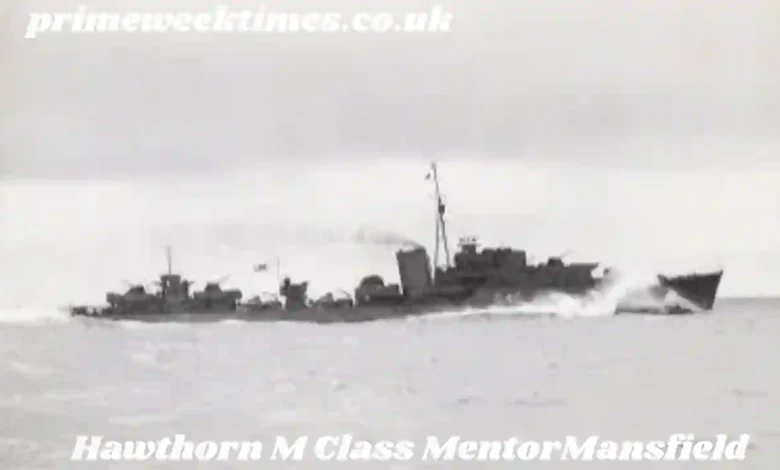
Introduction to Hawthorn M Class MentorMansfield
The Hawthorn M Class MentorMansfield represents an interesting chapter in the history of British naval engineering and Royal Navy operations during the First World War. Developed during a period when European naval powers were rapidly improving their military technology, these destroyers demonstrated how speed, maneuverability, firepower, and practical shipbuilding could work together to create effective warships. The class consisted of two ships, HMS Mentor and HMS Mansfield, which were constructed by Hawthorn Leslie and Company at Hebburn-on-Tyne in England.
The early twentieth century was an important period for naval development. Battleships, cruisers, submarines, and destroyers were becoming increasingly important to national defense. The Royal Navy needed smaller and faster vessels capable of protecting larger warships, conducting patrols, intercepting enemy vessels, and responding to submarine threats. Destroyers were particularly valuable because they could perform several different tasks without requiring the resources or size of a battleship. The Hawthorn M Class was developed within this changing military environment.
HMS Mentor and HMS Mansfield were based on the broader Admiralty M-class concept but incorporated a distinctive shipyard-specific design. Their four-funnel arrangement made them visually different from the more familiar three-funnel Admiralty M-class destroyers. This unusual feature became one of their most recognizable characteristics and established their place in the history of Royal Navy destroyer construction.
Although the two vessels had relatively short operational careers, their construction and service provide valuable insight into the development of British destroyers during World War I. Understanding the Hawthorn M Class MentorMansfield requires looking beyond their names and specifications. Their story also involves shipbuilding innovation, naval strategy, wartime responsibilities, engineering limitations, and the changing requirements of modern naval warfare.
What Was the Hawthorn M Class MentorMansfield?
The Hawthorn M Class was a small group of Royal Navy destroyers consisting of two vessels: HMS Mentor and HMS Mansfield. They were constructed under the British naval expansion programme associated with the period immediately before the First World War. Both ships were built by Hawthorn Leslie and Company, a respected British shipbuilding business based in Hebburn-on-Tyne.
The name Hawthorn M Class distinguishes these vessels from other M-class destroyers produced by different British shipbuilders. Although they shared the general characteristics of the wider M-class family, their construction included several modifications. The most noticeable difference was the use of four funnels rather than the three funnels commonly associated with the standard Admiralty design.
The ships were intended to provide the Royal Navy with fast and flexible combat vessels. Destroyers of this period were expected to operate alongside larger fleet units, protect important maritime routes, conduct reconnaissance, and attack enemy vessels when opportunities appeared. Their smaller dimensions allowed them to move quickly and operate in situations where larger ships might be less practical.
HMS Mentor and HMS Mansfield were completed in 1915 and served during the First World War. Both survived the conflict, although their usefulness declined as naval technology and fleet requirements changed after the war. They were eventually sold for breaking up in 1921.
The Hawthorn M Class is therefore significant not because it contained a large fleet of ships, but because it represented a distinctive variation within an important generation of British destroyers.
The Origins of the Hawthorn M Class Destroyers
The origins of the Hawthorn M Class can be understood through the Royal Navy’s preparations for a possible major European conflict. Before 1914, Britain maintained a powerful naval force, but technological developments among competing countries meant that continuous improvement was necessary.
Destroyers had become increasingly important to naval operations. Their original development was closely connected to the need to counter torpedo boats, which threatened larger warships with relatively inexpensive weapons. As naval warfare evolved, destroyers themselves became more capable and were assigned a wider range of responsibilities.
The Royal Navy’s M-class programme formed part of this development. Different shipbuilders received orders to construct vessels based on the general requirements of the Admiralty. However, private shipbuilding companies sometimes incorporated their own engineering arrangements and construction preferences.
Hawthorn Leslie and Company produced a modified version of the M-class destroyer. The result was a pair of ships with a recognizable four-funnel profile and machinery arrangements suited to the requirements of the period.
The construction programme reflected the importance of maintaining a capable destroyer force. With tensions increasing across Europe, Britain needed vessels that could be completed quickly and incorporated into operational formations. The Hawthorn M Class contributed to that broader effort.
Hawthorn Leslie and Company: The Shipbuilders Behind the Class
Hawthorn Leslie and Company played an important role in British shipbuilding during the late nineteenth and early twentieth centuries. Based in Hebburn, near Newcastle upon Tyne, the company developed a reputation for constructing naval vessels and commercial ships. Its engineering experience made it an important contributor to British maritime development.
The Royal Navy regularly worked with private shipbuilders to expand its fleet. Rather than relying exclusively on government shipyards, the Admiralty could request vessels from established companies with the technical knowledge and manufacturing facilities needed for complex naval projects. This approach also allowed different shipbuilders to experiment with alternative designs.
The Hawthorn M-class destroyers were examples of this arrangement. Hawthorn Leslie received the opportunity to produce a modified M-class design that reflected its own engineering decisions. The result was a pair of ships with four boilers and four funnels, distinguishing them from the standard Admiralty arrangement.
The company’s contribution was not limited to the two vessels discussed here. It also received orders for additional M-class destroyers, including HMS Pigeon and HMS Plover. Those later ships, however, followed the Admiralty design rather than the distinctive Hawthorn Leslie configuration.
The story of these destroyers demonstrates how private shipbuilding companies contributed to the development of Britain’s wartime naval strength. Their work combined established engineering practices with the changing operational demands of modern naval warfare.
Design and Construction of the Hawthorn M Class
The design of the Hawthorn M Class reflected the Royal Navy’s interest in faster destroyers during the years leading up to the First World War. British naval planners were concerned about developments in German destroyer construction and wanted ships capable of operating at higher speeds than many earlier vessels.
The Hawthorn Leslie design measured approximately 271 feet and 6 inches in overall length, with a beam of around 27 feet. These dimensions provided a relatively narrow and streamlined hull suitable for high-speed operations. The ships displaced approximately 1,055 long tons under normal conditions, although displacement varied according to loading and operational equipment.
One of the most important design characteristics was the arrangement of the machinery. Four Yarrow water-tube boilers supplied steam to Parsons steam turbines. These turbines generated the power required to drive the propellers and maintain the high speeds expected of a modern destroyer.
The boiler exhaust systems were connected to four individual funnels. This arrangement gave the ships a distinctive appearance that separated them from other members of the M-class family.
The design also reflected the practical challenges of building a fast warship. Engineers had to balance weight, fuel capacity, machinery performance, weapon placement, crew accommodation, and seaworthiness. Every additional piece of equipment affected the ship’s overall performance.
The resulting vessels were compact but powerful for their size. Their combination of steam propulsion, relatively light construction, and naval weapons made them suitable for the demanding conditions of the North Sea and surrounding waters.
Four-Funnel Configuration: The Most Recognizable Feature
The four-funnel configuration is probably the most distinctive characteristic of the Hawthorn M Class MentorMansfield destroyers. During the early twentieth century, funnels were an important visible feature of steam-powered warships because they carried exhaust gases away from the boilers.
The standard Admiralty M-class destroyers generally used three funnels. Hawthorn Leslie’s modified design instead incorporated four Yarrow boilers and four separate funnels. This arrangement created a recognizable silhouette that made Mentor and Mansfield different from many contemporary destroyers.
The funnels were not simply decorative structures. They were connected to the ships’ steam-generating machinery and formed part of the overall engineering arrangement. Their number reflected the division of the boiler exhaust systems.
The four-funnel arrangement also represented the diversity of British destroyer construction during this period. Different shipbuilders could produce vessels that met similar naval requirements while using different engineering layouts.
The ships are particularly interesting to naval historians because four-funnel destroyers were becoming increasingly uncommon as naval technology developed. Improvements in boiler design and machinery arrangements gradually changed the appearance of destroyers.
The Hawthorn M Class therefore became a distinctive example of an earlier generation of steam-powered naval engineering. Its unusual funnel arrangement remains one of the easiest ways to recognize the class in historical photographs and ship illustrations.
Technical Specifications of Hawthorn M Class MentorMansfield
The technical specifications of the Hawthorn M Class help explain why these ships were considered capable destroyers during the First World War. Their performance was based on a combination of powerful machinery, relatively low displacement, and weapons suitable for attacking both surface vessels and other naval threats.
The following table summarizes commonly reported class-level specifications. Individual records sometimes differ because of variations in loading, equipment, and the way technical measurements were recorded.
| Specification | Hawthorn M Class |
|---|---|
| Ship type | Destroyer |
| Navy | Royal Navy |
| Shipbuilder | Hawthorn Leslie and Company |
| Shipyard | Hebburn-on-Tyne, England |
| Number of ships | 2 |
| Ships | HMS Mentor and HMS Mansfield |
| Overall length | Approximately 271 ft 6 in |
| Beam | Approximately 27 ft |
| Normal displacement | Approximately 1,055 long tons |
| Boilers | Four Yarrow boilers |
| Engines | Parsons steam turbines |
| Machinery power | Approximately 27,000 shp |
| Maximum speed | Approximately 34–35 knots |
| Funnels | Four |
| Main guns | Three 4-inch guns |
| Torpedo armament | Two twin 21-inch torpedo tubes |
| Operational period | 1915–1921 |
These specifications show that the vessels were designed around speed and flexibility rather than heavy armour or the large guns associated with cruisers and battleships.
Their relatively modest displacement allowed them to operate as fast fleet escorts and patrol vessels. The machinery provided sufficient power for rapid movement, while their guns and torpedoes offered several ways to engage enemy vessels.
The specifications should not be interpreted as identical performance records for every voyage. Actual speed and endurance depended on weather, sea conditions, machinery condition, fuel availability, and the amount of equipment carried.
Propulsion System: Yarrow Boilers and Parsons Steam Turbines
The propulsion system was one of the most important aspects of the Hawthorn M Class design. During this period, steam turbines were becoming increasingly important in naval engineering because they could provide high power and support faster warship designs.
The ships used four Yarrow water-tube boilers. These boilers generated high-pressure steam that powered the Parsons turbines. The turbines converted the energy of the steam into mechanical rotation, which drove the ship’s propellers.
Yarrow boilers had an established reputation in naval engineering. Their water-tube construction allowed water to circulate through tubes exposed to hot combustion gases. This arrangement supported efficient steam production and was suitable for vessels that needed powerful machinery without excessive weight.
Parsons turbines were another important development. Steam turbines had already demonstrated their usefulness in high-speed naval vessels, and their adoption helped transform destroyer performance.
The Hawthorn M-class machinery was rated at approximately 27,000 shaft horsepower. Depending on the vessel and the conditions under which performance was measured, the ships could reach speeds in the region of 34 to 35 knots.
High speed offered several operational advantages. A destroyer could move rapidly between patrol areas, respond to reports of enemy activity, accompany faster naval formations, and attempt to intercept hostile vessels.
However, powerful machinery also required regular maintenance. Boilers needed attention, turbines required careful engineering supervision, and fuel consumption increased when ships operated at high speeds.
The propulsion system therefore represented both the strength and the operational challenge of the Hawthorn M Class.
Armament and Defensive Capabilities
The weapons fitted to the Hawthorn M Class were selected to support the destroyers’ different wartime responsibilities. Unlike battleships, which relied on heavy artillery, destroyers used smaller guns and torpedoes to attack enemy vessels and protect larger ships.
The main armament consisted of three 4-inch guns. These weapons provided the ships with an effective surface-combat capability for their size and could be used against enemy destroyers, smaller warships, and other suitable targets.
The positioning of the guns was influenced by the ships’ four-funnel arrangement. The middle 4-inch gun was positioned between the second and third funnels, creating a distinctive arrangement associated with the Hawthorn Leslie design.
The vessels also carried two twin 21-inch torpedo tubes. This gave each destroyer the ability to launch four torpedoes in a salvo. Torpedoes were particularly important in early twentieth-century naval warfare because they could threaten much larger vessels.
The ships also had light anti-aircraft weapons during their service, although their precise configuration and equipment changed over time. Such weapons became increasingly relevant as aircraft began to play a greater role in naval operations.
Depth charges and anti-submarine equipment were also important developments in the wider destroyer force during World War I. Destroyers increasingly performed escort and submarine-hunting duties as the German U-boat campaign threatened Allied shipping.
The weapons carried by Mentor and Mansfield reflected the changing nature of naval warfare. Their equipment allowed them to perform multiple duties rather than specializing in only one type of engagement.
HMS Mentor: Construction and Early Naval Career
HMS Mentor was one of the two ships that formed the Hawthorn M Class. She was built by Hawthorn Leslie and Company at Hebburn and was laid down on 9 July 1913. The vessel was launched on 21 August 1914 and completed in January 1915.
Her arrival came at an important moment in British naval history. The First World War had already begun, and the Royal Navy was operating across several important maritime regions. The North Sea was particularly significant because it was an important route for naval movements, trade, and military operations.
After entering service, HMS Mentor joined the Harwich Force and became part of the Tenth Destroyer Flotilla. This formation operated in waters where British naval forces needed to monitor German activity and protect important maritime routes.
Mentor’s speed made her useful for patrol operations and fleet support. She could accompany other destroyers, respond to developing situations, and participate in operations involving larger warships.
Her early wartime career included participation in the Battle of Dogger Bank in January 1915. This engagement was one of the important naval encounters of the early First World War.
Although the ship was not a large capital vessel, her participation illustrates the importance of destroyers in British naval formations. They provided additional speed, reconnaissance capabilities, and torpedo strength during operations involving battlecruisers and other major ships.
HMS Mentor continued to serve in different operational roles as the war progressed. Her assignments eventually brought her into the Dover-based destroyer force, where she participated in operations connected with the Belgian coast and the attacks on Ostend.
HMS Mansfield: Service History and Wartime Responsibilities
HMS Mansfield was the second destroyer of the Hawthorn M Class. Like her sister ship, she was constructed by Hawthorn Leslie and Company at Hebburn-on-Tyne. She was laid down on 9 July 1913, launched on 3 December 1914, and completed in April 1915.
Mansfield entered service during a period when the Royal Navy needed additional destroyers to protect merchant shipping and strengthen its operational formations. The German submarine campaign was creating serious problems for Allied maritime transportation, making escort and patrol vessels increasingly important.
After joining the Royal Navy, HMS Mansfield became associated with the Tenth Destroyer Flotilla at Harwich. Her responsibilities included operating in the North Sea, English Channel, and Western Approaches. These regions were strategically important because they connected Britain with international trade routes and Allied military transportation.
One important aspect of Mansfield’s career was her participation in operations involving the seaplane carrier HMS Vindex. In March 1916, the destroyer accompanied Vindex during an operation against German airship facilities near Hoyer in Schleswig. The operation demonstrated the growing relationship between naval vessels and aircraft.
Mansfield also assisted in the destruction of German patrol vessels during this operation. This demonstrated that destroyers could contribute to missions involving reconnaissance, aircraft operations, and attacks against smaller enemy vessels.
As the war continued, Mansfield was transferred to the Dover-based destroyer force. Her later responsibilities included supporting operations against German positions along the Belgian coast.
Her wartime career illustrates the flexibility of the Hawthorn M-class design. Mansfield was not restricted to one operational environment. She performed escort duties, participated in offensive operations, and supported missions that required cooperation between different types of naval vessels.
The Battle of Dogger Bank and the Hawthorn M Class
The Battle of Dogger Bank, fought on 24 January 1915, was an important naval engagement during the First World War. It took place in the North Sea between British and German naval forces and demonstrated the importance of speed, intelligence, and coordinated fleet operations.
British naval intelligence played a significant role in identifying German movements. The Royal Navy organized a force that included battlecruisers and destroyers to intercept the German formation.
HMS Mentor participated in the operation as part of the Tenth Destroyer Flotilla. The flotilla included several M-class destroyers operating together.
The engagement highlighted the different responsibilities assigned to destroyers. While battlecruisers delivered the main heavy-gun attacks, destroyers provided supporting capabilities and carried torpedoes that could threaten enemy warships.
The smaller vessels had to operate carefully because the battlecruisers were much larger and more heavily armed. Destroyers were also affected by difficult sea conditions, which could limit their ability to maintain position alongside faster capital ships.
Mentor’s participation in Dogger Bank contributed to her wartime record and helped establish the importance of the ship within the Royal Navy’s early wartime operations.
The battle also demonstrated why speed was such an important feature of the Hawthorn M Class. Destroyers needed to move rapidly across large areas of water while remaining coordinated with other vessels.
Dogger Bank was not simply a contest between large warships. It also demonstrated the importance of smaller supporting vessels in complex naval engagements.
The Harwich Force and Its Strategic Importance
The Harwich Force was an important Royal Navy formation during World War I. Based around Harwich, it operated in the southern North Sea and played a major role in British naval security.
The force included cruisers, destroyers, and other vessels that performed different responsibilities. Its location allowed British ships to monitor German naval movements and respond to potential threats approaching the English coast.
HMS Mentor and HMS Mansfield both served with the Tenth Destroyer Flotilla at Harwich during the early stages of their wartime careers.
Destroyers operating with the Harwich Force were expected to perform several tasks, including:
- Patrolling important maritime areas.
- Monitoring enemy naval movements.
- Escorting vulnerable vessels.
- Supporting larger Royal Navy formations.
- Responding to submarine threats.
- Participating in offensive operations.
- Protecting important coastal approaches.
These responsibilities required ships that were fast, dependable, and capable of operating for extended periods.
The Hawthorn M Class was suitable for many of these duties because its machinery provided considerable speed and its weapons offered both gunfire and torpedo capabilities.
The Harwich Force also demonstrated the importance of cooperation between different naval formations. Destroyers could be assigned to support larger ships, escort specialist vessels, or conduct independent patrols depending on operational requirements.
HMS Mentor and the Dover Patrol
As the First World War progressed, HMS Mentor became associated with the Sixth Destroyer Flotilla at Dover. This change placed the vessel in a different operational environment.
The Dover Patrol was responsible for protecting the English Channel and supporting British military operations along the Belgian coast. The region was strategically important because German forces occupied parts of the Belgian coastline and used nearby ports for naval activities.
The patrol’s responsibilities included preventing hostile naval movements, protecting shipping, and supporting attacks against German coastal facilities.
HMS Mentor participated in operations connected with the Belgian coast during 1917 and 1918. These operations required coordination between destroyers, monitors, cruisers, and other naval units.
One of the most important events associated with Mentor’s later career was the Ostend operation in April 1918. This operation formed part of the wider effort to restrict German access to the Belgian ports.
The Dover Patrol’s activities were particularly demanding because ships had to operate in waters where mines, submarines, coastal artillery, and enemy patrol vessels created serious dangers.
Mentor’s participation in these activities demonstrates how the operational responsibilities of destroyers changed throughout the war.
The Zeebrugge and Ostend Raids of 1918
The Zeebrugge and Ostend raids were major British naval operations conducted in April 1918. Their objective was to restrict German use of important Belgian ports that supported naval and submarine operations.
The ports of Zeebrugge and Ostend had strategic value because German forces could use them as bases for operations in the English Channel and surrounding waters.
British planners developed operations involving blockships and supporting naval formations. The intention was to obstruct access to important channels and make it more difficult for German vessels to use these facilities.
The attacks required careful preparation and coordination. Different vessels were assigned specific responsibilities, including transporting troops, providing covering fire, supporting landing operations, and protecting the withdrawal of participating forces.
HMS Mentor was associated with the Ostend operation, while HMS Mansfield also served in the Dover force and supported operations connected with the Belgian coast.
These events demonstrated that destroyers remained important even when naval warfare increasingly involved aircraft, submarines, and larger specialized vessels.
The raids were complicated and costly operations, and their overall effectiveness was influenced by several factors, including German defensive measures and the difficulty of maintaining effective blockships.
Nevertheless, they became significant events in the history of British naval operations during the First World War.
Differences Between the Hawthorn M Class and Standard Admiralty M Class
Although the Hawthorn M Class belonged to the wider M-class destroyer family, its design included several recognizable differences.
The standard Admiralty M-class destroyers were built according to a common naval design. The Hawthorn Leslie vessels, on the other hand, were constructed using a modified arrangement developed by the shipbuilder.
The following comparison highlights their most recognizable differences.
| Feature | Hawthorn M Class | Admiralty M Class |
|---|---|---|
| Funnels | Four | Three |
| Boilers | Four Yarrow boilers | Generally three |
| Design | Hawthorn Leslie modified design | Admiralty standard design |
| Builder | Hawthorn Leslie and Company | Multiple shipbuilders |
| Main role | Fleet destroyer and escort | Fleet destroyer and escort |
| Ships in Hawthorn group | Mentor and Mansfield | Numerous vessels |
The four-funnel design is the easiest visual difference to identify. It also illustrates how British shipbuilders could interpret similar Admiralty requirements through different engineering arrangements.
However, it would be incorrect to assume that the Hawthorn design was automatically superior in every respect. Both designs were intended to fulfil broadly similar naval requirements, and their effectiveness depended on operational circumstances.
The Hawthorn M Class is best understood as a specialized variation within the wider M-class destroyer programme.
Challenges Faced by Hawthorn M Class Destroyers
Despite their useful capabilities, the Hawthorn M-class destroyers faced several limitations common to early twentieth-century destroyers.
Their relatively small size restricted the amount of fuel, ammunition, and equipment they could carry. Compared with cruisers and larger warships, destroyers also had limited protection against heavy enemy gunfire.
High-speed operations placed considerable demands on their machinery. Steam boilers and turbines required maintenance, and prolonged operations could create mechanical problems.
Weather was another important challenge. The North Sea and English Channel were frequently exposed to rough conditions, strong winds, and difficult waves. Smaller vessels could experience considerable movement in bad weather, affecting crew comfort and weapon operation.
Submarine warfare introduced additional risks. German U-boats represented a serious threat to merchant shipping and naval vessels, forcing destroyers to devote more attention to escort and anti-submarine operations.
Mine warfare was another danger. Naval mines could damage or destroy vessels, particularly in heavily contested coastal waters.
These challenges demonstrate that the effectiveness of a destroyer depended on more than its technical specifications. Training, maintenance, coordination, intelligence, and operational planning were equally important.
What Happened to HMS Mentor and HMS Mansfield After World War I?
The end of World War I changed the Royal Navy’s requirements. During wartime, Britain had expanded its fleet considerably, but maintaining every vessel after the conflict was no longer practical.
Many older destroyers had experienced years of demanding service. Their machinery had accumulated considerable wear, and newer ship designs offered improved capabilities.
HMS Mentor was placed in reserve after the war and eventually sold for breaking up on 9 May 1921. Her disposal marked the end of her operational career.
HMS Mansfield also entered the post-war reserve system. She was eventually sold for breaking up on 26 October 1921.
Neither vessel was lost in combat during the First World War. Both survived the conflict, which was an important achievement considering the dangerous conditions in which they operated.
Their retirement reflected the rapid transition in naval technology after 1918. Newer destroyers were being designed with different requirements, while older vessels were gradually removed from active service.
The disposal of Mentor and Mansfield also reflected the economic realities of maintaining a large navy during the post-war period.
The Historical Legacy of Hawthorn M Class MentorMansfield
The legacy of the Hawthorn M Class MentorMansfield is closely connected to the development of British destroyer design and naval operations during World War I.
Although the class contained only two ships, their distinctive construction makes them interesting examples of shipbuilder-specific naval engineering.
Their four-funnel configuration represented an unusual approach within the wider M-class programme. The ships also demonstrated the value of combining steam turbine propulsion with practical weapons arrangements and a relatively compact hull.
Their wartime careers illustrated the flexibility expected of destroyers. They performed patrol, escort, reconnaissance, and offensive duties in several important maritime regions.
HMS Mentor’s participation in the Battle of Dogger Bank and later operations around Dover contributed to her historical importance. HMS Mansfield’s involvement in escort duties and operations involving HMS Vindex provides another perspective on the changing responsibilities of Royal Navy destroyers.
Their history also highlights the importance of the Harwich Force and Dover Patrol. These formations played significant roles in protecting British maritime interests during a period of intense naval conflict.
Today, the Hawthorn M Class is mainly of interest to naval historians, maritime researchers, military technology enthusiasts, and people studying the history of the Royal Navy.
The two ships may have disappeared from active service more than a century ago, but their records remain useful for understanding how destroyers developed during one of the most important periods in modern naval history.
Why the Hawthorn M Class MentorMansfield Still Matters to Naval History
Studying the Hawthorn M Class MentorMansfield offers more than an opportunity to learn about two historical ships. It provides a broader understanding of how naval technology, military requirements, and shipbuilding practices developed before and during the First World War.
The class demonstrates the importance of experimentation within British naval construction. Different shipbuilders were able to produce vessels that followed similar Admiralty requirements while incorporating distinctive engineering arrangements.
It also demonstrates the importance of destroyers as multi-purpose naval vessels. Their responsibilities expanded significantly during the war, particularly as submarine warfare and aircraft operations became more important.
The experience of Mentor and Mansfield illustrates the challenges faced by smaller warships operating alongside larger naval formations. Speed was essential, but so were endurance, communication, maintenance, and the ability to adapt to changing operational conditions.
Their eventual retirement also highlights the speed at which military technology evolved. A vessel that represented modern engineering in 1915 could become outdated within only a few years.
For researchers studying naval warfare, the class provides a useful example of how the Royal Navy adapted its destroyer force to meet the changing demands of the early twentieth century.
Conclusion
The Hawthorn M Class MentorMansfield occupies a distinctive place in the history of British naval engineering. Consisting of HMS Mentor and HMS Mansfield, the class represented a modified version of the Royal Navy’s wider M-class destroyer programme.
Built by Hawthorn Leslie and Company, the two vessels were recognized for their four-funnel arrangement, Yarrow boilers, Parsons steam turbines, high speed, and practical weapons configuration. Their design reflected the Royal Navy’s growing need for fast and adaptable destroyers during the years surrounding the First World War.
Both ships performed important wartime responsibilities. HMS Mentor served with the Harwich Force and later participated in operations associated with the Dover Patrol. HMS Mansfield performed escort and patrol duties and participated in operations involving naval aircraft and attacks against German coastal positions.
Although both vessels survived the war, changing naval requirements eventually led to their retirement and disposal in 1921.
Their story demonstrates how even a small class of destroyers could contribute to a much larger naval strategy. The Hawthorn M Class remains a valuable subject for understanding the engineering decisions, operational challenges, and technological developments that shaped British destroyers during World War I.
Frequently Asked Questions (FAQs)
1. What is the Hawthorn M Class MentorMansfield?
The Hawthorn M Class MentorMansfield refers to two Royal Navy destroyers, HMS Mentor and HMS Mansfield. Both were constructed by Hawthorn Leslie and Company and served during the First World War. They were distinguished by their four-funnel design, which differed from the three-funnel arrangement of standard Admiralty M-class destroyers.
2. Who built the Hawthorn M Class destroyers?
HMS Mentor and HMS Mansfield were built by Hawthorn Leslie and Company at Hebburn-on-Tyne, England. The company developed a modified M-class design featuring four Yarrow boilers and four funnels.
3. What made the Hawthorn M Class different from other M-class destroyers?
The most recognizable difference was the four-funnel configuration. The standard Admiralty M-class destroyers generally featured three funnels, while the Hawthorn Leslie vessels used four. Their machinery arrangement and individual design characteristics also distinguished them from other M-class variations.
4. How fast were HMS Mentor and HMS Mansfield?
The Hawthorn M-class destroyers were designed for high-speed operations. Their maximum speed was approximately 34–35 knots, depending on the vessel and the conditions under which performance was measured.
5. What weapons did the Hawthorn M Class carry?
Their principal armament included three 4-inch guns and two twin 21-inch torpedo tubes. Light anti-aircraft weapons were also fitted or updated during their service careers.
6. Did HMS Mentor participate in the Battle of Dogger Bank?
Yes. HMS Mentor participated in the Battle of Dogger Bank on 24 January 1915 as part of the Tenth Destroyer Flotilla. The engagement was an important naval confrontation between British and German forces during the First World War.
7. What was HMS Mansfield’s role during World War I?
HMS Mansfield performed patrol, escort, and anti-submarine-related duties. She served with the Harwich Force and later the Dover-based destroyer force. She also participated in operations involving the seaplane carrier HMS Vindex and the Belgian coast.
8. What happened to HMS Mentor and HMS Mansfield?
Both destroyers survived the First World War. HMS Mentor was sold for breaking up on 9 May 1921, while HMS Mansfield was sold for breaking up on 26 October 1921.
9. Why were the Hawthorn M Class destroyers important?
They demonstrated the development of fast destroyers and the contribution of private shipbuilders to British naval expansion. Their wartime service also illustrates the importance of destroyers in patrol, escort, and offensive naval operations.
10. Are the Hawthorn M Class ships still in service?
No. HMS Mentor and HMS Mansfield were both disposed of in 1921. They are now remembered through historical naval records and research into the Royal Navy’s First World War destroyer fleet.
ALSO READ : Dresser 28×28 by 55 Inches High: Complete Guide to Size, Storage, Design, and Bedroom Organization