
H Style Cat Harness on Chicken: Understanding Its Design, Fit, Safety, and Practical Uses
Introduction
The phrase H Style Cat Harness on Chicken brings together two unusual ideas: a harness traditionally designed for cats and the possibility of using or displaying it on a chicken. Although H-style harnesses are commonly associated with cats, understanding their construction, fit, and purpose can help explain whether this type of equipment is appropriate for other small animals. Chickens have different body shapes, movement patterns, and physical needs, so choosing suitable equipment requires more attention than simply finding a harness that looks small enough.
An H-style cat harness is generally designed to distribute pressure across several points around an animal’s body rather than concentrating it around the neck. Its structure usually includes adjustable straps, connecting sections, and attachment points for a leash. This arrangement can make it useful for supervised outdoor activities when it is correctly sized and fitted. However, cats and chickens are anatomically different, and a product designed for one species should never automatically be considered suitable for another.
The topic H Style Cat Harness on Chicken is therefore worth exploring from several perspectives, including harness construction, animal comfort, body measurements, safety, alternative equipment, and responsible handling. Whether someone is researching an unusual pet accessory, creating educational content, or trying to understand how an H-style harness works, the most important consideration should always be the animal’s welfare.
What Is an H Style Cat Harness?
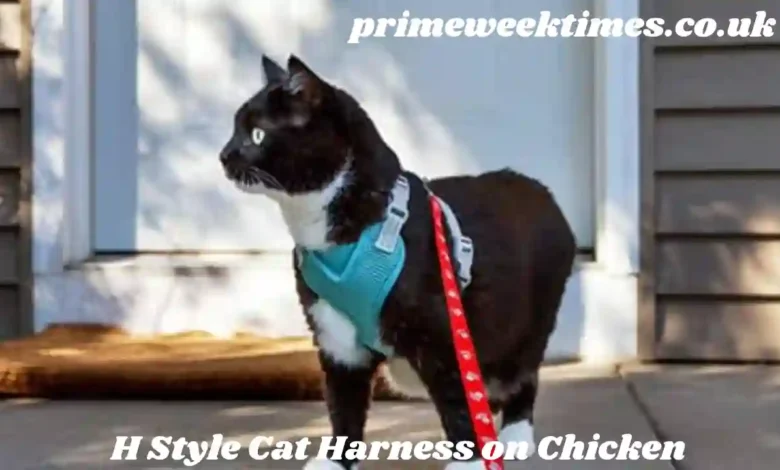
An H-style cat harness is a type of lightweight restraint equipment originally developed to help cat owners manage their pets during supervised outdoor activities. Its name comes from the shape created by its straps, which generally resembles the letter H when viewed from above. The design typically features two separate loops connected by a central strap. One loop is intended to sit around the neck area, while the other rests around the chest or torso. These sections work together to keep the harness positioned on the animal’s body.
The biggest advantage of this design is its relatively simple construction. Unlike some bulky pet harnesses, an H-style model usually contains narrow adjustable straps, small buckles, and a leash attachment point. This makes it easy to store, transport, and adjust for different body measurements. However, its simplicity does not mean that it is automatically suitable for every animal. A cat’s body structure is very different from a chicken’s, particularly around the shoulders, breastbone, wings, and neck.
When discussing H Style Cat Harness on Chicken, it is important to understand that the original design was not created specifically for poultry. Chickens have feathers, flexible wings, and different movement requirements. A harness that fits a cat comfortably might interfere with a chicken’s natural movements. Therefore, the design should be considered an example of pet equipment that requires careful evaluation rather than a universally suitable accessory.
Why Is the H Style Cat Harness on Chicken an Interesting Topic?
The combination of a cat harness and a chicken naturally attracts attention because these animals have different physical characteristics and everyday needs. Cats are four-legged mammals that often benefit from harness training when their owners want to introduce supervised outdoor exploration. Chickens, on the other hand, are birds that use their wings for balance, movement, and other natural behaviours. Putting these two concepts together creates an unusual subject for pet owners, poultry enthusiasts, and people interested in animal accessories.
Another reason the subject attracts interest is the growing popularity of keeping chickens as backyard pets. Many people no longer view chickens exclusively as farm animals. They develop individual relationships with their birds, give them names, create comfortable living spaces, and spend time interacting with them. This change in attitudes has encouraged more discussion about enrichment activities, handling methods, and accessories that might make everyday care easier.
The idea of an H Style Cat Harness on Chicken also raises useful questions about product design. Can an accessory made for one species be adapted for another? What measurements matter most? How can owners recognise discomfort? These questions are more important than the unusual appearance of a chicken wearing a harness.
For responsible owners, the subject provides an opportunity to learn about animal anatomy and equipment safety. It also highlights why choosing accessories based on appearance or availability alone is not a reliable approach.
Can You Put an H Style Cat Harness on a Chicken?
The simple answer is that a standard cat harness should not automatically be used on a chicken. Although some owners may experiment with small pet harnesses, a cat harness is not designed around the anatomy or movement patterns of poultry. A product that appears to fit around a chicken’s body may still create pressure in areas that should remain unrestricted.
Chickens have a prominent breastbone, a flexible neck, feathered skin, and wings that need sufficient freedom of movement. Their bodies also move differently from those of cats when walking, turning, balancing, and reacting to unfamiliar situations. A narrow strap positioned incorrectly could rub against feathers, restrict wing movement, or create uncomfortable pressure.
A poultry-specific harness is generally a more appropriate starting point for anyone considering supervised harness activities. These products are designed with birds in mind and may provide a more suitable arrangement around the body. Even then, the individual chicken’s size, health, temperament, and reaction to handling must be considered.
It is also important to remember that not every chicken will tolerate wearing equipment. Some birds may become frightened, struggle, crouch, or attempt to escape. Forcing a chicken to accept a harness simply because it looks interesting is not responsible animal care.
The safest approach is to consult an avian veterinarian or an experienced poultry professional before experimenting with equipment that was not designed for birds.
Understanding the Difference Between Cat and Chicken Anatomy
Understanding anatomy is one of the most important parts of evaluating H Style Cat Harness on Chicken. A harness is not simply a collection of straps that can be placed around any small animal. Its effectiveness depends on how the equipment interacts with the animal’s body.
Cats have a flexible torso, four supporting limbs, and a shoulder structure that allows them to move comfortably through relatively narrow spaces. Their harnesses are designed to accommodate these characteristics while providing a connection point for a leash. The two-loop construction of an H-style harness is intended to maintain its position around a cat’s neck and chest.
Chickens have a different skeletal structure. Their breastbone, known as the sternum, is an important part of the chest and supports the muscles involved in wing movement. Their wings also require freedom to open, fold, and move naturally. Feathers cover much of the body and can become damaged or displaced through repeated rubbing.
Another important difference is how chickens react to restraint. A chicken may suddenly flap its wings when frightened, lose balance, or attempt to move away from an unfamiliar object. Equipment that restricts this movement can increase the risk of injury.
These anatomical differences explain why a cat harness cannot be considered a direct replacement for a poultry harness. Proper equipment should accommodate the animal’s natural movements instead of forcing the animal to adapt to an unsuitable design.
Important Features to Consider When Choosing a Harness
Choosing suitable equipment requires more attention than selecting a particular colour or attractive design. Whether someone is researching an H-style harness for cats or a bird-specific harness for chickens, several product characteristics deserve careful consideration.
Material quality: Soft, flexible, and breathable materials are important because equipment may come into contact with feathers and sensitive skin. Rough edges, stiff seams, and exposed fasteners can cause irritation. Materials should also be easy to inspect and clean.
Adjustability: Animals have different body proportions, even when they belong to the same species. Adjustable straps can help create a more appropriate fit, but adjustment should never be used to force an unsuitable product onto an animal.
Lightweight construction: Heavy accessories can interfere with normal movement. Lightweight equipment is generally preferable, provided it is strong enough for its intended purpose.
Secure fastening: Buckles and closures should remain secure during ordinary movement while still allowing the owner to remove the equipment quickly if necessary. A complicated fastening system may make an already stressful experience more difficult.
Freedom of movement: The equipment must not interfere with breathing, walking, wing movement, balance, or other natural activities. This is especially important when considering a harness originally designed for cats.
Ease of removal: Owners should be able to remove the equipment promptly without pulling feathers or placing unnecessary pressure on the bird.
These features are useful starting points, but no single product characteristic can guarantee safety. The overall design must be appropriate for the species wearing it.
How to Measure a Chicken Before Considering a Harness
Measurements are essential when choosing any animal accessory. However, measuring a chicken for a harness requires a different approach from measuring a cat. The goal should be to understand the bird’s body dimensions without causing unnecessary stress or forcing it into an uncomfortable position.
The first consideration is the chicken’s general body size. Different breeds can have significantly different proportions, and even birds of similar ages may vary in weight and build. A product labelled small or medium does not necessarily provide a suitable fit for every chicken.
Owners should avoid pulling measuring tape tightly around the bird. Measurements should be taken gently, with the chicken supported comfortably and allowed to remain in a natural position. If the bird becomes distressed, the process should stop.
It is also important to consider the position of the wings and breastbone. Equipment must not press against the areas needed for normal wing movement or interfere with the bird’s ability to breathe. Feather coverage can make it difficult to judge the actual fit, so appearance alone should never be used as proof that a harness is comfortable.
Before buying or adapting any equipment, owners should review the manufacturer’s intended species, sizing guidance, and instructions. When those details do not establish suitability for chickens, professional advice is preferable to guessing.
Potential Benefits of Supervised Harness Activities
Although a cat harness is not automatically appropriate for poultry, the wider subject of supervised harness activities offers several interesting considerations for chicken owners. Properly designed bird equipment may be useful in limited situations, provided the animal is comfortable and the activity is handled responsibly.
One possible advantage is controlled exploration. Chickens are naturally curious animals that enjoy investigating their surroundings. A safe and familiar environment can provide opportunities to scratch, peck, forage, and observe new objects. However, a secure outdoor enclosure is generally a better way to provide these activities than relying on a leash.
Another possible benefit is easier handling during specific situations. Some owners may wish to transport a chicken for a supervised activity or veterinary examination. Nevertheless, a suitable poultry carrier is often a safer and more practical choice than attempting to guide a bird with a leash.
Harness-related activities may also create opportunities for positive interaction between owners and their chickens. Gentle handling, familiar routines, and rewards can help some birds become more comfortable around people. The important distinction is that these benefits should come from appropriate handling and enrichment, not from forcing an animal to wear uncomfortable equipment.
Ultimately, the best accessory is one that supports the animal’s natural behaviour without creating unnecessary restrictions.
Possible Risks of Using an H Style Cat Harness on Chicken
Safety is the most important issue when discussing H Style Cat Harness on Chicken. While the idea may appear harmless, using equipment designed for a different animal can create several problems. Understanding these risks helps owners make better decisions before introducing unfamiliar accessories.
Restricted Wing Movement
A chicken uses its wings for balance, movement, stretching, and responding to sudden situations. Straps that cross the wrong part of the body may prevent the wings from moving naturally. Even if the chicken can stand and walk, restricted wing movement can make it uncomfortable.
Pressure Around the Breastbone
The breastbone is an important part of a chicken’s skeletal structure. Incorrectly positioned straps may create pressure around the chest. Equipment should never interfere with normal breathing or place unnecessary force on this area.
Feather Damage and Skin Irritation
Chicken feathers can become damaged through repeated friction. Rough straps, tight buckles, and poorly finished edges may pull feathers or irritate the skin underneath. Regular inspection is important whenever a bird wears any accessory.
Stress and Fear
Some chickens are naturally comfortable around people, while others become frightened when restrained. Wearing an unfamiliar harness may cause a bird to struggle, flap its wings, crouch, or attempt to escape. These reactions should be treated as signs that the activity needs to stop.
Entanglement and Accidental Injury
A leash can become caught on branches, furniture, fencing, or other objects. If a chicken struggles while attached to an entangled leash, it may injure itself. This is another reason why constant supervision is essential.
Recognising these potential problems is more valuable than focusing exclusively on the convenience or appearance of a harness.
How to Introduce New Equipment to a Chicken
Introducing unfamiliar equipment requires patience and an understanding of chicken behaviour. Birds do not necessarily recognise a harness as something useful, and some may find its appearance, texture, or movement frightening.
The first step is simply allowing the chicken to observe the equipment from a comfortable distance. Place it nearby without attempting to put it on the bird. This allows the chicken to become familiar with the object without feeling threatened.
The next step is to build a positive association. Owners can use familiar treats and a calm voice when the chicken approaches the equipment voluntarily. There should be no chasing, grabbing, or forcing the bird to interact with it.
If the chicken remains comfortable, gentle handling can be introduced gradually. However, this does not mean that the owner should immediately fasten a cat harness around the bird. The suitability of the equipment must be established first.
A poultry-specific product should be used only according to its manufacturer’s instructions and after appropriate advice. If the chicken becomes distressed at any stage, the activity should end.
It is also worth remembering that training is not compulsory. A chicken does not need to wear a harness to enjoy a healthy and stimulating environment.
Choosing Between an H Style Harness and a Poultry-Specific Harness
One of the most important questions surrounding H Style Cat Harness on Chicken is whether a standard cat harness offers the same advantages as equipment specifically designed for birds.
The two products may look similar in photographs, but their intended purposes are different. An H-style cat harness is designed around feline anatomy, whereas poultry equipment should accommodate the body structure and movement of a bird.
| Feature | H-Style Cat Harness | Poultry-Specific Harness |
|---|---|---|
| Intended animal | Cat | Chicken or other specified bird |
| Main design | Two connected strap loops | Bird-oriented body arrangement |
| Wing accommodation | Not necessarily provided | Depends on the product |
| Sizing | Based on cat measurements | Based on poultry measurements |
| Feather considerations | Not a primary design requirement | Should be considered |
| Suitability for chickens | Not automatically suitable | More appropriate when correctly selected |
The table highlights why the intended species matters. A product being adjustable does not make it suitable for every animal.
A poultry-specific harness is generally the more sensible option when supervised harness activities are being considered. However, even a bird-specific product must fit correctly and allow natural movement. Owners should never assume that all poultry harnesses are safe simply because their packaging includes pictures of chickens.
What Are the Alternatives to an H Style Cat Harness on Chicken?
People interested in the subject may discover that a harness is not always the best solution for managing or entertaining backyard chickens. Several alternatives can provide greater convenience while allowing birds to behave naturally.
Secure Outdoor Enclosures
A well-maintained outdoor enclosure is one of the most practical ways to give chickens access to fresh air and natural activities. It can provide enough room for walking, scratching, dust bathing, and exploring while reducing the chances of wandering into dangerous areas.
Portable Poultry Pens
Portable chicken pens can be useful for owners who want to give their birds access to different areas of a garden. They provide a controlled environment without requiring an individual bird to wear equipment.
Suitable Poultry Carriers
A well-designed poultry carrier is often a better option for transporting chickens. It should provide adequate ventilation, enough space, a stable base, and secure closures. The carrier must also be appropriate for the bird’s size.
Supervised Garden Time
Some owners prefer to spend time with their chickens in a fenced garden or another secure outdoor space. This allows birds to investigate their surroundings without needing a leash.
Environmental Enrichment
Simple activities such as providing suitable perches, safe scratching areas, dust-bathing spaces, and opportunities to forage can make a chicken’s environment more interesting.
These alternatives demonstrate that animal enrichment does not always require specialised accessories.
Training and Building Trust With Your Chicken
Building trust is an important part of responsible chicken ownership. Chickens can become familiar with people through regular, gentle interactions. However, individual personalities differ, and some birds may take longer than others to become comfortable.
A consistent routine can help chickens recognise their owners and become more relaxed during everyday care. Feeding at predictable times, moving calmly, and avoiding sudden movements can all contribute to a more positive relationship.
Positive reinforcement is another useful approach. When a chicken voluntarily approaches its owner, a small amount of suitable food can reward the behaviour. Over time, the bird may become more confident around familiar people.
Owners should avoid chasing chickens to make them participate in activities. Chasing can increase fear and make future handling more difficult. Instead, allowing the bird to approach voluntarily creates a more comfortable experience.
When considering H Style Cat Harness on Chicken, trust should always come before training goals. Even a chicken that enjoys human interaction may dislike wearing equipment. Its preferences should be respected.
How to Recognise Discomfort in a Chicken
Recognising behavioural changes is essential whenever a chicken encounters unfamiliar equipment. Birds cannot verbally communicate discomfort, so owners need to observe their movements and behaviour.
Some possible warning signs include:
- Repeated attempts to remove or escape the equipment.
- Unusual crouching or reluctance to move.
- Frequent wing flapping or struggling.
- Changes in normal walking behaviour.
- Distressed vocalisations.
- Visible feather damage or skin irritation.
- Rapid or unusual breathing.
- Loss of balance or difficulty standing.
Not every behavioural change has the same cause, and some signs can indicate an underlying health problem. Owners should therefore avoid assuming that every unusual reaction is simply part of the training process.
If a chicken shows signs of distress, remove unsuitable equipment when it is safe to do so and stop the activity. If the bird has difficulty breathing, appears injured, or continues behaving unusually, seek advice from an avian veterinarian.
The most important lesson is that a chicken should never be expected to tolerate discomfort for the sake of an accessory or photograph.
Cleaning and Maintaining Animal Harnesses
Hygiene is another consideration that deserves attention. Animal accessories can collect dirt, dust, feathers, moisture, and other material during use. If equipment is not cleaned properly, it may become uncomfortable or unhygienic.
Owners should inspect straps, buckles, stitching, and attachment points before every use. Damaged components should not be trusted because a weak buckle or loose connection may fail unexpectedly.
Cleaning instructions depend on the material and manufacturer’s recommendations. Some products can be washed by hand, while others may have specific cleaning requirements. Strong cleaning chemicals should not be used unless the manufacturer confirms that they are appropriate.
After cleaning, equipment should be allowed to dry completely before storage or reuse. Damp accessories can become unpleasant and may encourage the growth of unwanted microorganisms.
It is also important not to share animal accessories without cleaning them appropriately. Equipment should be kept in a clean storage location away from moisture, pests, and contamination.
Although maintenance cannot make an unsuitable cat harness appropriate for a chicken, it remains an important part of caring for any properly selected animal accessory.
Common Mistakes to Avoid When Considering H Style Cat Harness on Chicken
People researching unusual pet accessories sometimes focus more on appearance than practicality. This can lead to mistakes that may affect animal comfort and safety.
Assuming that a small size will fit: A small cat harness is not necessarily suitable for a chicken. Different animals have different body proportions, and sizing labels cannot replace proper assessment.
Tightening straps to prevent escape: Making a harness excessively tight can create pressure and restrict movement. A product that cannot remain in place without uncomfortable tightening is not appropriate.
Attaching a heavy leash: Heavy equipment can create unnecessary resistance and may frighten or destabilise a small bird.
Leaving the chicken unattended: Any animal wearing equipment should be closely supervised. Unattended accessories can become caught on surrounding objects.
Ignoring behavioural warning signs: Repeated struggling, unusual movement, or distress should never be dismissed as stubbornness.
Using equipment for entertainment alone: Photographs and videos should not take priority over an animal’s comfort. A chicken should never be dressed in an unsuitable accessory simply because the result looks unusual.
Avoiding these mistakes helps owners approach the subject with greater responsibility.
Is H Style Cat Harness on Chicken Suitable for Every Breed?
Chicken breeds vary considerably in their size, body shape, feather coverage, and temperament. A product that appears manageable for one bird may be unsuitable for another.
Smaller breeds have different proportions from larger poultry breeds. Some chickens have particularly dense feathers, while others have different body shapes that can affect how equipment sits. Age and physical condition also matter.
Young birds require special consideration because their bodies are still developing. Older chickens may have reduced mobility or other age-related needs. Birds recovering from injuries or experiencing health problems should not be introduced to restraint equipment without veterinary guidance.
Temperament is equally important. A calm chicken may tolerate gentle handling better than a nervous bird, but calm behaviour does not automatically mean that a particular harness is safe.
For these reasons, breed names and general size categories are not enough to establish suitability. The individual animal and the equipment’s intended design must always be considered together.
Is an H Style Cat Harness on Chicken Worth Considering?
The idea of an H Style Cat Harness on Chicken is unusual, but it introduces an interesting discussion about animal accessories and how their designs relate to different species. Cat harnesses are lightweight and adjustable, which may explain why some poultry owners become curious about using them. Nevertheless, convenience and availability should not determine whether an accessory is appropriate.
For chicken owners, the priority should be providing a comfortable environment where birds can move, forage, explore, and interact naturally. A secure enclosure, suitable poultry carrier, or properly selected bird-specific harness may be more practical depending on the situation.
If someone is interested in experimenting with harness activities, professional guidance and careful equipment selection are essential. A standard cat harness should not be treated as a safe poultry accessory without evidence that its design is suitable for the individual bird.
The best decision is one that protects the chicken’s physical comfort and natural behaviour. There is no need to use a harness if the bird is happier and safer without one.
Final Thoughts on H Style Cat Harness on Chicken
H Style Cat Harness on Chicken is an unusual topic that connects pet accessories, backyard poultry care, animal handling, and product design. Although H-style harnesses are commonly associated with cats, their basic construction raises questions about whether similar equipment can be adapted for other animals.
Understanding the differences between cats and chickens is essential before considering such an accessory. Their anatomy, movement patterns, feather coverage, and responses to restraint are not the same. A harness designed for a cat may therefore create problems when used on a chicken.
For anyone interested in this subject, the most important factors are appropriate equipment, correct sizing, gentle handling, supervision, and awareness of discomfort. Poultry-specific equipment is generally a better choice than attempting to repurpose a standard cat harness.
Ultimately, responsible animal care should always come before convenience, entertainment, or appearance. Chickens deserve equipment and environments that support their natural behaviour and overall well-being.
Frequently Asked Questions (FAQs)
1. What Is an H Style Cat Harness on Chicken?
H Style Cat Harness on Chicken refers to the idea of using or adapting an H-shaped harness originally designed for cats for a chicken. The design generally includes two connected loops and adjustable straps. However, standard cat harnesses are not automatically suitable for poultry because chickens have different anatomical and movement requirements.
2. Can You Use a Regular Cat Harness on a Chicken?
A regular cat harness should not be assumed safe for a chicken. Cats and chickens have different body structures, particularly around the chest, shoulders, and wings. A poultry-specific harness is a more appropriate option when harness activities are being considered.
3. Why Would Someone Want to Put a Harness on a Chicken?
Some chicken owners are interested in supervised outdoor activities, controlled handling, or simply exploring unusual pet accessories. Others may find the idea entertaining for photographs and social media content. However, these activities should never compromise the bird’s comfort or safety.
4. What Should You Look for in a Chicken Harness?
Look for equipment specifically designed for birds, with suitable sizing, lightweight construction, smooth materials, secure fasteners, and sufficient freedom for natural movement. The harness should not restrict breathing, walking, or wing movement. Professional advice is recommended before introducing unfamiliar equipment.
5. Is an H Style Cat Harness on Chicken Safe for All Chickens?
No. A standard cat harness is not designed for all chicken breeds or body types. Even poultry-specific harnesses may not be suitable for every individual bird. Age, size, temperament, physical condition, and comfort should all be considered before using any restraint equipment.
ALSO READ : Hawthorn M Class MentorMansfield – HMS Mentor and HMS Mansfield: Complete Naval History