
Socks With Skis: Complete Guide to Comfort, Warmth, and Better Skiing
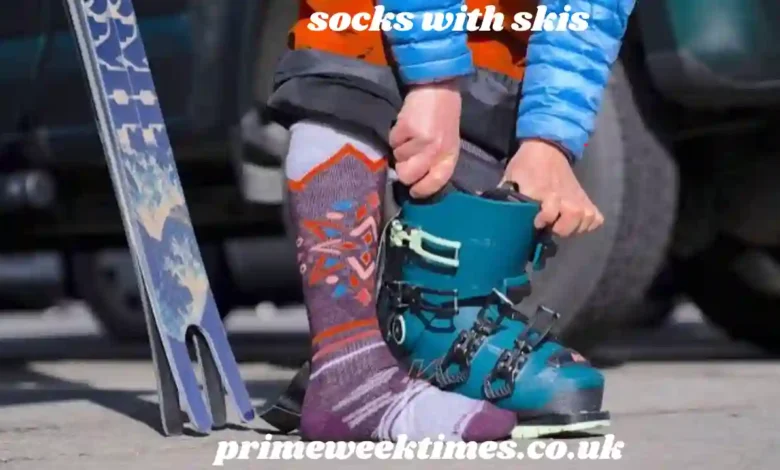
When people prepare for a day on the mountain, they often spend most of their attention choosing skis, boots, jackets, helmets, and gloves. One item that can easily be overlooked is the humble ski sock. Yet wearing the right socks with skis can have a surprisingly large impact on comfort, warmth, circulation, boot fit, and overall performance.
Skiing places unique demands on the feet. Ski boots are stiff, tightly fitted, and designed to transfer movement efficiently from the skier to the skis. Because of this close connection, even something as simple as wearing socks that are too thick, too loose, or made from the wrong fabric can create pressure points and discomfort during a long day on the slopes.
Choosing the correct socks with skis is therefore not simply about keeping the feet warm. Good ski socks should provide moisture control, cushioning, breathability, and a secure fit without interfering with the way the ski boot works.
This guide explains what makes ski socks different, how thick they should be, which materials work best, how they interact with ski boots, and how skiers can avoid common sock-related mistakes.
Why Socks Matter So Much When Skiing
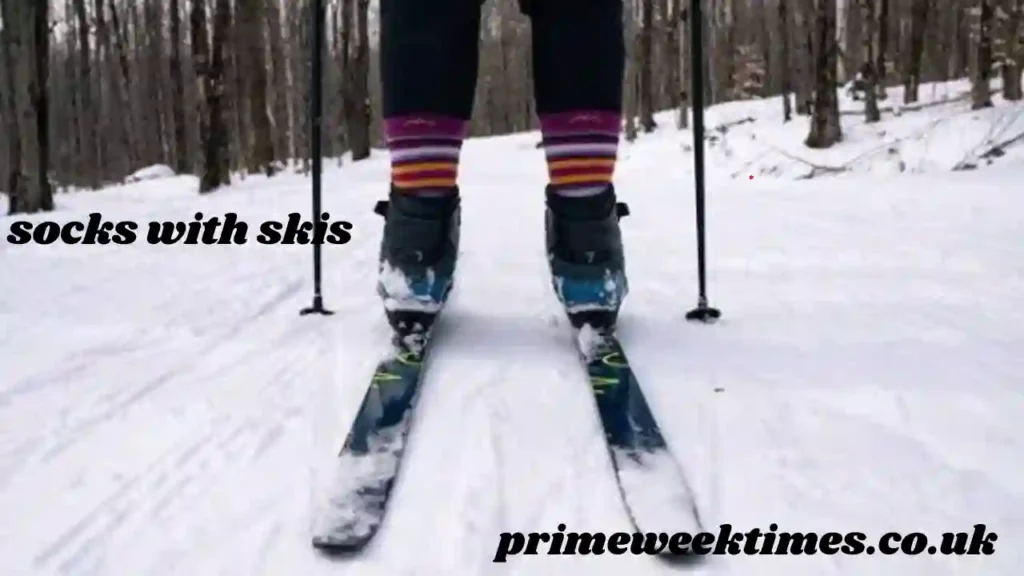
The relationship between ski boots and socks is different from the relationship between normal shoes and everyday socks. Ski boots are designed to hold the foot firmly in place while allowing the skier to control the skis precisely.
Because ski boots fit closely around the foot and lower leg, the socks inside them become an important part of that system.
Wearing poor-quality socks can create several problems. Thick seams may rub against the skin. Excess fabric can bunch around the toes or ankle. Cotton can hold moisture and become cold. Extremely thick socks can reduce circulation by making the boot feel tighter.
High-quality ski socks are designed specifically to avoid these issues.
The ideal pair of socks with skis should feel smooth, supportive, and almost unnoticeable once the boots are buckled.
What Are Ski Socks?
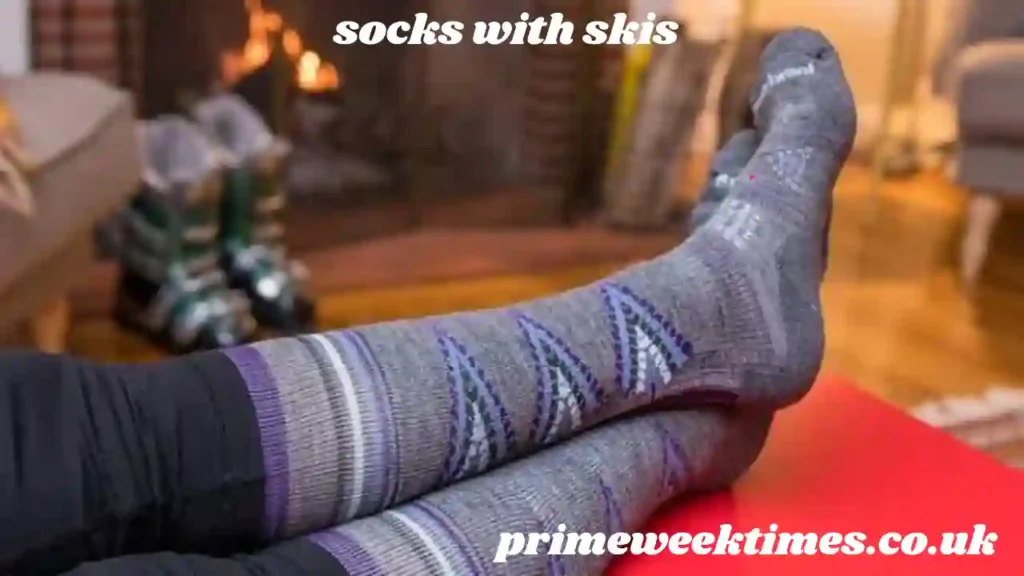
Ski socks are long technical socks designed specifically for skiing and other winter sports.
Unlike ordinary socks, they usually extend almost to the knee. This height helps protect the lower leg from contact with the ski boot cuff.
Ski socks are also designed to manage moisture and temperature. Many models use materials such as merino wool, synthetic fibers, nylon, polyester, or blends that help move sweat away from the skin.
Another important difference is thickness.
Many people assume thicker socks automatically mean warmer feet. In skiing, however, that is not always true. Ski boots already provide significant insulation, and overly thick socks can reduce circulation.
Modern ski socks are often surprisingly thin.
The Importance of Proper Boot Fit
Understanding socks with skis requires understanding how ski boots fit.
Ski boots are intentionally snug. A properly fitted ski boot should hold the heel securely while minimizing unnecessary movement inside the boot.
The toes may lightly touch the front of the boot when standing upright, but when the skier bends the knees into a skiing position, the heel usually moves backward slightly.
Because the boot is already fitted closely, adding thick socks can change the internal volume significantly.
When too much material is placed inside the boot, pressure increases around the foot. This pressure can restrict blood flow, especially around the forefoot and toes.
Reduced circulation can actually make the feet colder.
This is one reason experienced skiers often prefer thinner technical ski socks rather than extremely thick winter socks.
Should Ski Socks Be Thick or Thin?
One of the most common questions about socks with skis concerns thickness.
There are generally three categories:
Lightweight Ski Socks
Lightweight ski socks provide minimal cushioning and a close fit.
They are popular with advanced skiers and people who have properly fitted ski boots.
Thin socks allow the boot liner to sit closer to the foot, improving sensitivity and responsiveness.
They can also help prevent overheating.
Midweight Ski Socks
Midweight ski socks offer slightly more cushioning while still maintaining a relatively thin profile.
They are often a good choice for recreational skiers because they balance warmth and comfort.
These socks may include additional padding around the shin, heel, or toe area.
Heavyweight Ski Socks
Heavy ski socks contain more insulation and cushioning.
They may be useful in extremely cold conditions or for people who naturally struggle with cold feet.
However, they should only be used when there is enough room inside the boot.
If a ski boot already fits tightly, thick socks may create more problems than benefits.
Best Materials for Ski Socks
Material plays an important role when choosing socks with skis.
Different fibers manage heat, sweat, and moisture differently.
Merino Wool
Merino wool is one of the most popular materials used in ski socks.
Unlike traditional coarse wool, merino fibers are very fine and soft.
Merino wool can help regulate temperature while also managing moisture.
Another advantage is that wool retains some insulating ability when damp.
Because of these properties, merino wool blends are commonly used in premium ski socks.
Synthetic Materials
Synthetic fibers such as polyester, nylon, acrylic, and polypropylene are also common.
These materials are generally designed to dry quickly and move moisture away from the skin.
Synthetic socks may also be highly durable.
Many ski socks combine synthetic fibers with wool to balance comfort, moisture management, elasticity, and durability.
Elastane and Spandex
Stretch fibers help keep ski socks securely positioned on the leg.
Without adequate elasticity, socks can slide downward or wrinkle inside the boot.
Even small wrinkles can become uncomfortable after several hours of skiing.
Why Cotton Is Usually a Poor Choice
Cotton absorbs moisture easily and tends to dry slowly.
When feet sweat inside ski boots, cotton socks can become damp.
Wet socks may increase the feeling of cold and can contribute to discomfort or blisters.
For this reason, cotton is generally not considered ideal for technical ski activities.
Why One Pair of Socks Is Better Than Two
Some beginner skiers believe that wearing two pairs of socks will keep their feet warmer.
In most situations, this approach is unnecessary.
Two pairs of socks can create additional bulk inside the ski boot.
This extra thickness may compress the foot and restrict blood circulation.
The socks may also rub against each other, potentially increasing friction around the foot.
A single pair of well-designed ski socks is usually the better choice.
Quality technical socks are designed to provide insulation, moisture control, and cushioning without requiring additional layers.
How Ski Socks Should Fit
The proper fit of socks with skis is extremely important.
Ski socks should fit snugly against the foot and lower leg.
They should not feel loose or baggy.
Loose socks can fold or bunch inside the ski boot, creating pressure points.
The toe area should also fit correctly.
There should not be large amounts of excess fabric around the toes.
At the same time, the sock should not stretch so tightly that the toes feel restricted.
A good ski sock should feel almost like a second layer of skin.
Ski Sock Height
Ski socks are typically much taller than regular socks.
Most reach just below the knee.
This length serves an important purpose.
Ski boots have tall cuffs that wrap around the lower leg. Short socks may end inside this boot cuff, creating an uncomfortable ridge.
Tall socks place the top band above the ski boot.
This helps reduce rubbing and creates a smoother interface between the leg and the boot liner.
Cushioning in Ski Socks
Many ski socks include targeted cushioning rather than uniform padding.
Common padded areas include:
- The shin
- Heel
- Ball of the foot
- Toes
- Ankle
Shin cushioning can be especially helpful because the front of the lower leg repeatedly presses against the tongue of the ski boot.
However, more padding is not always better.
Too much cushioning can change the fit of the boot.
The ideal amount depends on personal preference and how much space is available inside the ski boot.
Moisture Management and Sweaty Feet
Skiing can be physically demanding.
Even when temperatures are cold, feet may sweat inside insulated ski boots.
Managing this moisture is one of the most important jobs performed by ski socks.
Good technical fibers move moisture away from the skin.
This process is often called moisture wicking.
When moisture moves away from the skin, the feet are more likely to remain comfortable and warm.
Proper moisture management can also reduce the environment that encourages friction and irritation.
Why Feet Can Still Feel Cold
People sometimes experience cold feet even while wearing warm ski socks.
The cause may not actually be insufficient insulation.
Poor circulation is often a major factor.
If ski boots are buckled too tightly or the socks are too thick, blood circulation may be reduced.
The toes then receive less warm blood.
In this situation, adding another pair of socks may make the problem worse.
Other factors can also contribute, including extremely cold weather, wet boot liners, long periods of inactivity, or poor-fitting boots.
Common Mistakes When Wearing Socks With Skis
Several mistakes are particularly common among beginner skiers.
Wearing Everyday Cotton Socks
Normal cotton socks are not designed for prolonged winter sports.
They hold moisture and may become uncomfortable.
Wearing Two Pairs
Multiple layers can reduce circulation and create unnecessary friction.
Choosing Socks That Are Too Thick
Extremely thick socks may make tightly fitted ski boots uncomfortable.
Wearing Socks That Are Too Short
Short socks can end directly beneath the ski boot cuff.
This may create pressure or rubbing.
Wearing Old or Stretched Socks
Worn-out socks may lose their elasticity and begin sliding or bunching inside the boot.
Leaving Wrinkles
Even a small wrinkle can create an uncomfortable pressure point after several hours.
Before putting on ski boots, socks should be pulled smoothly over the foot and lower leg.
How to Put On Ski Socks Correctly
Putting ski socks on properly takes only a few moments.
First, make sure the foot is dry.
Pull the sock over the toes and heel carefully.
Continue pulling it upward while smoothing the fabric around the ankle and calf.
Make sure the heel section of the sock aligns correctly with the heel.
The sock should remain flat against the skin.
Avoid rolling the top of the sock downward.
The top band should normally remain above the ski boot cuff.
How Socks Affect Ski Performance
Socks may seem like a minor piece of equipment, but they affect the connection between the skier and the ski boot.
When socks are too thick, the skier may lose some sensitivity inside the boot.
When socks are too loose, movement may occur between the foot and the liner.
Proper ski socks help maintain a consistent connection.
This can make it easier for the skier to feel how the boot responds when pressure is applied.
For recreational skiers, comfort may be the biggest noticeable benefit.
For advanced skiers, precise boot feedback may become more important.
Socks for Beginners
Beginners often prioritize warmth because they expect skiing to involve standing in freezing temperatures.
While warmth is important, beginners should avoid automatically choosing the thickest available socks.
A midweight technical ski sock is often comfortable for general resort skiing.
The sock should provide moderate cushioning without making the boot feel excessively tight.
Beginners should also pay attention to boot fit.
Rental boots vary considerably, and changing sock thickness can affect how a rental boot feels.
Socks for Advanced Skiers
Advanced skiers often prefer thinner ski socks.
A thinner sock allows the skier’s foot to remain close to the boot liner.
This can increase precision and allow subtle foot movements to transfer more directly to the ski.
Performance-oriented ski boots also tend to have lower internal volume.
Because these boots fit closely, there may be little room for thick cushioning.
This is why lightweight ski socks are common among experienced skiers.
Ski Socks for Very Cold Conditions
Cold weather can make sock selection more challenging.
When temperatures drop significantly, slightly warmer socks may help.
However, circulation remains important.
A thick sock that compresses the foot may provide less practical warmth than a thin sock that allows healthy circulation.
Skiers facing extremely cold conditions can also focus on other factors.
Keeping boots dry overnight, warming boot liners before skiing, taking breaks indoors, and ensuring the boots are not overly tight may all contribute to warmer feet.
Merino Wool vs Synthetic Ski Socks
Both merino wool and synthetic ski socks can work well.
Merino wool is valued for temperature regulation and natural comfort.
Synthetic materials often dry quickly and may offer excellent durability.
Many modern ski socks combine both materials.
A blended sock might contain merino wool for insulation, nylon for durability, and elastane for stretch.
Rather than focusing only on one fiber, skiers should consider the entire sock design.
Fit, thickness, cushioning, and construction can matter just as much as the fiber itself.
Seamless Construction
Seams can create uncomfortable pressure inside tight ski boots.
For this reason, many ski socks use flat seams or nearly seamless construction around the toes.
A bulky toe seam may not feel noticeable when wearing normal shoes.
Inside a tight ski boot, however, the pressure becomes much more noticeable.
People with sensitive feet should pay particular attention to toe construction when choosing ski socks.
Compression Ski Socks
Some ski socks include mild compression.
Compression designs are intended to provide a snug fit around the lower leg.
They may also help prevent the sock from sliding downward.
However, compression socks should still feel comfortable.
Excessively tight socks can become unpleasant during long ski sessions.
Skiers interested in compression should ensure the sock is appropriately sized.
Ski Socks and Boot Liners
Modern ski boots contain padded liners that surround the foot.
These liners provide much of the insulation inside the boot.
Because the liner already provides cushioning, ski socks do not need to function like thick winter slippers.
Instead, the sock acts as a thin technical layer between the skin and the boot liner.
This is another reason thinner ski socks can perform surprisingly well.
The liner provides insulation while the sock manages moisture and reduces friction.
How Many Pairs of Ski Socks Should You Own?
The number of ski socks needed depends on how frequently someone skis.
A person skiing for one day only needs one suitable pair, although carrying a backup pair can be useful.
Someone taking a week-long ski trip may prefer several pairs.
Fresh socks help maintain comfort and hygiene.
Because skiing can cause sweating, allowing worn socks to dry completely before wearing them again is important.
Travelers should also consider how easily they can wash and dry their ski socks during the trip.
Should Ski Socks Be Changed During the Day?
Most skiers do not need to change socks during a normal ski day.
However, changing socks can help when the original pair becomes wet.
For example, moisture may enter the boot if snow gets inside.
Replacing damp socks with a dry pair can improve comfort.
A spare pair stored in a ski bag or locker can therefore be useful, particularly during long days.
Caring for Ski Socks
Proper care can extend the lifespan of ski socks.
Always follow the manufacturer’s washing instructions when possible.
Many technical socks can be machine washed, but extremely high temperatures may affect elasticity or wool fibers.
Avoid excessive heat when drying certain wool socks.
Air drying is often gentle on technical fabrics.
It is also helpful to wash ski socks after use because sweat, oils, and dirt can accumulate within the fibers.
Signs That Ski Socks Need Replacing
Even high-quality ski socks eventually wear out.
Several signs suggest replacement may be necessary.
The sock may become thinner around the heel or toe.
Elasticity may decrease, causing the sock to slide downward.
Small holes may appear.
Cushioned zones may become compressed.
When ski socks no longer stay securely in position, they may begin bunching inside the boot.
Replacing them can restore a smoother and more comfortable fit.
Socks With Skis for Children
Children also benefit from proper ski socks.
Parents may be tempted to put multiple pairs of socks on children because they are concerned about cold feet.
However, the same principles apply.
Too much material inside the ski boot can create pressure and reduce circulation.
Children should wear properly sized ski socks that reach above the boot cuff.
The socks should feel warm but not excessively bulky.
Because children grow quickly, parents should check sock sizing regularly.
Socks With Skis for Women and Men
Many ski sock manufacturers offer separate designs for men and women.
These differences may involve sizing, calf shape, cushioning, or design.
However, the fundamental features remain the same.
The most important factors are fit, comfort, material, and thickness.
A sock that fits properly and performs well is more important than the category printed on the packaging.
Ski Socks for Wide or Narrow Feet
Foot shape can influence sock choice.
People with narrow feet may prefer socks with a very secure elastic fit because loose fabric can move inside the boot.
People with wider feet may prefer lightweight socks that reduce unnecessary volume.
Ski boot fit remains the main consideration.
If the boot already feels tight across the forefoot, thicker socks are unlikely to improve comfort.
Why More Expensive Socks Can Be Worth It
Technical ski socks can cost more than normal everyday socks.
The additional price often reflects specialized materials, targeted cushioning, reinforced areas, and seamless construction.
A good pair may also maintain its shape better after repeated use.
Since ski socks directly contact the foot for many hours, comfort can justify spending slightly more on a reliable pair.
However, price alone does not guarantee good performance.
Correct fit remains essential.
Preparing Your Feet Before Skiing
Sock selection works best when combined with basic foot preparation.
Toenails should be trimmed so they do not press against the front of the boot.
Feet should be clean and dry before socks are worn.
Avoid placing unnecessary layers inside the ski boot.
Long underwear should also not be tucked deeply into the boot.
Ideally, only the ski sock should sit directly between the lower leg and the boot liner.
Extra fabric around the calf can create pressure points.
What to Wear Over Ski Socks
Ski socks go directly against the skin.
Ski base layers can cover the upper leg but should generally end above the boot area or be positioned so they do not create folds inside the boot.
The ski boot then goes over the sock.
Outside the boot, ski pants and gaiters help prevent snow from entering.
The goal is to keep the internal boot area simple and smooth.
How Socks Influence Blisters
Blisters often develop because of friction.
When the foot moves repeatedly against fabric or the boot liner, the skin may become irritated.
Properly fitted ski socks reduce this movement.
Moisture control also matters because damp skin can become more vulnerable to friction.
A snug technical sock combined with a properly fitted ski boot can significantly improve comfort.
Socks and Ski Boot Buckles
Skiers sometimes tighten boot buckles aggressively when their feet feel loose.
However, excessive tightening can reduce circulation.
Before adjusting buckles, check whether the sock or boot fit is causing the problem.
The boot should hold the foot firmly without creating numbness or severe pressure.
Socks should not be used to compensate for badly fitting boots.
If a boot is significantly too large or too small, professional boot fitting may provide a more effective solution.
Can Regular Hiking Socks Be Used for Skiing?
Some hiking socks may work temporarily, especially if they are made from merino wool or synthetic materials.
However, hiking socks are often thicker and shorter than dedicated ski socks.
The extra thickness may affect boot fit.
Shorter designs may also end inside the ski boot cuff.
For occasional skiing, suitable hiking socks might be acceptable if they fit properly.
For regular skiing, dedicated ski socks generally provide better performance.
Can Snowboard Socks Be Used With Skis?
Ski and snowboard socks share many characteristics.
Both are typically tall, moisture-wicking, and designed for winter sports.
However, snowboard socks may sometimes contain heavier cushioning because snowboard boots are usually softer and roomier than ski boots.
Many snowboard socks can still work for skiing if they are thin enough to fit comfortably inside ski boots.
Boot fit should always guide the decision.
The Role of Personal Preference
There is no single perfect ski sock for every skier.
Some people naturally prefer warmer socks.
Others prefer extremely thin performance socks.
Some like cushioning around the shin, while others want minimal padding.
The ideal setup depends on boot volume, circulation, skiing style, weather conditions, and personal comfort.
Trying different thicknesses can help skiers discover what works best.
A Simple Checklist for Choosing Socks With Skis
When selecting socks with skis, several features are worth considering:
- Choose socks designed for skiing or winter sports.
- Look for merino wool, synthetic materials, or technical blends.
- Avoid cotton when possible.
- Choose a thickness that matches the available space inside the boot.
- Make sure the sock reaches above the ski boot cuff.
- Select a snug fit without wrinkles.
- Look for flat or low-profile seams.
- Consider targeted cushioning rather than excessive overall thickness.
- Wear one pair instead of stacking multiple socks.
- Replace socks when they become stretched, thin, or damaged.
Following these basic principles can make ski days noticeably more comfortable.
Frequently Asked Questions About Socks With Skis
What socks should you wear with skis?
Technical ski socks are generally the best choice. They are usually knee-high and made from merino wool, synthetic fibers, or blends designed for moisture management and warmth.
Should ski socks be thick?
Not necessarily. Many skiers prefer thin or medium-thickness socks because thick socks can make ski boots too tight and potentially reduce circulation.
Can you wear two pairs of socks skiing?
Wearing two pairs is generally unnecessary. Extra layers may increase pressure inside the boot and create friction.
Are wool socks good for skiing?
Merino wool socks are popular because they provide insulation, moisture management, and softness.
Can you wear cotton socks skiing?
Cotton is usually less suitable because it absorbs moisture and dries slowly.
How high should ski socks be?
Ski socks should normally extend above the top of the ski boot cuff, usually reaching close to the knee.
Why do feet get cold in ski boots?
Cold feet can result from low temperatures, moisture, poor circulation, tight boots, overly thick socks, or wet boot liners.
Do thin ski socks keep feet warm?
They can. A properly fitted boot provides significant insulation, while thin technical socks help manage moisture and allow better circulation.
How many pairs of socks should be worn inside ski boots?
One pair of properly fitting technical ski socks is usually enough.
Should long underwear go inside ski boots?
Extra fabric should generally be kept away from the boot cuff area because folds can create pressure points. Ideally, the ski sock should be the main layer directly beneath the boot.
Final Thoughts on Socks With Skis
Choosing the right socks with skis may seem like a small decision compared with choosing skis or boots, but it can influence an entire day on the mountain.
The best ski socks combine warmth, moisture management, comfort, and a secure fit without adding unnecessary bulk. For many skiers, thin or midweight technical socks made from merino wool or synthetic blends provide the ideal balance.
The biggest mistake is assuming that thicker socks always provide warmer feet. Ski boots already contain insulation, and excessive thickness can restrict circulation. A single pair of properly fitting technical socks is usually more effective than layering multiple pairs.
Skiers should also make sure their socks extend above the boot cuff, remain smooth against the skin, and do not create wrinkles or pressure points.
Ultimately, comfortable skiing depends on creating a clean connection between the foot, sock, boot liner, and ski boot. When each part fits correctly, the skier can focus less on sore or cold feet and more on enjoying the slopes.
Whether someone is skiing for the first time or spending dozens of days each winter on the mountain, selecting the right socks with skis is one of the simplest ways to improve comfort, warmth, and overall skiing experience.
ALSO READ : Jacaranda Tree – Growing, Care, Flowers, Benefits, and Complete Guide