
Jacaranda Tree – Growing, Care, Flowers, Benefits, and Complete Guide
The jacaranda tree is one of the most recognizable flowering trees in warm and subtropical regions around the world. Famous for its spectacular purple, violet, or blue-lavender flowers, the jacaranda tree can transform streets, gardens, parks, and landscapes into colorful displays during its flowering season. Its soft, fern-like foliage and spreading branches also give the tree an elegant appearance even when it is not covered in flowers. For gardeners, homeowners, landscapers, and nature lovers, the jacaranda tree is an attractive choice when the climate and growing conditions are suitable.
The beauty of the jacaranda tree is only one reason for its popularity. This tree can provide shade, seasonal color, habitat for wildlife, and a distinctive tropical or subtropical appearance. However, growing a jacaranda tree successfully requires an understanding of its preferred climate, soil, watering needs, sunlight requirements, pruning habits, and mature size. A tree that looks easy to grow in a suitable environment may struggle when planted in conditions that are too cold, too wet, too shaded, or poorly drained.
In this detailed guide, we will explore everything important about the jacaranda tree, including its appearance, origins, growth characteristics, flowers, leaves, planting requirements, watering schedule, pruning, propagation, common problems, landscaping uses, benefits, and frequently asked questions. Whether you already have a jacaranda tree or are considering planting one, understanding its natural growing habits can help you maintain a healthier and more attractive tree.
What Is a Jacaranda Tree?
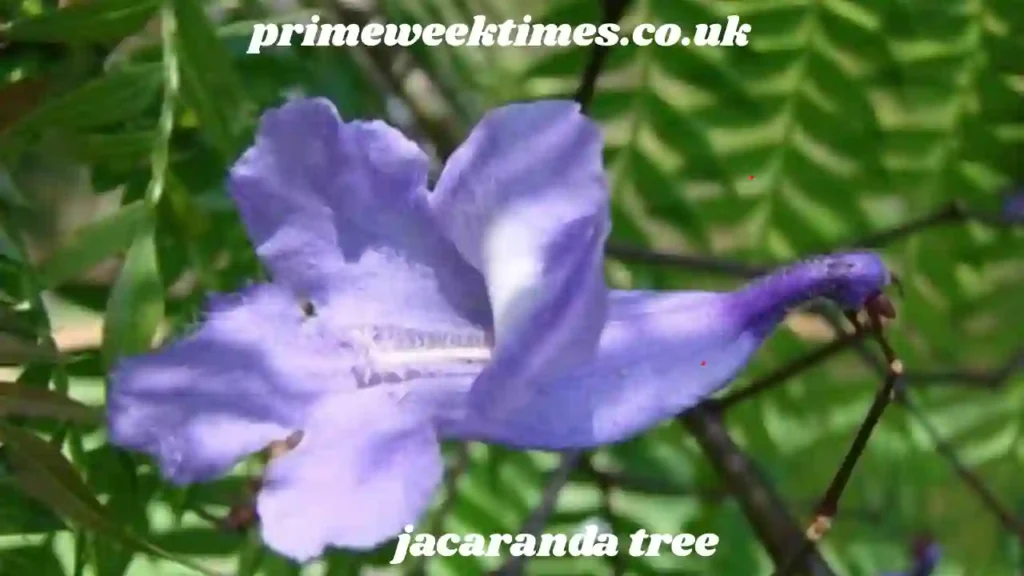
The jacaranda tree is a flowering tree belonging primarily to the genus Jacaranda. The species most commonly associated with ornamental planting is Jacaranda mimosifolia, often called the blue jacaranda. It is widely appreciated for its clusters of trumpet-shaped flowers and delicate-looking foliage.
A mature jacaranda tree can become a substantial landscape tree, developing a broad canopy and a relatively tall growth habit under favorable conditions. Its branches can spread outward, creating useful shade and an attractive architectural shape. The tree is especially admired when its branches become filled with masses of purple-blue flowers.
Although the exact appearance can vary depending on species, climate, age, and growing conditions, the classic jacaranda tree has a graceful form with a rounded or spreading crown. Its leaves are finely divided, creating a soft, almost fern-like texture. This combination of flowers, foliage, and branching structure makes the tree visually different from many common shade trees.
Jacaranda Tree Appearance and Characteristics
One of the most appealing characteristics of the jacaranda tree is its overall appearance. Unlike trees with large, heavy leaves, the jacaranda has finely divided foliage that allows light to pass through the canopy. This gives the tree a delicate appearance even though it can eventually become large and substantial.
The bark of a mature jacaranda tree is generally grayish-brown and develops a textured appearance as the tree ages. Young branches may appear smoother and more greenish or brown before becoming more mature.
The leaves are typically compound and divided into many small leaflets. From a distance, this foliage can resemble fern leaves. The fine texture of the leaves makes the tree particularly attractive in gardens where contrast between different foliage types is desired.
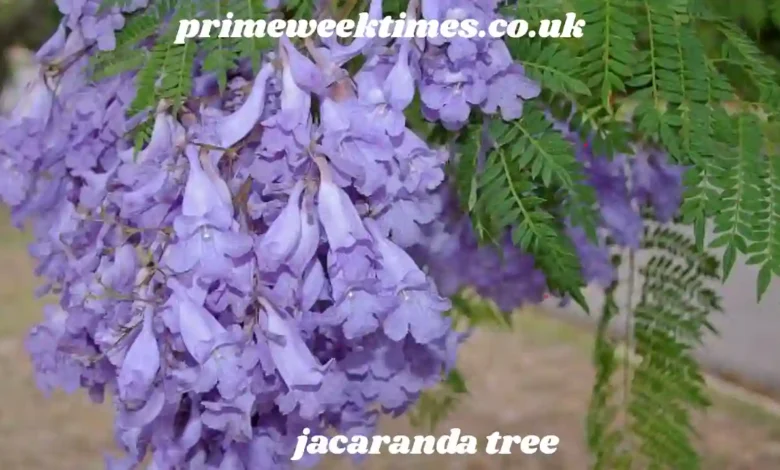
The flowers are the main attraction. They are generally trumpet-shaped and appear in clusters. Their shades can range from blue-purple and lavender to violet, depending on the tree and growing conditions. During peak flowering, a healthy jacaranda tree can appear almost completely covered with blooms.
Where Does the Jacaranda Tree Grow Naturally?
The jacaranda tree is associated with South America, particularly regions where warm temperatures and seasonal rainfall support its growth. Over time, ornamental jacaranda trees have been planted successfully in many warm and subtropical areas around the world.
The tree generally performs best in locations with plenty of sunlight, warm growing seasons, and protection from severe frost. It can tolerate some variation in conditions once established, but young trees are generally more vulnerable to cold temperatures and environmental stress.
In suitable climates, the jacaranda tree can become a major landscape feature. It is often planted along roads, in parks, around large properties, and in gardens where sufficient space is available for its mature canopy.
Jacaranda Tree Flowers
The flowers are perhaps the most famous feature of the jacaranda tree. When flowering conditions are favorable, the tree can produce large numbers of vibrant trumpet-shaped blooms.
Jacaranda flowers commonly appear in shades of purple, lavender, or blue-purple. The exact flowering period depends heavily on climate and local growing conditions. In some warm regions, flowering occurs during spring or early summer, while in other climates the timing can vary.
A flowering jacaranda tree can create a dramatic visual effect. Flowers may cover branches and eventually fall onto the ground, producing a colorful carpet beneath the tree. This seasonal display is one reason jacarandas are so popular in urban landscaping.
Flower production can be affected by several factors, including sunlight, water availability, temperature, tree age, pruning, and general health. A young tree may not flower heavily until it becomes more established.
Jacaranda Tree Leaves and Foliage
The foliage of the jacaranda tree is another important part of its appeal. The leaves are finely divided and create a light, airy canopy. This can make the tree appear less dense than many traditional shade trees.
The foliage can also provide filtered shade rather than extremely heavy shade. This makes the tree useful in landscape designs where gardeners want some protection from direct sunlight without creating a completely dark area beneath the canopy.
Depending on local conditions, a jacaranda tree may behave as evergreen, semi-evergreen, or deciduous. Seasonal leaf loss can vary according to temperature, rainfall, drought, and other environmental factors.
Best Climate for a Jacaranda Tree
Climate is one of the most important considerations when planting a jacaranda tree. The tree generally prefers warm conditions and performs best in subtropical or tropical environments and other areas with mild winters.
Young jacaranda trees can be particularly sensitive to freezing temperatures. Severe or prolonged frost may damage branches, foliage, flowers, and young growth. Mature trees can be more resilient in some situations, but consistently cold climates are generally unsuitable.
A location with plenty of sunlight and a long warm growing season can encourage stronger growth and better flowering. If the tree is planted in a region with cold winters, gardeners should carefully consider whether the local conditions are suitable before planting.
How Much Sun Does a Jacaranda Tree Need?
A jacaranda tree generally performs best in full sun. Strong sunlight encourages healthy foliage, vigorous growth, and better flower production.
When planted in deep shade, a jacaranda may become weak, stretched, or less productive. Limited sunlight can also reduce the intensity and quantity of flowering.
When choosing a planting location, look for an open area where the tree can receive several hours of direct sunlight. Remember that a young tree may look small when planted but can eventually develop a broad canopy, so the amount of available space should be considered from the beginning.
Best Soil for a Jacaranda Tree
Good drainage is important for a healthy jacaranda tree. The tree generally prefers soil that allows excess water to move away from the root zone.
Heavy, poorly drained soil can create problems because constantly wet conditions may reduce root health and increase the risk of root-related diseases. If the soil remains saturated for long periods after rainfall or irrigation, improving drainage may be necessary.
A moderately fertile soil can support healthy growth, but extremely rich soil is not always necessary. Before planting, gardeners can improve poor soil by incorporating suitable organic material while maintaining good drainage.
How to Plant a Jacaranda Tree
Planting a jacaranda tree correctly gives it a stronger foundation for future growth. Start by choosing a sunny location with adequate room for the mature tree.
Dig a planting hole that is wider than the root ball but not unnecessarily deep. The tree should generally be planted at approximately the same depth at which it was growing in its container or nursery setting. Planting too deeply can create problems for the trunk and roots.
After placing the tree in the hole, fill the space with suitable soil and gently firm it around the root ball. Water thoroughly after planting to settle the soil around the roots.
A layer of mulch can help conserve moisture and reduce competition from weeds. However, mulch should not be piled directly against the trunk. Leaving a small gap around the trunk helps reduce moisture-related bark problems.
Watering a Jacaranda Tree
Watering requirements change as the jacaranda tree develops. Newly planted trees require more consistent moisture while their root systems become established.
During the early stages, the soil should be kept reasonably moist without becoming constantly waterlogged. Deep watering can encourage roots to grow farther into the surrounding soil.
Once established, a jacaranda tree may tolerate periods of relatively dry conditions better than a young tree. However, prolonged drought can cause stress, leaf drop, reduced growth, and poor flowering.
The ideal watering frequency depends on climate, rainfall, soil type, tree age, and season. Rather than following a rigid schedule, gardeners should check soil moisture and adjust watering according to actual conditions.
Fertilizing a Jacaranda Tree
A healthy jacaranda tree usually does not require excessive fertilizer. Too much nitrogen can encourage lush vegetative growth while potentially reducing flowering.
If the tree is growing slowly or showing signs of nutrient deficiency, soil testing can help identify what nutrients may actually be needed. A balanced fertilizer may be appropriate in some landscapes, but fertilizer should be used according to the soil condition and the tree’s needs.
Young trees may benefit from proper nutrition while becoming established, but excessive feeding can create weak or overly vigorous growth. Good sunlight, drainage, irrigation, and soil conditions are often more important than heavy fertilization.
Pruning a Jacaranda Tree
Pruning can help develop a strong structure and maintain the appearance of a mature jacaranda tree. Young trees may benefit from structural pruning that encourages a strong central framework and appropriately positioned branches.
Dead, damaged, crossing, or weak branches can be removed when necessary. Pruning should be done thoughtfully because excessive cutting can reduce the tree’s natural shape and may affect flowering.
Because jacarandas can become large, it is important to think about mature size before planting. A tree planted too close to buildings, roads, power infrastructure, or other structures may eventually require difficult maintenance.
Jacaranda Tree Growth Rate
The growth rate of a jacaranda tree depends on climate, soil, water, sunlight, genetics, and general care. Under favorable conditions, jacarandas can establish and grow relatively quickly.
Young trees may appear to grow slowly at first as they establish their root systems. Once established, growth can become more vigorous.
Providing sufficient sunlight, adequate water during establishment, and suitable soil can help the tree develop properly. However, gardeners should avoid trying to force rapid growth through excessive fertilizer or irrigation.
Growing a Jacaranda Tree From Seed
Growing a jacaranda tree from seed can be an enjoyable project for gardeners who have patience. Jacaranda produces seed pods containing seeds that can be collected once mature.
Seeds can be planted in a suitable growing medium and kept appropriately moist. Warm temperatures generally support germination. Young seedlings should receive adequate light and protection from extreme environmental conditions.
Growing from seed takes time, and the resulting tree may require several years before reaching an impressive landscape size. Flowering may also take longer than with a more mature nursery-grown tree.
For gardeners interested in experiencing the complete life cycle of a tree, growing a jacaranda tree from seed can be rewarding.
Jacaranda Tree Propagation
Propagation of the jacaranda tree can be carried out through seeds and, depending on the species and horticultural practices, vegetative methods such as cuttings.
Seed propagation is accessible to home gardeners, although the process requires patience. Cuttings may be used by experienced growers when suitable plant material and propagation conditions are available.
The most practical method for many homeowners is purchasing a healthy young tree from a reputable nursery and transplanting it into an appropriate landscape location.
Common Jacaranda Tree Problems
Although the jacaranda tree can be a relatively adaptable ornamental tree in suitable climates, it can experience problems.
Poor drainage is one of the major concerns. Excessively wet soil can damage roots and reduce overall tree health. Drought stress can also cause leaf drop and reduced flowering.
Pests may occasionally affect foliage or new growth. Insects can become more problematic when trees are already stressed by drought, poor nutrition, unsuitable soil, or other environmental conditions.
Another issue can be physical damage caused by wind, storms, or weak branch structures. Regular observation can help gardeners identify problems early.
Jacaranda Tree and Pests
Different insects can affect jacaranda trees depending on the growing region. Symptoms may include distorted leaves, discoloration, sticky residues, premature leaf drop, or reduced vigor.
Instead of immediately applying pesticides, gardeners should first identify the pest and determine whether the infestation is actually causing significant damage. Natural predators and healthy growing conditions can often help keep minor pest populations under control.
If treatment becomes necessary, selecting an appropriate method based on the specific pest is safer and more effective than using a general product without identification.
Jacaranda Tree Diseases
Disease problems in a jacaranda tree are often associated with environmental stress, poor drainage, damaged roots, or unsuitable growing conditions.
Root problems can develop when soil remains excessively wet. Fungal or other disease organisms may become more damaging when trees are already weakened.
Good drainage, proper planting depth, sensible watering, adequate sunlight, and removal of severely damaged plant material can help reduce the risk of many problems.
If a mature tree suddenly develops widespread symptoms, professional diagnosis may be helpful because several different problems can produce similar signs.
Jacaranda Tree Landscaping Uses
The jacaranda tree is especially valuable as an ornamental landscape tree. Its flowers make it an excellent focal point for large gardens, parks, courtyards, and open residential landscapes.
It can also be used as a shade tree where there is enough space for the mature canopy. When planted along streets or in large public landscapes, rows of flowering jacarandas can create spectacular seasonal displays.
However, its mature size means it should not be treated like a small ornamental shrub. Before planting, consider nearby structures, walkways, underground infrastructure, overhead lines, and other trees.
Jacaranda Tree Benefits
There are several reasons gardeners choose a jacaranda tree. The most obvious benefit is its ornamental beauty. Its purple-blue flowers can provide an unforgettable seasonal display.
The tree can also provide shade and contribute to the visual character of a landscape. Its foliage creates texture and movement, while its branches provide structure throughout the year.
Like other trees, a healthy jacaranda can contribute to urban greenery and provide habitat or resources for various organisms. Trees can also help improve the overall environmental quality of developed spaces by adding vegetation to areas dominated by buildings and hard surfaces.
Jacaranda Tree in Urban Landscapes
The jacaranda tree has become especially famous in cities with warm climates. Streets lined with mature trees can become visually striking when the flowering season arrives.
Urban planting requires careful planning, however. The mature roots, branches, falling flowers, leaves, and seed pods can create maintenance considerations. A tree that works beautifully in a spacious park may not be appropriate for a narrow sidewalk.
Successful urban planting depends on matching the tree to the available space rather than simply choosing a tree based on its appearance.
Jacaranda Tree Maintenance
Maintaining a jacaranda tree is relatively straightforward when the tree is planted in an appropriate environment. The main tasks include monitoring soil moisture, removing damaged branches, maintaining reasonable soil fertility, checking for pests and diseases, and providing adequate space for growth.
Young trees require more attention than established specimens. During the first few years, gardeners should monitor watering and structural development carefully.
Once established, a healthy jacaranda can become a long-term landscape feature with relatively modest routine care.
When Does a Jacaranda Tree Bloom?
The flowering period of a jacaranda tree varies by location and climate. In many warm regions, flowering is associated with spring or early summer, although local conditions can shift the timing.
Temperature, rainfall, sunlight, tree age, and pruning can all influence flowering. Trees exposed to good sunlight and suitable growing conditions are generally more likely to produce impressive blooms.
A young tree may flower lightly or not at all during its early years. Patience is often necessary while the tree develops into a mature flowering specimen.
Why Is My Jacaranda Tree Not Flowering?
If a jacaranda tree is not flowering, several factors may be responsible. Insufficient sunlight is one possibility. Trees growing in excessive shade may produce foliage without abundant flowers.
Over-fertilization, particularly with high-nitrogen fertilizer, can also encourage leafy growth at the expense of flowering. Young age is another common explanation.
Water stress, excessive pruning, poor soil conditions, and unfavorable temperatures can also influence flowering. Before making major changes, evaluate the tree’s overall growing environment.
Jacaranda Tree Care in Hot Weather
In hot climates, a jacaranda tree may need additional water during prolonged dry periods, particularly when it is young.
Mulching can help reduce evaporation and protect the soil from rapid temperature changes. However, irrigation should still be managed carefully because heat does not mean the soil should remain constantly wet.
During extreme heat, monitoring the leaves and soil can provide useful clues about stress. Drooping foliage, premature leaf loss, or reduced growth may indicate that the tree needs attention.
Jacaranda Tree Care in Winter
Winter care depends on the climate. In warm areas where freezing temperatures are rare, established trees may require little special winter protection.
Young trees are more vulnerable to cold. If freezing weather is expected, gardeners in marginal climates should consider local horticultural recommendations for protecting young plants.
The most important factor is selecting a suitable location and understanding the climate before planting. A tree that naturally prefers warm conditions may struggle if exposed to repeated severe freezes.
Is a Jacaranda Tree Good for a Garden?
A jacaranda tree can be an excellent garden tree when the garden is large enough and the climate is appropriate. Its flowers provide exceptional seasonal beauty, while its canopy can create useful shade.
However, it may not be ideal for a very small garden. The mature size and spreading branches require adequate room. Gardeners should also consider the seasonal dropping of flowers, leaves, and seed pods.
For a spacious property in a warm climate, the jacaranda can be a spectacular choice.
Jacaranda Tree and Wildlife
The flowers and canopy of a jacaranda tree can contribute to garden biodiversity. Flowering trees can attract various insects, including pollinating species, depending on the local environment.
The tree also provides physical structure for small organisms and contributes to the overall habitat value of a landscape.
Planting jacaranda alongside other flowering plants, native species, shrubs, and ground covers can create a more diverse garden ecosystem than relying on a single tree species.
Jacaranda Tree Size and Space Requirements
One of the most important considerations before planting a jacaranda tree is its mature size. A small nursery tree can eventually become a substantial specimen.
Gardeners should allow sufficient horizontal and vertical space for the canopy. Planting too close to buildings can lead to future maintenance challenges.
The tree should also be positioned with consideration for driveways, sidewalks, fences, utility infrastructure, and other large plants. Good planning at planting time can prevent many problems later.
How Long Can a Jacaranda Tree Live?
The lifespan of a jacaranda tree varies according to species, environment, care, disease pressure, weather, and planting conditions.
A healthy tree growing in a suitable climate and soil can remain a landscape feature for many years. Proper structural development, adequate water, good drainage, and protection from severe damage can all contribute to longevity.
Rather than focusing only on lifespan, gardeners should concentrate on creating conditions that allow the tree to remain healthy throughout its life.
Advantages and Disadvantages of a Jacaranda Tree
The jacaranda tree offers many advantages, including beautiful flowers, attractive foliage, shade, wildlife value, and strong ornamental appeal.
However, there are also considerations. Its mature size can make it unsuitable for small spaces. Falling flowers and seed pods may increase maintenance around sidewalks and patios. Branches can also require management if the tree is planted in a restricted area.
The best choice depends on the available space, local climate, and gardener’s expectations.
Tips for Growing a Healthy Jacaranda Tree
For the best results with a jacaranda tree, remember several basic principles:
- Choose a warm and suitable climate.
- Plant the tree where it receives plenty of sunlight.
- Use soil with good drainage.
- Water young trees consistently while they establish.
- Avoid keeping the root zone constantly saturated.
- Give the tree enough room to reach its mature size.
- Prune thoughtfully to develop strong structure.
- Avoid excessive fertilizer.
- Monitor leaves, branches, and roots for signs of stress.
- Protect young trees from severe cold when necessary.
- Keep weeds and competing plants away from the immediate root zone.
- Maintain a reasonable layer of mulch without piling it against the trunk.
Following these basic practices can help a jacaranda tree develop into a healthy and attractive landscape specimen.
Final Thoughts on the Jacaranda Tree
The jacaranda tree is much more than a flowering ornamental tree. Its distinctive purple-blue flowers, finely textured leaves, spreading canopy, and impressive landscape presence make it one of the most memorable trees for warm-climate gardens.
Successful cultivation begins with choosing the right location. A sunny position, well-drained soil, suitable temperatures, adequate water during establishment, and sufficient room for mature growth are all important. With proper planning and care, a jacaranda tree can become a major feature of a landscape and provide years of seasonal beauty.
For gardeners who have enough space and live in a suitable climate, planting a jacaranda tree can be a rewarding long-term investment. Its spectacular flowering display can turn an ordinary garden or streetscape into a visually impressive environment. Understanding its needs before planting is the key to enjoying its beauty while minimizing future maintenance problems.
Frequently Asked Questions About Jacaranda Tree
1. What is a jacaranda tree?
A jacaranda tree is a flowering ornamental tree known especially for its clusters of purple, lavender, or blue-purple trumpet-shaped flowers and finely divided foliage. It is commonly grown in warm and subtropical landscapes.
2. How fast does a jacaranda tree grow?
The growth rate depends on climate, soil, water, sunlight, and overall care. Under favorable conditions, a jacaranda tree can establish and grow relatively quickly, although young trees may take time to develop a substantial canopy.
3. Does a jacaranda tree need full sun?
Yes. A jacaranda tree generally performs best in full sun. Good sunlight supports stronger growth and can encourage better flowering.
4. How often should I water a jacaranda tree?
Young trees generally need more consistent watering while establishing. Established trees can often tolerate some dry periods, but watering requirements depend on rainfall, temperature, soil, and local climate.
5. Why is my jacaranda tree not flowering?
Possible reasons include insufficient sunlight, young age, excessive nitrogen fertilizer, drought stress, excessive pruning, or unsuitable environmental conditions. Providing appropriate growing conditions is usually the first step.
6. Can a jacaranda tree grow in a small garden?
It can be challenging because a mature jacaranda tree can become large and develop a broad canopy. Small gardens may be better suited to naturally smaller ornamental trees.
7. Is the jacaranda tree evergreen?
Its foliage behavior varies with climate and growing conditions. Depending on the environment, a jacaranda tree may retain leaves for much of the year or shed some or most of its foliage seasonally.
8. Can I grow a jacaranda tree from seed?
Yes. A jacaranda tree can be grown from seed, although the process requires patience. Young seedlings need appropriate warmth, moisture, and light while developing.
9. What color are jacaranda tree flowers?
Jacaranda flowers are commonly blue-purple, violet, or lavender. The exact color and intensity can vary between trees and growing conditions.
10. Is a jacaranda tree good for shade?
Yes. A mature jacaranda tree can provide useful shade through its spreading canopy. Its finely divided foliage often creates a softer, filtered type of shade.
11. Does a jacaranda tree need fertilizer?
Not necessarily in large amounts. Healthy trees growing in suitable soil may require little supplemental fertilizer. Excessive fertilization can encourage leafy growth and may not improve flowering.
12. How should I prune a jacaranda tree?
Pruning should focus on removing dead, damaged, weak, or poorly positioned branches and developing a strong structure. Excessive pruning should be avoided because it can affect the tree’s natural shape and flowering.
13. Is a jacaranda tree difficult to grow?
A jacaranda tree can be relatively easy to grow when planted in a suitable warm climate with good sunlight and drainage. Problems are more likely when the tree is exposed to unsuitable cold, poor drainage, inadequate space, or prolonged environmental stress.
14. Can a jacaranda tree tolerate drought?
Established trees can tolerate some dry conditions, but prolonged drought can cause stress and affect growth and flowering. Young trees generally require more regular moisture.
15. Where should I plant a jacaranda tree?
Choose a sunny, well-drained location with enough room for the mature canopy. Keep the tree away from structures and infrastructure that could become difficult to manage as the tree grows.
16. Why is the jacaranda tree so popular?
The jacaranda tree is popular primarily because of its spectacular flowering display, elegant foliage, shade-producing canopy, and distinctive appearance. In suitable climates, it can become one of the most attractive trees in a landscape.
ALSO READ : Icebreaker Book: Hannah Grace’s Popular Romance Novel, Characters, Story, Themes and Why Readers Love It