
Leylandii: Complete Guide to Growing, Planting, Pruning, Care, Benefits, Problems, and Maintenance
Leylandii: An Overview
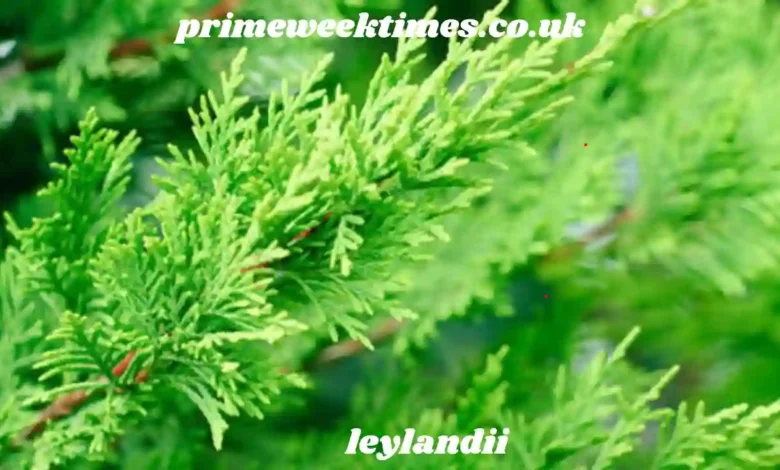
Leylandii is one of the most popular fast-growing evergreen trees used for privacy screens, hedges, boundaries, wind protection, and garden landscaping. Known for its rapid growth, dense foliage, and ability to create an effective green barrier, leylandii has become a familiar choice for homeowners who want privacy from neighboring properties. The tree can grow considerably faster than many traditional hedge plants, making it particularly attractive when a garden needs a tall screen within a relatively short period.
The name leylandii is commonly used for the hybrid conifer Cuprocyparis leylandii, historically known as × Cupressocyparis leylandii. It is an evergreen conifer that maintains its foliage throughout the year. Its dense growth means that a row of carefully maintained leylandii can provide privacy during every season rather than only during spring and summer. The foliage is generally green, although different cultivars can display variations in color, texture, and growth habit.
One of the biggest advantages of leylandii is its adaptability. When planted in a suitable position and given reasonable care, leylandii can establish quickly and develop into a thick hedge. However, its fast-growing nature is also the reason why regular maintenance is extremely important. A hedge that is ignored for several years can become very tall, wide, and difficult to control. Therefore, understanding planting distance, pruning, watering, feeding, spacing, and long-term maintenance is essential before choosing leylandii for a garden.
Why Is Leylandii So Popular?
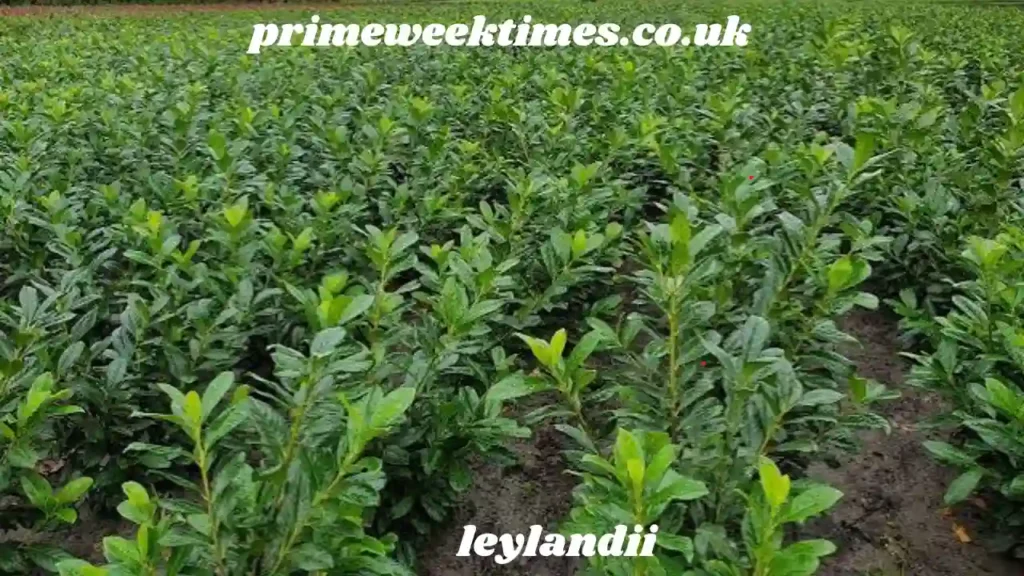
The popularity of leylandii comes largely from its ability to grow quickly and form a dense screen. Many people plant leylandii because they want to reduce visibility between properties, create a secluded garden, or block an unattractive view. Compared with slower-growing evergreen shrubs, leylandii can produce a substantial privacy barrier in a shorter period when growing conditions are favorable.
Another reason for choosing leylandii is its evergreen character. A deciduous tree may lose its leaves during autumn and winter, leaving a garden exposed for several months. Leylandii retains its foliage, so it can continue to provide screening throughout the year. This makes it useful for gardens, larger properties, boundaries, and areas where year-round privacy is important.
Leylandii can also be shaped into a relatively formal hedge. With regular trimming, homeowners can maintain a straight, neat boundary. It can be allowed to grow naturally for a softer appearance or carefully clipped to create a more structured landscape feature. This flexibility makes leylandii suitable for both traditional and modern garden designs.
Despite these advantages, leylandii should not be treated as a plant that can simply be planted and forgotten. Its vigorous growth requires planning. The available space, mature height, mature width, surrounding structures, and intended hedge height should all be considered before planting.
Choosing the Right Leylandii Plants

When buying leylandii for a hedge, plant quality matters. Healthy plants generally establish more effectively and are better prepared to cope with the stresses associated with planting and changing environmental conditions. Look for plants with healthy, evenly distributed foliage and a strong root system.
Avoid plants that appear severely dried out, have extensive brown foliage, or show obvious signs of disease or pest damage. Small plants are usually easier to transport and may establish well when planted correctly, while larger plants can provide an immediate visual effect but may require more careful watering and establishment.
The size of the plants you choose should depend on your budget, available space, and how quickly you need the hedge to provide privacy. Buying very large leylandii can seem attractive because the desired screening effect is achieved sooner, but larger plants can require more attention during establishment.
It is also important to consider the final purpose of the hedge. If the goal is to create a relatively low privacy screen, there is little reason to allow the plants to become extremely tall. If the goal is wind protection or screening from a tall building, a higher hedge may be appropriate, provided that the site and local requirements allow it.
How to Plant Leylandii
Planting leylandii correctly gives the hedge a much better start. Begin by selecting a suitable location with enough room for the plants to develop. The area should be prepared by removing competing weeds, grass, stones, and other unwanted vegetation.
Dig a planting hole that is wide enough to accommodate the root system without forcing or bending the roots. The planting depth should generally allow the plant to sit at approximately the same depth at which it was previously growing. Planting too deeply can create problems with root health and drainage.
After placing the leylandii in the hole, backfill with the excavated soil and gently firm the soil around the roots. Avoid excessively compacting the ground because roots need access to air and moisture. Water the plant thoroughly after planting so that the soil settles around the root system.
A layer of organic mulch around the planting area can help conserve moisture and suppress weeds. However, mulch should not be piled directly against the trunk or main stem. Leaving a small gap around the base helps reduce the risk of excessive moisture around the stem.
Leylandii Spacing for a Healthy Hedge
Spacing is one of the most important decisions when planting leylandii. Planting too close together may create excessive competition for water, nutrients, light, and root space. Planting too far apart can leave large gaps that take longer to close.
The ideal spacing depends on the size of the plants, desired hedge density, available space, and how quickly you want the screening effect to develop. Many gardeners choose a moderate spacing that allows the plants to grow together gradually while still giving each plant enough room for healthy development.
It is tempting to plant leylandii extremely close together because the resulting hedge may look dense initially. However, long-term competition can create unnecessary stress. A carefully planned planting distance can produce a healthier hedge that is easier to maintain.
When planning a boundary hedge, consider not only the distance between individual plants but also the distance between the hedge and nearby fences, walls, buildings, pathways, and other plants. Leaving adequate room makes future pruning and maintenance much easier.
Soil Requirements for Leylandii
Leylandii can grow in a range of soil conditions, but good drainage and reasonable soil fertility are important. Soil that remains permanently waterlogged can create difficult conditions for roots, while very dry soil can cause establishment problems.
Before planting, improve poor soil where necessary by incorporating suitable organic material. Heavy clay soil may need attention to drainage, while very sandy soil may benefit from organic matter that helps retain moisture.
A soil test can provide useful information about soil structure and nutrient availability, especially when establishing a large hedge. However, leylandii generally does not require an unusually complicated soil management program when planted in reasonably fertile, well-drained ground.
The most important consideration during the first growing seasons is maintaining consistent moisture without leaving the roots in saturated soil.
Watering Leylandii
Watering is particularly important after planting. A newly planted leylandii has a limited root system and may struggle to obtain enough moisture from the surrounding soil, especially during dry or hot weather.
Rather than relying only on occasional heavy watering, focus on maintaining adequate moisture around the developing root zone. The exact amount of water required depends on soil type, rainfall, temperature, wind, plant size, and season.
During periods of hot or dry weather, newly planted leylandii may require more frequent attention. Established plants are generally more resilient because their root systems have had time to develop, but prolonged drought can still cause stress.
Watering should be directed toward the soil rather than simply spraying the foliage. A slow, deep watering approach can help moisture penetrate into the root zone. Mulching can also reduce evaporation and help keep the soil more consistently moist.
Feeding Leylandii
Leylandii generally benefits from being planted in reasonably fertile soil. Fertilizer is not always necessary if the soil already provides adequate nutrients, but feeding can be useful when plants show signs of poor growth or when soil fertility is low.
A balanced fertilizer suitable for evergreen plants can be used according to the product’s instructions. Avoid excessive feeding because more fertilizer does not necessarily mean healthier growth. Too much fertilizer can damage roots and may encourage excessively soft or vigorous growth.
Organic matter can also improve soil condition by supporting moisture retention and overall soil structure. A healthy root environment is often more valuable than simply adding large quantities of fertilizer.
If foliage becomes unusually pale, growth is weak, or the hedge appears unhealthy, investigate watering, drainage, root problems, pests, diseases, and soil conditions before assuming fertilizer is the solution.
Pruning Leylandii
Pruning is perhaps the most important aspect of leylandii maintenance. Because leylandii grows quickly, regular trimming is much easier than allowing the hedge to become extremely large and then attempting to reduce it dramatically.
Young plants can be lightly trimmed to encourage branching and help establish the desired hedge shape. Once the hedge reaches the required height and width, regular maintenance pruning can keep growth under control.
The exact pruning schedule depends on climate, growth rate, desired appearance, and hedge size. Some gardens may require trimming more than once during a growing season, while others may need less frequent maintenance.
When pruning, aim to maintain a shape that allows sufficient light to reach the lower parts of the hedge. A slightly wider base with a narrower top is often easier to maintain because the lower foliage receives better light.
Why Regular Pruning Matters
Allowing leylandii to become excessively tall can make future management much harder. The taller the hedge becomes, the more difficult and potentially dangerous it is to trim. Large branches and thick stems may also become difficult to reduce without creating an unattractive appearance.
Regular pruning keeps the hedge within manageable dimensions. It also helps maintain the dense structure that makes leylandii useful as a privacy screen.
A common mistake is to wait until the hedge reaches an unwanted size before cutting it back heavily. Preventative maintenance is usually easier than major corrective pruning.
Gardeners should also consider access. A hedge that requires ladders, specialized equipment, or professional assistance for every trimming session may become expensive and inconvenient over time.
Can Leylandii Be Cut Back Hard?
Leylandii can tolerate pruning, but there are important limits. Like many conifers, it does not always regenerate well from old, leafless wood. If a branch or section is cut far back into completely bare areas without green foliage, new growth may be limited or absent.
This is why regular trimming is preferable to severe reduction. If the hedge has already become extremely large, major reduction should be approached carefully. Cutting small amounts over time may be safer for the appearance and health of the plants than attempting to remove a huge amount of growth at once.
When a very large hedge needs substantial reduction, professional assistance may be appropriate, especially where trees are tall or located close to buildings, roads, electrical infrastructure, or neighboring properties.
Leylandii and Privacy
Privacy is one of the main reasons homeowners choose leylandii. A well-maintained hedge can create a thick green wall that blocks views into a garden and provides a sense of separation between properties.
The density of the foliage makes leylandii particularly effective for screening. However, privacy planning should begin before planting. Consider where the main unwanted views originate and how tall the screen really needs to be.
A hedge does not necessarily need to reach its maximum possible height to provide effective privacy. Maintaining a reasonable height can make pruning easier and reduce competition for resources.
The width of the hedge is also important. A narrow but excessively tall hedge may be unstable or difficult to maintain, while a moderately tall and well-shaped hedge can provide excellent screening with less maintenance.
Leylandii as a Windbreak
Leylandii can also be used as a windbreak because its evergreen foliage remains present throughout the year. A dense hedge can reduce wind exposure around gardens, patios, outdoor seating areas, and other parts of a property.
However, the effectiveness of a windbreak depends on hedge density, height, length, orientation, and surrounding landscape. A completely solid barrier may behave differently from a somewhat porous hedge because wind can be redirected over or around a dense structure.
When planting for wind protection, think beyond the individual plants. The overall layout of the hedge determines how effectively it performs its intended function.
Common Leylandii Problems
Although leylandii can be vigorous and resilient, it can still experience problems. Brown foliage is one of the most common concerns. Browning can occur for several reasons, including drought stress, root problems, physical damage, poor planting conditions, pests, diseases, or environmental stress.
One of the first things to investigate is moisture. Newly planted hedges are especially vulnerable to drying out. Check the soil around the root zone rather than relying only on the appearance of the foliage.
Another concern is poor drainage. If roots remain wet for prolonged periods, they may become stressed and less capable of absorbing water and nutrients. This can result in declining foliage even when the surrounding soil appears moist.
Physical damage from trimming, strong winds, animals, construction work, or accidental impact can also produce brown sections.
Pests and Diseases Affecting Leylandii
Like other plants, leylandii can be affected by pests and diseases. The exact problems vary according to climate, growing conditions, and local environment.
Some pests feed on foliage or plant sap, while certain fungal and root-related diseases can cause discoloration, dieback, or weakened growth. Stress caused by drought, poor drainage, overcrowding, or incorrect pruning can make plants more vulnerable.
Regular inspection is one of the best ways to detect problems early. Look for unusual discoloration, thinning foliage, dead branches, visible insects, abnormal growth, or changes that appear suddenly across multiple plants.
If only one section of a hedge is affected, compare it with nearby plants. Localized symptoms may indicate physical damage or a root-zone problem, whereas widespread symptoms can suggest environmental stress or a broader pest or disease issue.
Leylandii in Small Gardens
Leylandii can be useful in small gardens, but careful management is essential. Its fast growth means that a small garden can quickly become overcrowded if the plants are allowed to grow without regular pruning.
Before planting, visualize the mature hedge rather than focusing only on the size of the young plants. A small container-grown plant may eventually become a large evergreen tree if left unmanaged.
For smaller properties, a lower and narrower hedge may be more practical than allowing leylandii to reach substantial heights. Regular maintenance from an early stage can help prevent the hedge from becoming overwhelming.
Homeowners should also consider how the hedge will affect sunlight. A tall evergreen screen can cast shade over neighboring plants, lawns, patios, and parts of a building.
Leylandii and Garden Design
Leylandii does not have to be used only as a boundary hedge. It can also form part of a broader garden design. Carefully positioned plants can separate different garden areas, frame entrances, create a background for flowering plants, or provide structure during winter.
Because leylandii remains green throughout the year, it can provide a stable background for seasonal flowers and ornamental shrubs. However, its size and growth rate should be considered when combining it with smaller plants.
A well-maintained leylandii hedge can create a strong visual boundary, while irregularly maintained plants may dominate the landscape. Good design therefore depends on selecting an appropriate planting position and committing to ongoing pruning.
Advantages of Leylandii
There are several reasons why leylandii remains a popular choice for gardeners and homeowners.
First, its rapid growth can produce privacy relatively quickly compared with many slower-growing evergreen plants. Second, its evergreen foliage provides year-round screening. Third, it can be trimmed into a formal hedge and maintained at a chosen size.
Leylandii can also provide wind protection, visual separation, and a green backdrop for other garden features. Its adaptability makes it suitable for many different landscapes.
Another advantage is that it can be established as a continuous hedge rather than relying on individual ornamental trees. When planted and maintained correctly, the plants can merge into a dense screen.
Disadvantages of Leylandii
The same fast growth that makes leylandii attractive can also be its biggest disadvantage. If neglected, the hedge can become extremely tall and difficult to manage.
Regular trimming requires time, equipment, and sometimes professional help. Large hedges can also produce significant amounts of green waste after pruning.
Another consideration is space. Leylandii should not be planted without thinking about mature dimensions. In a restricted garden, an unmanaged hedge can quickly become too large.
Its dense growth can also create substantial shade. This may affect grass, flowers, shrubs, and other plants growing near the hedge. Therefore, gardeners should consider the entire planting area before establishing a leylandii screen.
How to Keep Leylandii Healthy
The best way to keep leylandii healthy is to combine good planting practices with consistent maintenance. Start with healthy plants, prepare the soil properly, provide sufficient water during establishment, and monitor growth regularly.
Do not wait for problems to become severe. Check foliage, soil moisture, drainage, and branch structure throughout the year. Early intervention is generally easier than trying to repair a severely damaged hedge.
Regular pruning should be part of the long-term plan. Instead of thinking about trimming as an occasional emergency task, treat it as routine garden maintenance.
Good spacing also contributes to long-term health. Plants that are overcrowded may compete heavily for resources and can become more difficult to manage.
Seasonal Leylandii Care
Leylandii care can change throughout the year. During spring and periods of active growth, gardeners should monitor new shoots and plan maintenance pruning. This is also a useful time to check the general health of the hedge and address weeds or soil problems.
During summer, watering becomes particularly important during dry weather. Newly planted leylandii may require close monitoring because warm temperatures and wind can quickly dry the soil.
Autumn can be a useful period for assessing the hedge’s overall structure and removing damaged or dead material where appropriate. Gardeners should also check whether branches have become too heavy or uneven.
During winter, the evergreen foliage continues to provide screening. Although growth may slow, the plants still require attention after strong winds, heavy weather, or unusual environmental conditions.
Frequently Asked Questions About Leylandii
What is leylandii?
Leylandii is a fast-growing evergreen hybrid conifer commonly used for hedges, privacy screens, windbreaks, and garden boundaries. It is valued for its dense foliage and rapid growth.
How fast does leylandii grow?
Leylandii can grow rapidly when planted in favorable conditions. Growth rates vary depending on climate, soil, water availability, plant age, and maintenance. Regular pruning is therefore important.
Is leylandii evergreen?
Yes. Leylandii is an evergreen conifer, meaning it generally retains its foliage throughout the year and can provide continuous screening.
Is leylandii good for privacy?
Yes. Its dense evergreen foliage makes leylandii a popular choice for privacy hedges and screening. Proper spacing and regular pruning are important for maintaining an effective screen.
Does leylandii need regular pruning?
Yes. Because leylandii grows quickly, regular pruning is strongly recommended. Early and consistent trimming is generally easier than attempting to reduce a very large hedge later.
Can leylandii grow in different soils?
Leylandii can adapt to a variety of soils, but good drainage and reasonable fertility are important. Extremely waterlogged or severely dry conditions can cause stress.
How often should leylandii be watered?
Newly planted leylandii should be monitored regularly and watered when the surrounding soil becomes dry. Water requirements depend on weather, soil type, plant size, and the time since planting.
Can leylandii be planted in a small garden?
Leylandii can be used in smaller gardens, but careful planning and regular pruning are essential. The mature size should always be considered before planting.
Why is my leylandii turning brown?
Brown foliage can have several causes, including drought, root problems, physical damage, pests, disease, poor drainage, or environmental stress. Checking the soil and examining the affected areas can help identify the cause.
Can leylandii be cut back heavily?
Heavy pruning should be approached carefully because leylandii may not regenerate effectively from old, bare wood. Regular trimming is usually preferable to severe corrective pruning.
Final Thoughts on Leylandii
Leylandii remains a popular landscaping choice because it combines fast growth, evergreen foliage, dense screening, and strong potential for use as a privacy hedge. When properly planned and maintained, leylandii can transform an exposed garden boundary into a thick green screen that provides privacy and structure throughout the year.
However, the decision to plant leylandii should not be based solely on its rapid growth. The same characteristic that makes it useful can make it demanding when maintenance is neglected. Gardeners should consider mature size, planting distance, soil conditions, watering requirements, sunlight, surrounding plants, and long-term pruning before establishing a hedge.
The key to successful leylandii care is consistency. Healthy plants, suitable spacing, adequate moisture, good soil conditions, and regular pruning can help produce a dense and attractive hedge. Instead of allowing the plants to become excessively large and attempting to correct them later, it is much easier to maintain the desired height and width from the beginning.
ALSO READ : alexandra reeve givens – Life, Career, and Impact in Digital Policy