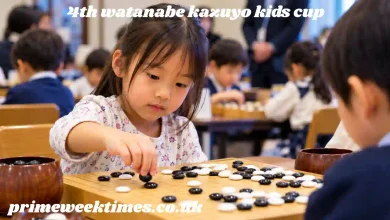
4th Watanabe Kazuyo Kids Cup: History, Format, Winner, Significance, and Legacy of the Children’s Go Tournament
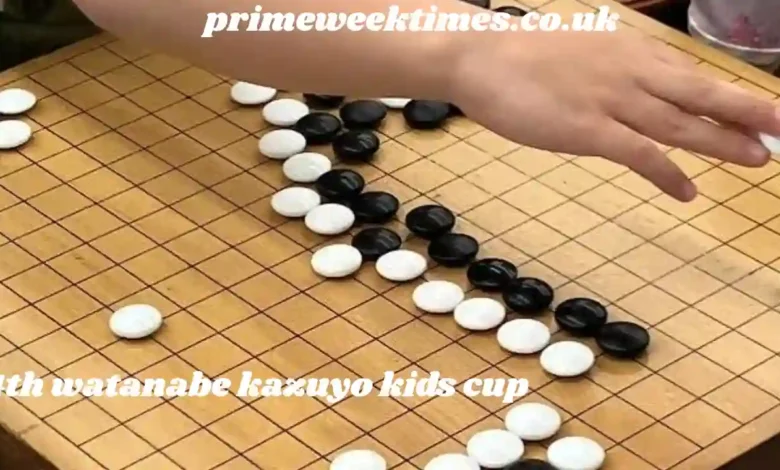
4th Watanabe Kazuyo Kids Cup: An Introduction
The 4th Watanabe Kazuyo Kids Cup was an important children’s Go tournament in Japan, particularly because it provided a dedicated competitive environment for preschool children who were learning and developing their skills in the ancient board game of Go. Officially known as the 4th Watanabe Kazuyo Kids Cup Go Tournament, the event was held on March 28, 2015, at the Nihon Ki-in building in Tokyo. The tournament was designed specifically for children who had not yet entered elementary school and who understood the basic rules and manners of Go. The event was part of a broader effort to introduce young children to Go and encourage the development of the next generation of players.
The 4th Watanabe Kazuyo Kids Cup has become particularly memorable because its winner was Sumire Nakamura, who later became widely known for entering professional Go at an exceptionally young age. The historical winners list identifies Nakamura as the champion of the fourth edition, representing Osaka. Her victory helped give the tournament additional recognition in later years, as people began looking back at the early competitive achievements of a player who would go on to make history in professional Go.
The tournament itself was much more than a simple children’s competition. It represented an educational philosophy in which Go could be used to develop concentration, patience, decision-making, discipline, and respect for an opponent. The official announcement explained that the event was established with the intention of helping expand the base of Go players while also supporting children’s intellectual and character development.
What Was the 4th Watanabe Kazuyo Kids Cup?
The 4th Watanabe Kazuyo Kids Cup was the fourth edition of a specialized Go competition for preschool-aged children. Unlike many major Go competitions that bring together players across a broad range of ages and abilities, this event focused on a very specific stage of childhood development.
According to the official tournament announcement, participants had to be children aged three or older who had not yet entered elementary school and who understood the rules and manners of Go. The event was scheduled for March 28, 2015, from 12:30 p.m. to 4:15 p.m., with registration beginning at noon. It was held at the second floor of the Nihon Ki-in building in Tokyo. Participation was free, and every child received a participation prize. The announced capacity was 100 participants, with applications accepted on a first-come, first-served basis.
These details demonstrate how unusual and specialized the 4th Watanabe Kazuyo Kids Cup was. It was not simply a junior tournament with a broad age range. Instead, it created a competitive space where very young children could play against others at approximately the same stage of life.
For preschool children, participating in a formal tournament can itself be a significant achievement. They have to sit at a Go board, understand the rules, make decisions independently, manage the pressure of competition, and respect the person sitting across from them. A tournament such as this therefore combines education, competition, social interaction, and personal development.
Why Was the Watanabe Kazuyo Kids Cup Created?
The origins of the tournament are closely connected with the idea of promoting Go among young children. The official Nihon Ki-in announcement explains that the sponsor, Kazuyo Watanabe, was a longtime Go fan who wanted to support the development of the Go community. She personally became a sponsor because she believed that holding a children’s Go tournament over an extended period could help broaden the foundation of the Go population while contributing to children’s intellectual and moral education.
This purpose is important when understanding the 4th Watanabe Kazuyo Kids Cup. The tournament was not established solely to identify the strongest preschool player. It was also intended to encourage children to become familiar with Go from an early age.
The tournament’s philosophy placed emphasis on families as well. The original announcement expressed the hope that children would learn Go with guidance from grandparents, fathers, and mothers and that more children would become interested in Go while they were still very young.
That family-oriented approach is particularly relevant to Go because young players often learn their earliest concepts through parents, grandparents, teachers, clubs, and local Go communities. A competition can then become an important milestone where a child applies what they have learned in a more formal setting.
Date and Venue of the 4th Watanabe Kazuyo Kids Cup
The 4th Watanabe Kazuyo Kids Cup took place on Saturday, March 28, 2015. The official schedule listed the competition period as 12:30 p.m. to 4:15 p.m., with participants expected to register from 12:00 p.m.
The venue was the second floor of the Nihon Ki-in building in Tokyo. The location was significant because Nihon Ki-in is one of the central institutions of Japanese Go. Holding a preschool tournament in such an environment allowed young participants to experience the atmosphere of an established Go institution.
For a young child, simply entering a major Go venue can be memorable. The setting communicates that the game they are learning is not merely a pastime at home but a serious cultural and competitive activity with its own traditions, organizations, players, and tournaments.
The event also benefited from the organizational infrastructure of Nihon Ki-in, which helped provide a structured environment for a large number of young participants.
Who Could Participate?
One of the defining features of the 4th Watanabe Kazuyo Kids Cup was its age requirement. The competition was intended for children who had not yet entered elementary school. Participants had to be at least three years old and understand the rules and manners of Go.
This created a distinctive competitive environment.
At preschool age, even a difference of several months can represent a meaningful difference in development. Children are still developing attention spans, memory, emotional control, motor skills, and the ability to think through complicated situations. Go adds another layer because it requires abstract thinking and strategic planning.
The tournament therefore brought together children who were unusually interested in Go for their age. Some may have been beginners, while others had already developed considerable strength through frequent practice.
The later reports about the fourth tournament suggest that the competitive level was remarkably high. One account describing the event noted that many of the strongest participants were older preschoolers and that several had advanced playing strength.
How the Competition Was Organized
The official announcement stated that all games were played on the standard 19-by-19 Go board, using even games and a komi of 6.5 points.
The tournament structure gave children an opportunity to experience multiple games rather than being eliminated after one loss. A contemporary report about the fourth edition described preliminary groups consisting of 16 players, with three preliminary rounds. The preliminary games used a 20-minute judgment-based time format. Players who won all three preliminary games advanced from their groups.
The same report described a main tournament consisting of four rounds, with a 15-minute sudden-death time control.
For preschool competitors, this is a demanding format. Young children have to adapt quickly from one game to another. They must recover emotionally after a loss, maintain concentration after a win, and make decisions within a limited amount of time.
The competition therefore tested more than raw Go knowledge. It also tested a child’s ability to remain calm, focused, and engaged throughout a tournament day.
The Winner of the 4th Watanabe Kazuyo Kids Cup
The champion of the 4th Watanabe Kazuyo Kids Cup was Sumire Nakamura, from Osaka. The historical winners record lists Nakamura as the winner of the fourth tournament.
Her victory has become one of the most recognizable parts of the tournament’s history.
At the time, she was a young child competing in a field of preschool Go players. In later years, Nakamura’s career developed rapidly, and her early success in children’s competitions became part of the story of her development as a professional player.
Multiple accounts of her career identify her victory at the fourth Watanabe Kazuyo Kids Cup as an important early achievement. She began learning Go at around three years old and competed at a very young age. Later, she became the first player admitted under Japan’s special recommendation system for exceptionally talented young players and entered professional Go at age ten.
Looking back, therefore, the 4th Watanabe Kazuyo Kids Cup can be viewed as one of the early competitive milestones in the career of a player who eventually became famous for her historic professional debut.
Sumire Nakamura and the Significance of Her Victory
Sumire Nakamura’s victory gives the 4th Watanabe Kazuyo Kids Cup an especially interesting place in children’s Go history.
According to accounts of her early development, Nakamura learned Go at a very young age and began participating in competitions before reaching elementary school. Her victory in the fourth Watanabe Kazuyo Kids Cup came when she was six years old.
Her subsequent development demonstrated how early talent, structured training, and competitive experience can combine to produce an exceptional player.
Nakamura later entered the Kansai Ki-in as a student and also spent time studying Go in South Korea. In 2019, she became a professional player at age ten, attracting widespread attention as the youngest professional Go player in Japan at that time.
The connection between her early children’s tournament success and later professional career does not mean that winning a preschool competition automatically predicts professional success. Many children participate in junior competitions and later choose different paths. Nevertheless, Nakamura’s case illustrates why competitions like the 4th Watanabe Kazuyo Kids Cup can be valuable: they provide talented children with an opportunity to test themselves early.
The Competitive Level of the 4th Watanabe Kazuyo Kids Cup
One of the most interesting aspects of the 4th Watanabe Kazuyo Kids Cup was the level of competition.
A report written after the event described the field as containing many older preschoolers and players with substantial Go ability. The report suggested that the winning level was around four to five dan strength and that approximately half of the field had reached at least amateur first-dan level.
For a tournament restricted to preschool children, that is an extraordinary level of competitive strength.
It also highlights how early some Japanese children begin serious Go training. By preschool age, certain players may already have accumulated years of experience, developed tactical reading skills, learned common patterns, and played against strong adult teachers or family members.
The 4th Watanabe Kazuyo Kids Cup therefore offered a rare opportunity to observe how advanced young Go players could become before entering elementary school.
The Role of Go in Children’s Development
Go is often associated with strategy and competition, but children’s tournaments also demonstrate its educational value.
A young player must learn to examine a position before acting. They have to consider possible consequences, recognize patterns, decide when to attack, and understand when patience is more valuable than immediate action.
These habits can encourage concentration and careful decision-making.
The philosophy behind the Watanabe Kazuyo Kids Cup specifically recognized the potential of Go for children’s intellectual and character development.
Another important aspect is sportsmanship. Players must follow rules, respect their opponents, accept the outcome of games, and continue learning after mistakes.
For very young children, these lessons can be just as important as winning.
Family Support and Early Go Education
The 4th Watanabe Kazuyo Kids Cup also reflects the important role families can play in developing children’s interests.
The tournament’s original purpose included encouraging children to learn Go with support from parents and grandparents.
For a preschool player, family involvement can take many forms. Parents may introduce the game, help the child attend lessons, practice at home, travel to tournaments, or simply encourage the child after difficult games.
The emotional support is particularly important because competitive Go can be challenging. A child can lose a game despite playing well, become nervous before an important match, or struggle against a stronger opponent.
A supportive environment helps transform those experiences into learning opportunities.
Why the Tournament Became Memorable
The 4th Watanabe Kazuyo Kids Cup is memorable for several reasons.
First, it was a specialized event for preschool children, making it different from ordinary Go competitions.
Second, it brought together children who were already developing significant Go skills at a remarkably young age.
Third, its organization at the Nihon Ki-in building gave the tournament an important institutional setting.
Fourth, the event became strongly associated with Sumire Nakamura after her victory. Her later rise to professional Go gave her childhood achievements additional historical significance.
The tournament is therefore remembered not simply as another children’s competition but as an event connected with the early development of an exceptional player.
A Tournament That Helped Build the Next Generation
The long-term story of the Watanabe Kazuyo Kids Cup demonstrates the potential value of competitions designed specifically for young players.
The tournament continued beyond its fourth edition. The historical winners record shows champions from subsequent editions, including Suzuki Yuito at the fifth tournament, Yanagihara Saki at the sixth, and later champions from different regions of Japan.
Later reports also described participants traveling from places such as Sendai, Osaka, and Okinawa, demonstrating that the event attracted interest beyond Tokyo.
The tournament’s continued existence suggests that the original concept had lasting appeal: create a special stage where preschool children can compete, learn, meet other young players, and develop a deeper relationship with Go.
The Broader Legacy of the 4th Watanabe Kazuyo Kids Cup
The legacy of the 4th Watanabe Kazuyo Kids Cup can be understood at several levels.
At the most immediate level, it gave dozens of young children a memorable competitive experience.
At the educational level, it supported the idea that Go can contribute to concentration, discipline, strategic thinking, and respectful competition.
At the community level, it brought families, teachers, organizers, and young players together around a shared interest.
At the historical level, its association with Sumire Nakamura has made the fourth edition particularly noteworthy.
The tournament also demonstrates the importance of creating age-appropriate opportunities. A preschool child can feel overwhelmed when competing against older elementary school players. By creating an event specifically for preschoolers, organizers gave young children a chance to compete within a more appropriate peer group.
What Makes the 4th Watanabe Kazuyo Kids Cup Different?
The uniqueness of the 4th Watanabe Kazuyo Kids Cup lies in the combination of age, competition, and educational purpose.
Many children’s competitions are divided into broad age categories, but this tournament focused specifically on children who had not yet entered elementary school. That made it possible to highlight an unusual stage of development in which children were already capable of playing sophisticated strategic games.
The tournament also demonstrated that young children can participate in formal competitive environments when the event is structured appropriately.
The rules, time controls, group system, and prizes all created an experience that balanced seriousness with the excitement of being a child.
The atmosphere was competitive, but the event was fundamentally designed to encourage young players rather than simply identify winners.
Lessons From the 4th Watanabe Kazuyo Kids Cup
There are several lessons that can be drawn from the history of the 4th Watanabe Kazuyo Kids Cup.
The first is that talent can emerge very early. Sumire Nakamura’s victory is an excellent example of how exceptional ability can become visible during preschool years.
The second is that talent needs an environment. A gifted child needs teachers, family support, practice opportunities, competition, and encouragement.
The third is that losing can be valuable. Children’s tournaments give players opportunities to experience mistakes and setbacks in a controlled environment.
The fourth is that competitions can build communities. Parents meet other families, children make friends, and teachers exchange experiences.
Finally, the tournament shows the importance of investing in young players even when their future is uncertain. Not every preschool participant will become a professional player, but every participant can gain experience, confidence, and a deeper appreciation of the game.
The Continuing Importance of Children’s Go Tournaments
The modern history of the Watanabe Kazuyo Kids Cup shows that the concept continued to have a place within Japanese Go culture. The event reached its 15th edition in 2026, with the tournament scheduled at the Tokyo headquarters of Nihon Ki-in.
That continuation gives additional context to the 4th Watanabe Kazuyo Kids Cup. It was not an isolated event. Instead, it formed part of a continuing tournament tradition aimed at young Go players.
The historical winners list records champions across many editions, illustrating how different generations of children have passed through the tournament.
This continuity is important because youth competitions can influence the development of a sport or cultural activity over decades. A child who participates may later become a stronger player, teacher, coach, organizer, or simply an enthusiastic supporter of the game.
Conclusion: The Lasting Story of the 4th Watanabe Kazuyo Kids Cup
The 4th Watanabe Kazuyo Kids Cup holds a distinctive place in the history of children’s Go competitions in Japan. Held on March 28, 2015, at the Nihon Ki-in building in Tokyo, the event brought together preschool children who already understood the rules and manners of Go. It was designed not merely as a contest but as part of a broader effort to encourage young children to experience Go and develop through the game.
The tournament became especially memorable because Sumire Nakamura won the fourth edition. Her later career as a professional Go player gave her childhood achievement an additional layer of historical importance. Her development from a very young Go player to a record-setting professional demonstrates how early competitive experiences can become part of a much larger journey.
Yet the significance of the 4th Watanabe Kazuyo Kids Cup extends beyond one champion. The tournament created an environment where very young players could compete with peers, learn sportsmanship, test their skills, and experience the excitement of a formal Go event.
Its story is ultimately about opportunity. A child sitting at a Go board may not know where the game will take them. They may become a professional player, continue playing recreationally, teach others, or eventually move on to a completely different interest. What matters is that competitions such as the 4th Watanabe Kazuyo Kids Cup give children the chance to discover what they can do.
ALSO READ : 4th watanabe kazuyo kids cup and the Rise of Young Go Players