Matthew Wright – Biography, Career, The Wright Stuff and Life
Matthew Wright: An Introduction
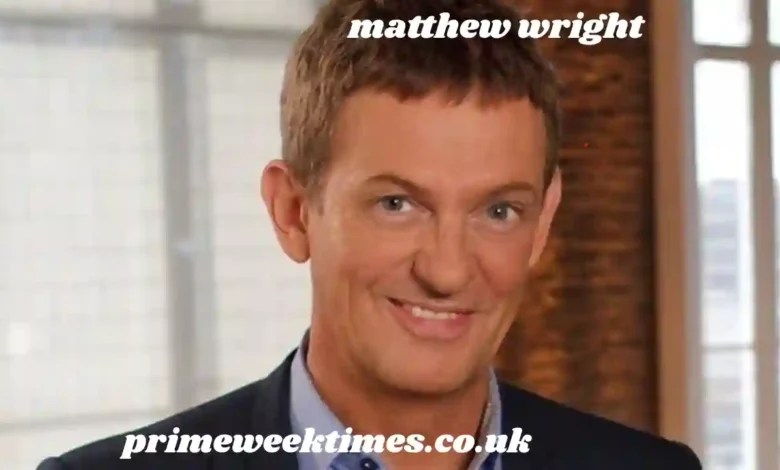
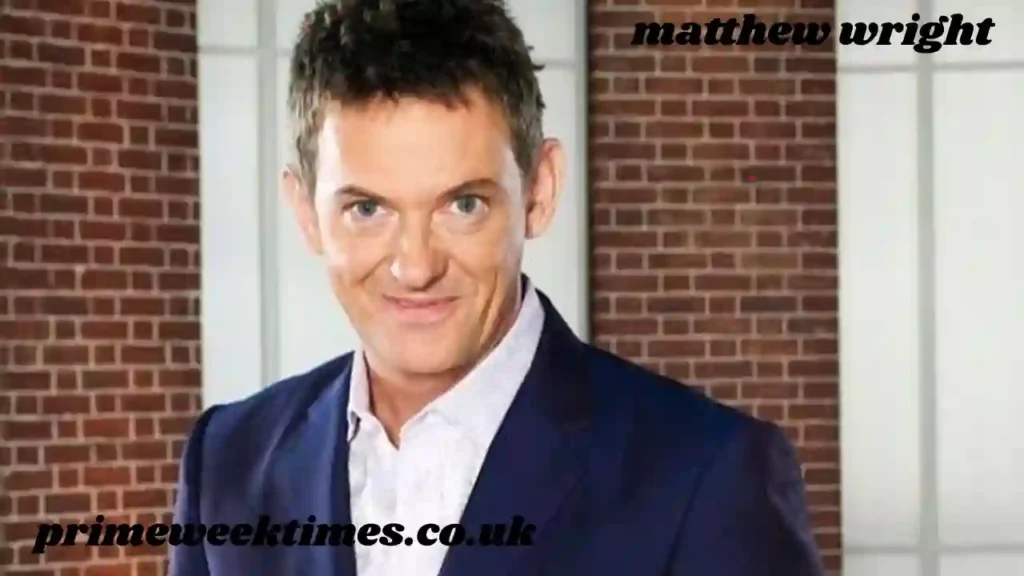
Matthew Wright is a British journalist, television presenter, radio broadcaster and former tabloid journalist who has built a long career across newspapers, television and radio. Best known for presenting the Channel 5 current-affairs and debate programme The Wright Stuff, Matthew Wright became a familiar face to British television audiences during an 18-year run on the programme. His career has also included newspaper journalism, entertainment reporting, radio presenting, television appearances and participation in several popular celebrity programmes.
Born Alexander Matthew Wright on 8 July 1965 in Richmond upon Thames, Surrey, England, Matthew Wright developed an interest in performance and communication at an early age. He studied English and Drama at the University of Exeter before moving into journalism. His professional journey eventually took him from local newspapers to major national publications and then into television broadcasting.
For many viewers, the name Matthew Wright is closely associated with lively discussion, current affairs and the ability to bring different opinions together in a television studio. His presenting style often combined serious debate with humour, personal observation and interaction with viewers. Over the years, he became particularly recognizable for his role as the central presenter of The Wright Stuff, a programme that covered everything from politics and social issues to entertainment, relationships and controversial topics.
Although The Wright Stuff eventually ended with Matthew Wright’s departure, his broadcasting career did not stop there. He continued to work in radio and television, appearing on programmes such as This Morning and taking part in a variety of entertainment and quiz programmes. His career therefore represents a broad transition from traditional Fleet Street journalism to modern television and radio broadcasting.
Matthew Wright Early Life and Education
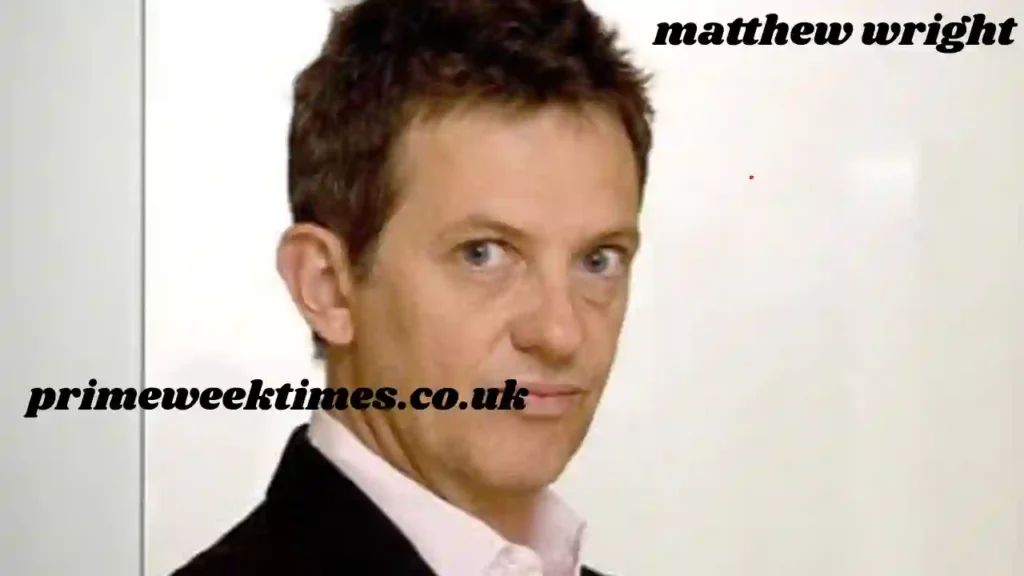
Matthew Wright was born in Richmond upon Thames, Surrey, in 1965. His early career interests were not limited to journalism. According to his professional biography, he had an early experience in entertainment when he appeared in the Children’s Film Foundation production Big Wheels and Sailors at the age of 14. Rather than immediately pursuing acting, however, he chose to concentrate on education.
Matthew Wright later attended the University of Exeter, where he studied English and Drama. This combination of subjects would prove useful in his later career. English provided a foundation in writing, communication and storytelling, while drama helped develop skills in performance and presentation. These abilities became particularly valuable once he moved into television and radio.
His early professional direction ultimately shifted toward journalism. Instead of remaining in acting or entertainment, Matthew Wright entered the newspaper industry and began working for local newspapers. This stage of his career gave him experience in reporting, interviewing and working under the pressures of a newsroom.
Starting in local journalism is significant because it provided Matthew Wright with an understanding of how stories are developed before they reach a national audience. His later television work would require many of the same skills: researching stories, identifying interesting angles, questioning guests and communicating complicated issues in a way that ordinary viewers could understand.
Matthew Wright and His Journalism Career
Before becoming widely recognized as a television presenter, Matthew Wright established himself in the British newspaper industry. His career began with the Surrey Mail group of newspapers in Godalming, where he worked as a junior journalist under editor Peter Tribe. He subsequently moved into national journalism and became a showbusiness correspondent at The Sun.
His work at The Sun helped Matthew Wright develop expertise in entertainment and celebrity reporting. He later worked with the Daily Mirror, where he became associated with showbusiness gossip and celebrity interviews. During this period, he interviewed and wrote about numerous well-known figures from the entertainment industry.
The move from local reporting to celebrity journalism helped broaden Matthew Wright’s professional profile. He was no longer simply reporting conventional news stories; he was operating in an environment where personality, timing, public interest and entertainment value were extremely important.
His journalism career also introduced him to the fast-moving nature of tabloid media. Stories could develop rapidly, and journalists were often expected to find exclusive material and distinctive angles. These experiences later influenced his television style, particularly his ability to ask direct questions and keep a discussion moving.
Matthew Wright’s newspaper career was not without controversy. In 1998, he and the Daily Mirror were successfully sued for libel by actor David Soul over a review of the West End play The Dead Monkey. The case became one of the notable incidents from Wright’s earlier journalism career.
This period demonstrates that Matthew Wright’s professional journey was not simply a straightforward rise to television fame. Like many journalists who move between newspapers and broadcasting, he experienced both opportunities and controversies along the way.
Matthew Wright Moves Into Television
Matthew Wright began expanding his television career during the 1990s. His professional biography states that he worked on The Richard Littlejohn Show for Sky, supplying news packages and features. He later returned to newspaper journalism before increasing his television presence.
By the late 1990s, Matthew Wright had developed a reputation as a television commentator and critic. He joined GMTV as a television critic, working alongside Lorraine Kelly, and also contributed to other television productions.
This transition was important because television required a different type of communication from newspaper writing. A newspaper journalist can carefully construct an article before publication, whereas a live television presenter has to react immediately. Guests can change the direction of a conversation, viewers can call in with unexpected opinions and breaking news can alter an entire programme.
Matthew Wright’s journalism background gave him an advantage in this environment. He already understood how to identify newsworthy subjects and ask questions. Television allowed him to add personality, humour and direct interaction to those skills.
The Wright Stuff and Matthew Wright’s Biggest Career Achievement
The programme most closely associated with Matthew Wright is The Wright Stuff. The Channel 5 show began broadcasting on 11 September 2000 and was presented by Matthew Wright for most of its run. The programme continued until 2018 and became a major part of Channel 5’s daytime schedule.
The Wright Stuff was designed around topical discussion. Instead of simply presenting news, the programme invited guests, commentators and members of the public to debate the issues of the day. Viewers could participate through phone calls, messages and other forms of audience interaction.
The format suited Matthew Wright particularly well because it combined several of his professional strengths. His background in journalism helped him understand the news stories being discussed, while his television experience allowed him to manage conversations between guests with different viewpoints.
Over its long run, The Wright Stuff discussed a wide range of subjects. Politics, social questions, relationships, consumer issues, entertainment and controversial public debates could all become topics for discussion. The show’s format encouraged people with opposing opinions to make their arguments directly.
The programme eventually expanded into a longer daytime format, and by its later years it ran for approximately two hours. Its mixture of current affairs and audience participation became a recognizable feature of Channel 5’s daytime programming.
Matthew Wright announced his departure from The Wright Stuff in 2018 after approximately 18 years as its principal presenter. His departure marked the end of one of the longest-running chapters of his broadcasting career. The programme later concluded and was replaced by Jeremy Vine, with Jeremy Vine taking over the channel’s daily current-affairs format.
Matthew Wright’s Presenting Style
One reason Matthew Wright became recognizable to television audiences was his distinctive presenting style. He generally approached current affairs as a conversation rather than simply delivering information.
His style could be energetic, direct and occasionally humorous. Because The Wright Stuff relied heavily on debate, Wright often had to manage competing personalities and strong opinions. A presenter in that environment must know when to challenge a guest, when to allow a discussion to develop and when to move the programme forward.
Audience interaction was another major element. Viewers were encouraged to participate, meaning that Matthew Wright sometimes had to respond to unpredictable comments or questions. This gave the programme a spontaneous quality.
The format also allowed Wright to discuss subjects that were sometimes emotionally difficult or socially controversial. His experience as a journalist meant that he was accustomed to dealing with stories that generated strong reactions.
This combination of current affairs, debate, entertainment and audience participation helped make Matthew Wright one of the recognizable figures associated with British daytime television during the 2000s and 2010s.
Matthew Wright and Television Controversies
Live current-affairs television inevitably carries risks, particularly when programmes discuss sensitive subjects. Matthew Wright experienced this firsthand during his career.
One of the most widely reported incidents occurred in 2002 when Wright named television presenter John Leslie on The Wright Stuff in connection with allegations discussed in the media. Wright later apologized and said that the identification had been made in error. Leslie was not charged in relation to the particular allegation involving Ulrika Jonsson.
The incident became an important part of the public history surrounding The Wright Stuff. It demonstrated the dangers of live television, especially when discussing allegations involving individuals who have not been formally identified or charged.
The programme also faced scrutiny over other controversial discussions and viewer polls. Such incidents were part of the broader challenge of producing a live debate programme dealing with subjects involving politics, crime, disability, relationships, celebrities and social issues.
For Matthew Wright, these experiences also reinforced the responsibility that comes with broadcasting to a national audience. Live television can create memorable moments, but it can also create significant consequences when information is presented incorrectly or without sufficient context.
Matthew Wright on Radio
Television has been an important part of Matthew Wright’s career, but radio has also played a major role. His professional biography lists broadcasting work with BBC Radio 2, BBC 6 Music, LBC and TalkRadio.
Radio is particularly suited to presenters who enjoy conversation and debate because it depends heavily on voice, personality and the ability to create a connection without relying on visual presentation.
Matthew Wright hosted The Weekender on BBC Radio 2, a programme covering arts and entertainment. He also worked with BBC 6 Music on The Freak Zone, reflecting his interest in music and culture.
His later radio work continued his interest in current affairs and discussion. His broadcasting career therefore demonstrates that his skills were not limited to television. He has been able to move between different formats while maintaining a recognizable identity as a broadcaster.
Radio also gives presenters an opportunity to explore subjects in a different way. Television is visually driven and often tightly structured, whereas radio can allow more conversational development. For someone with Matthew Wright’s background in discussion-based broadcasting, this has provided another important platform.
Matthew Wright on This Morning and Other Programmes
After leaving The Wright Stuff, Matthew Wright remained active in television. His professional representation lists appearances on ITV’s This Morning, where he has participated in discussions and current-affairs debates.
He has also appeared on a range of television programmes, including Question Time, Celebrity MasterChef, Mastermind, The Chase, Have I Got News for You, I’m a Celebrity…Get Me Out of Here! and other entertainment and quiz programmes.
These appearances demonstrate the versatility of Matthew Wright as a television personality. While current affairs remains central to his public identity, he has also participated in reality television, quizzes, entertainment shows and celebrity competitions.
His appearance on I’m a Celebrity…Get Me Out of Here! in 2013 introduced him to an audience outside his usual daytime television environment. Taking part in a reality programme allowed viewers to see a different side of a broadcaster who was normally seen behind a studio desk.
Matthew Wright and I’m a Celebrity
Matthew Wright participated in I’m a Celebrity…Get Me Out of Here! in 2013. The programme placed him in a very different environment from the television studio in which viewers were accustomed to seeing him.
Rather than moderating discussions, Wright had to participate in challenges and live alongside other celebrities. Reality television can change how the public views established broadcasters because it removes some of the professional distance associated with their normal roles.
For Matthew Wright, the experience added another chapter to his television career. It also showed that his popularity was not restricted to viewers who followed The Wright Stuff.
Celebrity reality programmes can be particularly demanding for established presenters because audiences get to see them outside their professional environment. The experience can create both humorous and challenging moments, making it a useful contrast to Wright’s more formal current-affairs work.
Matthew Wright Personal Life
Matthew Wright has generally kept many aspects of his personal life away from the intense attention that can accompany celebrity journalism. His professional biography mentions his wife Amelia and his family life in connection with charitable and television appearances.
Because Matthew Wright spent much of his career reporting on celebrities, it is interesting that he has also experienced the other side of public attention. His career demonstrates the difference between being a journalist who asks questions about public figures and becoming a public figure whose own career is discussed by the media.
His family has occasionally appeared alongside him in television-related activities. In 2021, Matthew Wright, his wife Amelia and his godson Elliot Mackenzie participated in Britain’s Brightest Celebrity Family, according to his professional biography, and the team won the competition.
Matthew Wright and Charity Work
Matthew Wright has also participated in charitable activities. His professional biography notes that in 2021 he took part in a two-day paddleboard charity event connected with the Big Stand Up and Movember.
Celebrity charity challenges often provide public figures with an opportunity to use their visibility for causes beyond entertainment. For broadcasters, these events can also demonstrate a side of their personality that audiences may not see during a traditional current-affairs programme.
Matthew Wright’s involvement in such activities fits into the wider pattern of a broadcaster who has moved between journalism, television, radio, entertainment and public events throughout his career.
Matthew Wright’s Career Achievements
One of Matthew Wright’s biggest achievements is undoubtedly the longevity of his broadcasting career. Presenting the same major daytime current-affairs programme for around 18 years is unusual in an industry where programmes and presenters can change frequently.
His work on The Wright Stuff established him as a recognizable name in British television. The programme itself received recognition, including nominations for daytime television awards.
Another achievement is his ability to move successfully between different media. Matthew Wright has worked in newspapers, television and radio, demonstrating adaptability throughout his professional life.
His journalism career also gave him access to many major entertainment personalities. During his newspaper years, he interviewed figures including Cher, Madonna, Elizabeth Taylor, Elton John and Gwyneth Paltrow, according to his professional biography.
This breadth of experience makes Matthew Wright an interesting example of a modern British broadcaster whose career developed from traditional print journalism into multimedia broadcasting.
Why Matthew Wright Remains Recognizable
The continued recognition of Matthew Wright can largely be explained by the length and visibility of his television career. For nearly two decades, viewers could watch him regularly on The Wright Stuff, making his face and presenting style familiar to a large daytime audience.
The programme’s interactive format also helped create a strong connection between the presenter and viewers. Instead of simply delivering scripted news, Wright regularly responded to members of the public and debated issues with guests.
His later television and radio work has allowed him to maintain that public profile. Even after The Wright Stuff, he continued appearing in current-affairs discussions and entertainment programmes.
Another reason for his lasting recognition is the range of subjects associated with his career. Matthew Wright has worked across entertainment journalism, politics, social issues, celebrity interviews, radio, reality television and general current affairs.
Matthew Wright’s Influence on Daytime Debate Television
The success and longevity of The Wright Stuff helped establish the appeal of daytime television built around public discussion. Instead of treating viewers simply as an audience, the programme gave them a more active role.
Matthew Wright was central to that format. He was required to balance the needs of television production with the unpredictability of live discussion. The result was a programme where debates could develop quickly and where audience opinions were an important part of the content.
The format also demonstrated that current affairs could be presented in an accessible way during daytime television. Political and social subjects could be discussed alongside consumer stories, entertainment and everyday issues.
Although broadcasting has changed significantly since the programme began in 2000, the basic concept of audience participation remains influential. Social media, online comments and live digital discussions have made it even easier for audiences to contribute to conversations about current affairs.
Matthew Wright Career Timeline
Matthew Wright’s career can be understood through several important stages:
1965: Matthew Wright was born in Richmond upon Thames, Surrey.
Age 14: He appeared in the Children’s Film Foundation production Big Wheels and Sailors.
University years: He studied English and Drama at the University of Exeter.
Early journalism: He began working in local newspapers before moving into national journalism.
The Sun: He worked as a showbusiness correspondent.
Daily Mirror: He developed a showbusiness gossip column and interviewed major entertainment figures.
1990s: His television career expanded through Sky and GMTV-related work.
2000: The Wright Stuff began on Channel 5.
2000–2018: Matthew Wright served as the programme’s principal presenter for approximately 18 years.
2013: He participated in I’m a Celebrity…Get Me Out of Here!
2018: He left The Wright Stuff as its long-serving presenter.
Later career: He continued appearing on television and working in radio, including current-affairs and entertainment-related programmes.
Matthew Wright’s Legacy
The legacy of Matthew Wright is strongly connected to his contribution to British daytime television. His name became almost synonymous with The Wright Stuff, a programme that placed debate and public participation at the centre of its format.
His career also illustrates how journalism can provide a foundation for television and radio broadcasting. The ability to research stories, understand public interest and ask effective questions helped Matthew Wright make the transition from newspaper journalism to television.
At the same time, his career shows the challenges of live broadcasting. Controversial discussions, mistakes and public criticism are all possible when a programme deals with sensitive subjects in real time.
Despite those challenges, Matthew Wright remained a prominent broadcaster for decades. His career has included journalism, television presenting, radio, celebrity programmes and charity events, giving him a diverse professional profile.
Frequently Asked Questions About Matthew Wright
Who is Matthew Wright?
Matthew Wright is a British journalist, television presenter and radio broadcaster. He is best known for presenting Channel 5’s The Wright Stuff for approximately 18 years.
When was Matthew Wright born?
Matthew Wright was born on 8 July 1965 in Richmond upon Thames, Surrey, England.
What is Matthew Wright famous for?
Matthew Wright is best known for presenting The Wright Stuff, a Channel 5 daytime current-affairs and debate programme that ran from 2000 to 2018.
How long did Matthew Wright present The Wright Stuff?
Matthew Wright presented The Wright Stuff for around 18 years, from its launch in 2000 until his departure in 2018.
What did Matthew Wright do before television?
Before becoming a major television presenter, Matthew Wright worked as a journalist. His career included local newspapers, The Sun and the Daily Mirror, where he became known for showbusiness journalism and celebrity coverage.
Did Matthew Wright appear on I’m a Celebrity?
Yes. Matthew Wright participated in I’m a Celebrity…Get Me Out of Here! in 2013.
Has Matthew Wright worked in radio?
Yes. His radio career has included work with BBC Radio 2, BBC 6 Music, LBC and TalkRadio.
What happened to The Wright Stuff?
Matthew Wright left the programme in 2018. The show subsequently ended, and Channel 5 launched Jeremy Vine as its replacement daily current-affairs programme.
Does Matthew Wright still appear on television?
Matthew Wright has continued to make television appearances after The Wright Stuff, including appearances connected with current affairs and programmes such as This Morning.
What did Matthew Wright study?
Matthew Wright studied English and Drama at the University of Exeter.
Conclusion: Matthew Wright’s Lasting Broadcasting Career
Matthew Wright has had a remarkably varied career spanning journalism, television, radio and entertainment. From his early days in local newspapers and national showbusiness journalism to his long-running role on The Wright Stuff, he developed into one of Britain’s recognizable current-affairs broadcasters.
His greatest professional association remains The Wright Stuff, where he spent around 18 years discussing news, politics, social issues, entertainment and everyday subjects with guests and members of the public. The programme’s interactive format made Matthew Wright an important part of British daytime television and gave audiences a platform to express their opinions.
However, reducing Matthew Wright’s career to one programme would overlook his broader achievements. His newspaper work, celebrity interviews, television appearances, radio career, reality-show participation and charity activities all contributed to a professional life that has crossed multiple areas of British media.
From journalism to live broadcasting, Matthew Wright’s career demonstrates how communication skills can develop across different platforms. His ability to discuss current affairs, interview guests and engage audiences has remained central to his work.
For viewers who remember The Wright Stuff, Matthew Wright remains strongly associated with the era of interactive daytime debate. For newer audiences discovering his work through radio and television appearances, his career offers an example of a broadcaster who successfully moved from newspapers into a long and varied life in broadcasting.
ALSO READ : Mikki Moore: Biography, NBA Career, Basketball Journey, Stats, Teams, and Legacy