
Karl Blossfeldt: The Photographer Who Revealed the Hidden Architecture of Nature
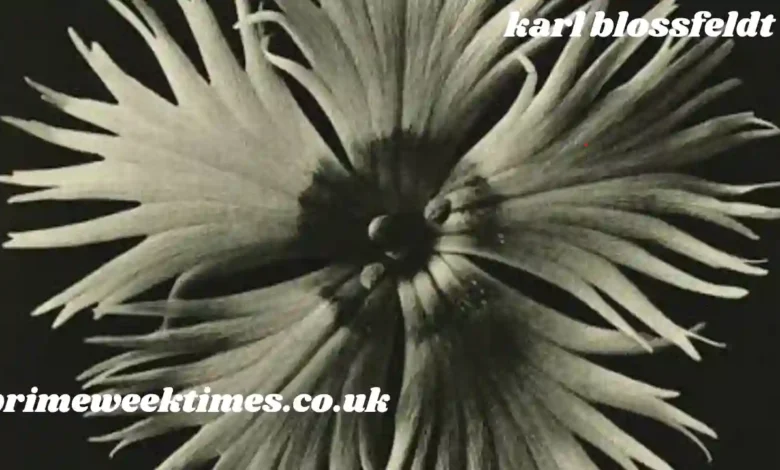
Karl Blossfeldt was a German photographer, sculptor, teacher, and artist whose remarkable close-up photographs transformed ordinary plants into extraordinary visual structures. Although he did not begin his career as a professional photographer, Karl Blossfeldt eventually became one of the most influential figures in the history of botanical and modern photography. His photographs of stems, leaves, buds, seed pods, tendrils, and other plant parts demonstrated that nature itself could provide an almost endless vocabulary of shapes, patterns, rhythms, and forms for artists and designers.
What makes Karl Blossfeldt particularly fascinating is that his original purpose was not simply to create beautiful photographs. His plant photographs were closely connected with teaching, drawing, sculpture, ornament, and design. He wanted students to observe the structures found in nature and understand how those structures could inspire artistic creation. His photographs enlarged details that were normally too small to appreciate with the naked eye, turning familiar botanical specimens into almost architectural or sculptural objects. The result was a body of work that stood between scientific observation and fine art.
Karl Blossfeldt was born on June 13, 1865, in Schielo, in the Harz region of Germany. His early experiences with craft and natural forms helped shape his later artistic philosophy. He initially trained in an iron foundry, where he encountered ornamental designs inspired by plants. Later, he studied at the educational department associated with the Berlin Kunstgewerbemuseum, or Museum of Decorative Arts. In 1890, he received an opportunity to work with the decorative artist and teacher Moritz Meurer. This experience became an important turning point because it brought together botanical study, artistic design, photography, and education.
For more than three decades, Karl Blossfeldt photographed plant forms while working as an educator in Berlin. His photographs were originally intended as visual teaching aids rather than as conventional artistic prints. He developed and used specially adapted photographic equipment that allowed him to produce extraordinary magnifications. Through these images, tiny botanical structures could be studied almost as though they were architectural models. The precision of his approach eventually became one of the defining qualities of his artistic legacy.
Karl Blossfeldt and His Early Life
Karl Blossfeldt grew up in an environment where craftsmanship and nature could easily become sources of visual inspiration. His birthplace, Schielo, was situated in the Harz Mountains, a region associated with forests and natural landscapes. His early apprenticeship at an ironworks gave him practical experience with materials, tools, and decorative forms. According to biographical accounts, he began an apprenticeship as an iron caster when he was around sixteen years old.
This early training was important because Blossfeldt did not approach nature merely as a photographer. He was interested in form. The relationship between natural structures and human-made ornament became a recurring theme throughout his career. Ironwork, architectural decoration, sculpture, drawing, and plants could all be understood through the language of shape.
After his apprenticeship, Blossfeldt moved toward formal artistic education. He studied drawing in Berlin and eventually became connected with Moritz Meurer, an important figure in ornamental design. Meurer’s work emphasized the study of natural forms as a foundation for artistic decoration. Blossfeldt’s involvement in this environment helped establish the direction that would define much of his professional life.
During his work with Meurer, Blossfeldt traveled and photographed botanical specimens for artistic study. Photography offered an efficient way to preserve natural forms and make them available for repeated observation. Instead of relying entirely on memory or hand-drawn sketches, artists could examine photographic records of plants in considerable detail.
This approach would become central to Karl Blossfeldt’s philosophy. The camera was not simply a device for documenting reality. It could become a tool for discovering structures that ordinary human vision overlooked.
Karl Blossfeldt as a Teacher and Designer
One of the most important parts of Karl Blossfeldt’s story is his long career as an educator. He worked in Berlin as a teacher of plant modeling and design, using plants as examples for students learning artistic form. Sources indicate that he taught at the Berlin school associated with the Museum of Decorative Arts for roughly three decades.
His teaching philosophy was based on close observation. Blossfeldt believed that plants contained fundamental forms that could inspire artists, craftsmen, and designers. A stem might reveal a pattern suitable for ornament. A seed pod might suggest a sculptural structure. The arrangement of leaves might provide an example of rhythm, symmetry, repetition, or balance.
This idea sounds familiar today because modern design frequently looks to nature for inspiration. However, Blossfeldt’s systematic approach was remarkable for his time. Rather than occasionally sketching a beautiful flower, he built an extensive visual archive of plant structures.
His photographs therefore had an educational function. They allowed students to examine natural structures at a convenient scale. Small details that were difficult to recognize in the living plant could become large, sharply defined photographic forms.
The educational origins of his photography also explain why many of his images feel so controlled. Blossfeldt often isolated a plant part against a plain background. The absence of distracting scenery directs the viewer toward the structure itself.
The Special Camera of Karl Blossfeldt
Karl Blossfeldt’s photographic technique was unconventional. He was not simply using a standard camera to photograph landscapes, portraits, or flowers in their natural surroundings. Instead, he adapted photographic equipment to achieve extreme magnification.
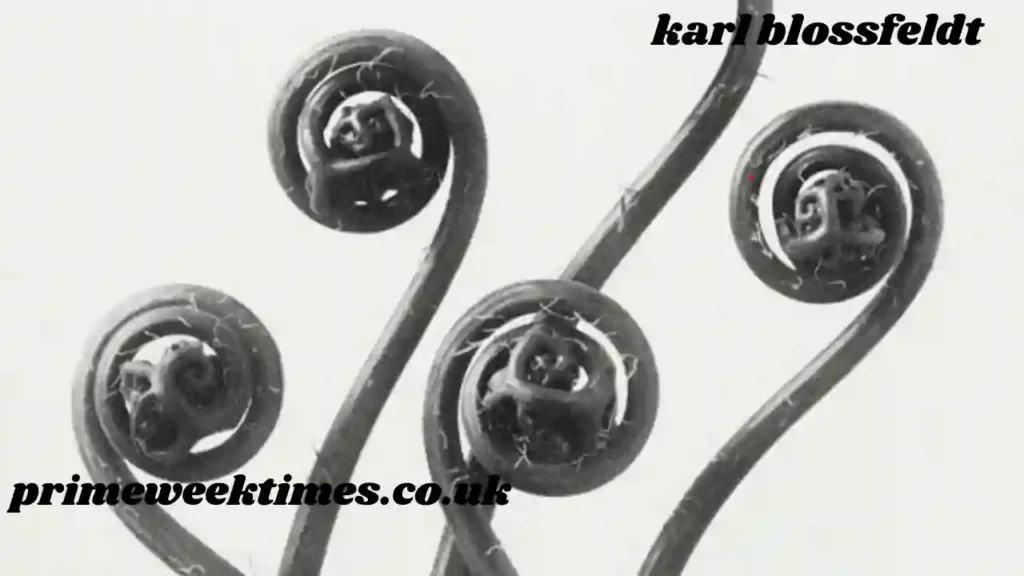
The resulting photographs could reveal tiny botanical details with extraordinary clarity. The scale of the image changed the viewer’s relationship with the plant. A small bud might suddenly look like a piece of industrial machinery. A stem might resemble a column. A curled tendril could appear like a decorative metal ornament.
The Museum of Modern Art notes that Blossfeldt altered his camera to photograph plant surfaces at unprecedented magnification.
This technical experimentation was essential to his artistic vision. The camera allowed him to change scale without changing the physical specimen. Something that appeared insignificant in the real world could become monumental in a photograph.
That transformation is one of the reasons Karl Blossfeldt’s photographs continue to attract attention. His images challenge viewers to reconsider what they think they know about ordinary plants.
Why Karl Blossfeldt Photographed Plants
Karl Blossfeldt’s plant photographs were not primarily botanical portraits in the conventional sense. He was interested in the structures and principles that plants revealed.
He saw nature as a kind of design library. Leaves, stems, buds, flowers, seed heads, and tendrils displayed recurring patterns and geometric relationships. These structures could provide inspiration for artists and designers searching for new forms.
His approach was also democratic in an unusual way. He did not need rare or exotic specimens to create compelling images. Everyday plants could become visually extraordinary when enlarged and carefully presented.
The Public Domain Review describes how Blossfeldt used plant specimens and created images that revealed their forms on a scale that made previously overlooked structures easier to study.
This idea remains powerful today. Modern viewers often encounter thousands of photographs of spectacular flowers, landscapes, and exotic gardens. Blossfeldt demonstrated that visual wonder could also be found in a small stem, an ordinary weed, or an apparently insignificant seed pod.
Karl Blossfeldt and Urformen der Kunst
The publication that made Karl Blossfeldt internationally famous was Urformen der Kunst, commonly translated as Art Forms in Nature. It appeared in 1928 and contained a collection of his plant photographs.
The book was a major moment in photographic history. Blossfeldt was already an older man when his work achieved widespread public recognition. The success of Urformen der Kunst helped transform his photographs from teaching materials into objects of artistic importance.
The book presented plant structures in a highly controlled visual manner. Instead of emphasizing color or environmental context, Blossfeldt emphasized form, texture, repetition, symmetry, and detail.
The Rijksmuseum records Urformen der Kunst as a 1928 photobook by Karl Blossfeldt, published by Ernst Wasmuth in Berlin.
The publication’s importance went beyond botanical photography. It contributed to changing perceptions of what photography could accomplish. A photograph could be documentary, educational, scientific, decorative, and artistic at the same time.
For Karl Blossfeldt, these categories were not necessarily separate. His photographs could teach someone about plants while simultaneously providing a source of inspiration for sculpture, architecture, illustration, and design.
The Visual Style of Karl Blossfeldt
The style of Karl Blossfeldt is immediately recognizable. His photographs frequently feature a single botanical subject isolated against a neutral or plain background. The composition is direct, disciplined, and highly detailed.
There is little visual clutter. The viewer is encouraged to examine the plant as a structure rather than as part of a larger landscape.
This simplicity gives the photographs an almost scientific appearance. At the same time, the enlarged forms can look surprisingly abstract. They may resemble metalwork, architectural details, mechanical components, columns, spirals, or ornamental motifs.
The International Center of Photography notes that Blossfeldt’s photographs were starkly composed against plain backgrounds and that their visual treatment allowed comparisons with line drawings.
This tension between science and abstraction is one of the most interesting aspects of his work. His photographs look objective, but the decision to enlarge, isolate, arrange, and frame a plant is highly artistic.
Nature as Architecture in Karl Blossfeldt’s Work
A major theme associated with Karl Blossfeldt is the idea that natural forms can resemble architecture.
When viewed at normal scale, a plant is simply a plant. When magnified, however, its structure may appear surprisingly architectural. Repeated leaves can create a pattern similar to ornament. A flower bud can resemble a geometric construction. A stem can look like a column.
Blossfeldt’s photographs encourage viewers to see these similarities.
This does not mean that he claimed plants were literally designed as buildings. Rather, his work suggests that certain principles of organization appear repeatedly in both natural and human-made forms. Symmetry, repetition, proportion, rhythm, branching, spiraling, and structural support can all be observed in nature.
This relationship between nature and design was particularly relevant to modern art and design movements of the early twentieth century. Blossfeldt’s images offered designers a vast collection of visual forms from which they could draw inspiration.
Karl Blossfeldt and Modern Photography
Karl Blossfeldt’s work became particularly important during a period when photographers were reconsidering traditional approaches to the medium.
In the 1920s, photography was increasingly being used for experimentation with scale, perspective, abstraction, and industrial subjects. Blossfeldt’s plant photographs fit naturally into this wider modernist interest in seeing familiar objects differently.
The clarity and precision of his images attracted the attention of avant-garde artists and photographers. His work appeared in important exhibitions, including Fotografie der Gegenwart and Film und Foto in 1929.
His photographs could be appreciated as examples of New Vision photography because they transformed ordinary subjects through scale and photographic technique.
Yet Blossfeldt’s relationship with modern photography was somewhat unusual. He had not set out to become a modernist photographer. His photographs had developed primarily through education and design. Their later reception demonstrated that an image created for practical teaching could acquire an entirely different meaning in an artistic context.
Karl Blossfeldt and the New Vision
The New Vision movement in photography emphasized unconventional ways of seeing. Photographers explored close-ups, unusual viewpoints, strong geometry, sharp detail, and abstraction.
Karl Blossfeldt’s photographs fit many of these characteristics.
His extreme enlargements made small natural objects appear unfamiliar. A plant was no longer merely a botanical specimen. It became an abstract composition.
This effect is particularly powerful because viewers can recognize the subject and fail to recognize it at the same time. We know that we are looking at a plant, but the enlarged structure encourages us to interpret it as something else.
That dual identity is a defining characteristic of Blossfeldt’s work. His photographs preserve the botanical object while transforming its visual meaning.
Wundergarten der Natur and Karl Blossfeldt’s Later Work
In 1932, Karl Blossfeldt published another important collection, Wundergarten der Natur, often translated as The Magic Garden of Nature. It followed the success of Urformen der Kunst and further established his reputation as a photographer of natural forms.
The second publication demonstrated that Blossfeldt’s work was not limited to a single successful book. His archive contained a much larger body of plant photographs created over decades.
His photographs represented years of observation, experimentation, teaching, collecting, arranging, and technical development.
The timing of the publication is significant because Blossfeldt died in Berlin on December 9, 1932, the same year the second book appeared. He was sixty-seven years old.
Although his major public recognition arrived relatively late, his photographs eventually became a lasting part of photographic history.
Karl Blossfeldt’s Relationship With Science and Art
One reason Karl Blossfeldt remains so interesting is that his photographs resist simple classification.
They can be understood as botanical documents because they show real plant structures with exceptional detail. They can also be viewed as teaching materials because they were originally created for educational purposes.
At the same time, they are undeniably artistic. The careful composition, magnification, isolation, lighting, and presentation create a visual experience that goes beyond ordinary documentation.
His career therefore demonstrates how photography can occupy multiple fields at once.
The distinction between scientific photography and fine-art photography was not always as fixed as it may appear today. Blossfeldt’s work demonstrates that a photograph can have an instructional purpose and still possess extraordinary aesthetic power.
The Importance of Scale in Karl Blossfeldt’s Photography
Scale is perhaps the most important visual tool in Karl Blossfeldt’s work.
When we look at a plant with the naked eye, we perceive its general shape. We may see a flower, leaf, stem, or seed pod. But we usually do not notice every tiny curve, ridge, joint, spiral, or surface pattern.
Blossfeldt changed that.
By enlarging small plant structures, he turned microscopic-looking details into the primary subject. The viewer is forced to slow down and observe.
This change in scale also changes meaning. A small natural object can become monumental. A common weed can become an elegant design. A seed pod can resemble sculpture.
In this way, Karl Blossfeldt did not merely photograph nature. He changed how viewers were able to see nature.
Karl Blossfeldt’s Influence on Design
Blossfeldt’s belief that nature could inspire design has remained influential.
Architects, sculptors, graphic designers, illustrators, textile designers, and photographers can all find useful ideas in his work. His images demonstrate how natural structures can be translated into visual principles.
For example, branching can inspire patterns. Spirals can create movement. Repetition can establish rhythm. Symmetry can produce balance. Layering can create depth. Curved stems can suggest organic movement.
His photographs are therefore not just historical documents. They continue to function as a visual vocabulary.
The Routledge Encyclopedia of Modernism describes Blossfeldt’s photographs as revealing geometrical structures and formal complexities in common flora while connecting natural forms with industrial design.
Why Karl Blossfeldt’s Images Still Look Modern
Despite being created more than a century ago, Karl Blossfeldt’s photographs can still appear remarkably contemporary.
One reason is their simplicity. The clean backgrounds and strong compositions resemble modern product photography. Another reason is their emphasis on structure rather than decoration.
Contemporary design frequently values minimalism, geometry, organic forms, and close observation. Blossfeldt’s photographs combine all of these qualities.
His work also fits naturally into today’s interest in biomimicry, where designers and engineers study natural structures for inspiration. Although modern biomimicry involves scientific and technological research beyond Blossfeldt’s original artistic purposes, the basic visual principle of learning from nature creates an interesting connection.
Karl Blossfeldt’s Legacy in Photography
Karl Blossfeldt left behind an extensive photographic archive and a distinctive approach to seeing. His work demonstrated that photography could make the invisible or overlooked visible.
His photographs also helped expand the possibilities of botanical imagery. Rather than presenting plants only as specimens, landscapes, or decorative subjects, he treated them as independent structures worthy of intense visual study.
The International Center of Photography describes his goal as creating a catalogue of natural forms that could be available to artists, craftsmen, and architects.
That goal explains why his work continues to have value beyond photography. Blossfeldt created a visual resource for anyone interested in form.
His legacy is therefore not simply the legacy of a photographer. It is also the legacy of a teacher who encouraged people to look more carefully at the natural world.
What Makes Karl Blossfeldt Unique?
Many photographers have photographed flowers. Many artists have drawn plants. Many scientists have documented botanical specimens. Karl Blossfeldt’s uniqueness comes from combining these traditions in a highly distinctive way.
He treated plants as subjects of observation, sources of artistic inspiration, and examples of formal structure.
His photographs are beautiful without depending on conventional ideas of beauty. There are no dramatic landscapes or colorful sunsets. Instead, the beauty comes from structure.
A dried seed head can become beautiful because of its symmetry. A stem can become fascinating because of its repeated pattern. A leaf can become visually powerful because of its geometry.
This approach encourages a different understanding of beauty: beauty is not necessarily something rare or spectacular. It may exist in ordinary objects if we are willing to look closely enough.
Karl Blossfeldt and the Idea of “Art Forms in Nature”
The title Art Forms in Nature summarizes much of Blossfeldt’s philosophy.
He believed that natural forms could provide fundamental lessons about visual organization. His photographs did not need to impose artificial patterns on plants because the plants already contained remarkable structures.
The camera simply helped reveal them.
This is why his work has an almost philosophical quality. It asks viewers to reconsider the relationship between nature and human creativity.
Where does design begin? Does an artist invent a form, or discover a form that already exists in nature? Can a natural structure be considered artistic even though it was not created by an artist?
Blossfeldt’s photographs do not necessarily answer these questions directly. Instead, they make the questions visible.
Frequently Asked Questions About Karl Blossfeldt
Who was Karl Blossfeldt?
Karl Blossfeldt was a German photographer, sculptor, teacher, and artist best known for his highly magnified photographs of plants. He used photography to study natural forms and originally created many of his photographs as educational resources for students of art and design.
When was Karl Blossfeldt born?
Karl Blossfeldt was born on June 13, 1865, in Schielo in the Harz region of Germany.
When did Karl Blossfeldt die?
Karl Blossfeldt died in Berlin on December 9, 1932, at the age of sixty-seven.
What is Karl Blossfeldt famous for?
Karl Blossfeldt is famous for his close-up and highly magnified photographs of plant structures. His images transformed ordinary stems, buds, leaves, flowers, and seed pods into visually striking forms that often resemble architecture or sculpture.
What is Urformen der Kunst?
Urformen der Kunst, commonly translated as Art Forms in Nature, is Karl Blossfeldt’s famous 1928 photographic book. It presented a large collection of his botanical photographs and helped establish his international reputation as an artist.
Did Karl Blossfeldt study photography?
Photography was not his original formal profession. He developed his photographic practice through his work with botanical forms, design education, and teaching. The Museum of Modern Art notes that he was never formally trained as a photographer and that he modified his camera for extreme magnification.
Why did Karl Blossfeldt photograph plants?
He photographed plants primarily to study their forms and use them as educational references for art and design. He believed that natural structures could provide inspiration for artists, craftsmen, and designers.
What made Karl Blossfeldt’s photographs different?
His use of extreme magnification and isolated compositions made tiny plant structures appear monumental. The photographs reveal patterns and geometries that are often difficult to notice with the naked eye.
What was Karl Blossfeldt’s second major book?
His second major published collection was Wundergarten der Natur, published in 1932. It followed the success of Urformen der Kunst.
Why is Karl Blossfeldt important in photography?
Karl Blossfeldt helped demonstrate that photography could function simultaneously as scientific observation, educational material, design reference, and fine art. His work became particularly important to modern photography because of its unusual scale, precision, abstraction, and treatment of natural forms.
Conclusion: The Enduring Vision of Karl Blossfeldt
Karl Blossfeldt changed the way people could look at plants. His achievement was not simply that he photographed botanical specimens in great detail. His deeper achievement was showing that the natural world contains a visual language of its own.
Through magnification, careful composition, and patient observation, he transformed ordinary plant structures into extraordinary images. His photographs reveal repetition, symmetry, rhythm, geometry, texture, and proportion in places where viewers might otherwise see only a stem, bud, or seed pod.
His career also demonstrates the unexpected paths through which artistic reputations can develop. Karl Blossfeldt began as a craftsman and became an educator, sculptor, designer, and photographer. For many years, his photographs served practical teaching purposes. Only later did the wider art world recognize their extraordinary aesthetic power.
The success of Urformen der Kunst in 1928 established him as a significant figure in photographic history, while Wundergarten der Natur further extended his visual legacy. His work became associated with modern photography and the New Vision because his extreme close-ups encouraged viewers to see familiar objects in unfamiliar ways.
More than anything, Karl Blossfeldt’s work teaches the value of careful looking. In an age filled with increasingly sophisticated cameras and digital technology, his photographs remain powerful because their central idea is remarkably simple: look closely at nature, and there is more there than you first imagined.
Karl Blossfeldt found architecture in stems, sculpture in seed pods, ornament in leaves, and abstract design in ordinary plants. His photographs remind us that nature does not merely provide subjects for art. It can also provide the forms, rhythms, structures, and ideas from which art itself begins.