How to Lock with Vikur War Thunder: Complete Guide to Target Locking, Vikhr Missiles, Controls, and Accurate Combat
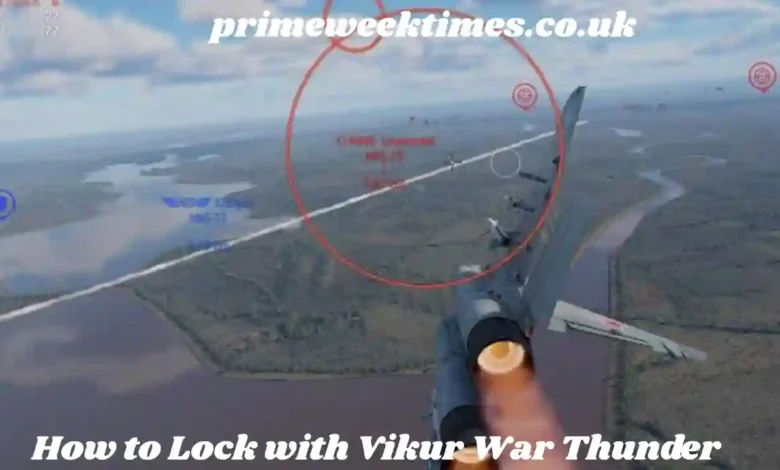
Introduction to How to Lock with Vikur War Thunder
War Thunder is a multiplayer military combat game that offers players an opportunity to experience different types of military vehicles, aircraft, helicopters, tanks, and advanced weapon systems. Among its many combat features, guided missiles are particularly interesting because they allow players to attack targets from a distance with greater precision than conventional weapons. One weapon that attracts considerable attention among helicopter players is the Vikhr missile, which some players search for as Vikur. Understanding How to Lock with Vikur War Thunder is important for anyone who wants to improve their helicopter gameplay, learn guided missile mechanics, and become more effective during ground and air engagements.
The Vikhr is not an ordinary fire-and-forget missile. It uses a beam-riding guidance system, meaning that the launching vehicle must maintain the appropriate targeting and guidance line while the missile travels towards its target. This is an important distinction because players sometimes assume that selecting an enemy automatically means the missile will continue tracking it independently. In reality, successful Vikhr employment requires the player to locate the target, position the targeting sight correctly, launch the missile, and maintain the required guidance throughout its flight.
Players who understand this process can use the missile more effectively against armoured ground vehicles and certain aerial targets. However, beginners may experience difficulties when attempting to acquire targets, maintaining the targeting sight, or understanding why a missile misses its intended destination. Learning the basic mechanics before entering competitive battles can make the entire experience considerably easier.
What Is Vikur in War Thunder?
The term Vikur is commonly used in searches about the Vikhr missile in War Thunder. The correct weapon designation is 9K127 Vikhr. It is a Soviet-designed anti-tank guided missile that appears on several Russian vehicles in the game. It is especially associated with helicopters such as the Ka-50 and Ka-52, as well as certain aircraft equipped with compatible weapon systems.
The missile is designed primarily for engaging armoured targets. Its high velocity and considerable guidance range make it a useful weapon for players who prefer attacking from a distance instead of approaching enemy ground vehicles directly. In War Thunder, the Vikhr can be used against tanks, armoured vehicles, and selected aircraft under suitable circumstances.
One of its most important characteristics is its beam-riding guidance system. Unlike certain guided weapons that follow reflected laser energy from a target, a beam-riding missile attempts to remain inside a guidance beam projected by the launching vehicle. Consequently, the player must keep the targeting system properly aligned while the missile is travelling.
This mechanic explains why understanding How to Lock with Vikur War Thunder requires more than simply pressing a target-lock button. Players must become familiar with their helicopter’s optical targeting system, weapon controls, target positioning, and missile guidance behaviour.
Which Vehicles Can Use the Vikhr Missile?
Before learning how to operate the missile, players should make sure that they are using a vehicle capable of carrying it. Not every helicopter or aircraft in War Thunder has access to Vikhr weapons.
The Ka-50 and Ka-52 are two well-known helicopters associated with the Vikhr missile system. These vehicles provide players with specialised helicopter targeting equipment and the ability to engage enemies using guided weapons. The Ka-50 is particularly recognised for its long-range anti-tank missile capability, while the Ka-52 offers additional equipment and combat options.
The Mi-28NM is another helicopter associated with the Vikhr family. Certain Russian aircraft, including the Su-25T and Su-39, also have access to compatible guided weapon configurations.
However, available weapons depend on the vehicle, researched modifications, and selected loadout. Players should always inspect the vehicle’s weapon configuration before entering a battle. Selecting the wrong loadout can prevent access to the missile even when the vehicle supports it.
It is also worth remembering that individual vehicle targeting equipment can differ. Optical systems, thermal imaging availability, zoom levels, and other features may influence how easily a player can identify and track an enemy.
Understanding How Vikhr Targeting Works
The most important part of learning How to Lock with Vikur War Thunder is understanding the difference between target acquisition and missile guidance.
Target acquisition is the process of identifying an enemy and positioning the targeting sight over it. The player uses the helicopter’s optical targeting equipment or gunner sight to locate a suitable target. Depending on the vehicle and game mode, the available camera and sight controls may provide different viewing options.
Missile guidance begins after the weapon has been launched. The Vikhr uses a beam-riding system, so the launching vehicle must continue projecting its guidance beam towards the intended target. The missile attempts to remain within that beam until it reaches the target.
This means that a successful launch does not automatically guarantee a successful hit. If the player moves the targeting sight away from the enemy, loses the necessary line of sight, or allows an obstacle to interfere with guidance, the missile may fail to reach its destination.
Players should therefore develop a habit of keeping the target centred in their sight throughout the missile’s flight. This simple practice is one of the most important skills for anyone learning helicopter guided weapons.
How to Lock with Vikur War Thunder: Step-by-Step Guide
Learning the complete targeting procedure becomes easier when it is divided into smaller actions. Beginners should practise each stage in test flight before attempting complicated engagements in multiplayer battles.
Step 1: Select a Vehicle Equipped with Vikhr Missiles
The first step is choosing a compatible helicopter or aircraft. The Ka-50, Ka-52, and other vehicles with suitable Vikhr configurations are examples of platforms that players can use.
Open the vehicle’s modification and weapon selection menus. Check whether the Vikhr missile modification has been researched and whether the weapon is included in the selected loadout.
If the missile is not available, inspect the modification tree and research requirements. Some vehicles require players to unlock specific weapon modifications before using particular guided weapons.
Step 2: Check Your Weapon Controls
Control settings are extremely important because missile targeting depends on several different actions.
Open the controls menu and inspect the helicopter or aircraft weaponry settings. Look for the controls associated with air-to-ground weapon selection, guided weapon firing, optical targeting, gunner sight, and target acquisition.
War Thunder allows players to customise many controls, so there is no reason to assume that every player’s keyboard has identical settings.
Pay particular attention to the following functions:
- Select or switch secondary weapons.
- Fire the selected secondary weapon.
- Activate the gunner or optical sight.
- Control targeting camera movement.
- Zoom the targeting camera.
- Activate or deactivate the relevant targeting functions.
The exact names and available controls can vary according to vehicle, control configuration, and game updates. Players should verify their own key assignments rather than relying on an assumed universal keyboard shortcut.
Step 3: Locate an Enemy Target
Once the battle begins, identify an enemy vehicle that can be engaged safely.
Ground targets are often easier for beginners because their movement is generally more predictable than that of aircraft. Look for exposed tanks, armoured vehicles, and other suitable ground targets.
Avoid immediately attacking the first enemy you see. Consider the distance, surrounding terrain, possible anti-aircraft threats, and your helicopter’s position.
A good target is one that can be clearly identified and kept within the optical targeting system’s field of view.
Step 4: Open the Optical Targeting Sight
The next step is to use the appropriate targeting camera or gunner sight.
The optical targeting view provides a more precise aiming interface than ordinary third-person observation. Depending on the vehicle, it may also provide additional zoom and targeting information.
Move the targeting sight towards the enemy vehicle and adjust the zoom until the target is clearly visible.
Do not rush this stage. A poor initial sight position can make it difficult to guide the missile accurately after launch.
Step 5: Acquire and Centre the Target
Place the targeting sight over the enemy vehicle and ensure that the target remains visible.
Players should distinguish between selecting a target point, activating an optical tracking function, and establishing a weapon lock. These are not necessarily the same action.
The Vikhr is a beam-riding weapon, so it does not require the same type of independent infrared or radar seeker lock associated with some other guided missiles.
Use the targeting controls supported by your vehicle to maintain the required aiming position. If an automatic tracking feature is available, understand its limitations rather than assuming it will independently guide the Vikhr after launch.
Step 6: Check the Missile’s Effective Range
Before firing, consider the distance between your helicopter and the target.
The Vikhr has a substantial maximum guidance range, with the exact performance depending on the vehicle and missile configuration. The original Vikhr and improved Vikhr-M configurations should not automatically be treated as identical.
A target inside the advertised maximum range may still be difficult to engage because of terrain, visibility, helicopter positioning, and enemy movement.
Beginners should avoid firing at targets that are extremely distant when a closer and clearer opportunity is available.
Step 7: Launch the Vikhr Missile
After identifying the target and aligning the targeting sight, select the Vikhr missile and use the assigned weapon firing control.
Watch the missile’s flight path and make sure the target remains properly aligned with the guidance system.
Do not immediately switch to another target or move your camera away. The missile requires continued guidance from the launching vehicle, so maintaining the correct sight position is essential.
Step 8: Maintain Guidance Until Impact
This is the most important stage of the entire process.
Keep the targeting sight directed towards the enemy while the missile travels. Avoid sudden movements that could move the guidance beam away from the target.
If the enemy vehicle changes position, carefully adjust your targeting sight to follow it. The objective is to keep the guidance beam aligned with the intended target throughout the engagement.
Once the missile reaches the target, observe the result and prepare for another engagement if the battlefield situation allows it.
Does the Vikhr Missile Require a Traditional Target Lock?
This is one of the most common questions among players searching for How to Lock with Vikur War Thunder.
The answer is that the Vikhr does not operate like a traditional lock-on missile that independently searches for and follows a target after launch.
Instead, it relies on beam-riding guidance. The launching vehicle projects the guidance beam, and the missile attempts to remain inside that beam during flight.
This difference is important because players may become confused when they cannot see the same locking indicators associated with infrared or radar-guided weapons.
The optical sight helps the player aim and maintain the required guidance. However, the player should not assume that every visual tracking feature represents an independent missile seeker lock.
Understanding this distinction prevents unnecessary frustration and helps beginners develop the correct approach to guided missile combat.
Best Tips for Accurate Vikhr Missile Targeting
Keep Your Targeting Sight Stable
Stability is one of the most important factors in successful guided missile employment. Sudden camera movements can move the guidance beam away from the intended target.
Try to make controlled adjustments instead of constantly moving the sight. When engaging a stationary tank, keep the target centred and avoid unnecessary movement.
Choose Clear Targets
Targets hidden behind buildings, hills, trees, or other obstacles are more difficult to engage.
Because the missile depends on a guidance beam from the launching platform, maintaining the appropriate line of sight is essential.
Choose targets that are visible and have a clear engagement path whenever possible.
Avoid Unnecessary Helicopter Movement
Although helicopter manoeuvrability can be useful for avoiding enemy fire, unnecessary movement during missile guidance can make targeting more difficult.
Try to establish a stable position before launching. If the battlefield becomes dangerous, prioritise survival rather than attempting to force an unsuccessful engagement.
Use Camera Zoom Carefully
Zoom can make it easier to identify enemy vehicles and place the targeting sight accurately.
However, excessive zoom can make tracking a moving target more challenging because even small camera movements may appear significant.
Find a comfortable zoom level that provides enough detail without making target tracking unnecessarily difficult.
Learn the Difference Between Ground and Air Targets
The Vikhr can also be used against certain aerial targets because of its proximity-fuse capability. However, aerial engagements require different timing and aiming skills.
Fast-moving aircraft can change direction quickly, making it difficult to maintain the correct guidance alignment.
Beginners should first practise against ground vehicles before attempting complicated aerial engagements.
Common Problems When Locking with Vikur in War Thunder
The Missile Does Not Hit the Target
One possible reason is that the player moved the targeting sight away from the target during the missile’s flight.
Another possibility is that the target moved behind an obstacle or the missile was launched under unfavourable conditions.
Check your sight alignment and make sure you maintain the required guidance throughout the engagement.
The Targeting Sight Cannot Identify the Enemy
Visibility problems can make target acquisition difficult.
Smoke, terrain, vegetation, lighting, and distance may affect how easily the player can identify an enemy vehicle.
Try changing your position or adjusting the targeting camera zoom. Thermal imaging may also help when available on the selected vehicle.
The Missile Launches but Misses
A missile can launch successfully without hitting its intended target.
Launching is only one part of the process. Correct alignment, sufficient visibility, appropriate range, and continuous guidance all contribute to a successful engagement.
Watch the missile’s trajectory rather than assuming that a successful launch guarantees an impact.
The Target Moves Behind a Building
Buildings and terrain can interfere with the required line of sight.
If the target disappears behind an obstacle, maintaining guidance becomes difficult or impossible.
Wait until the enemy becomes visible again or select a different target with a clearer engagement path.
The Controls Do Not Work as Expected
Control problems are another common source of frustration.
Players may have incorrect key assignments, conflicting controls, or different settings from those shown in tutorials.
Open the controls menu and review the relevant weaponry and targeting functions. Testing the settings in a test flight can help identify problems without the pressure of a live battle.
How to Use Vikhr Against Tanks
Ground vehicles are among the most natural targets for the Vikhr missile.
When attacking tanks, prioritise identifying the enemy and selecting a clear aiming point. Although the missile has substantial armour penetration, successful damage also depends on the impact location and the vehicle’s armour layout.
Attacking a tank from a favourable angle can improve the chances of achieving a useful result.
Do not repeatedly fire at the same heavily protected area if the first attack fails to produce the expected damage. Observe the battlefield, assess the target’s orientation, and adjust your next engagement accordingly.
It is also important to remember that enemy anti-aircraft vehicles may be watching for helicopters. Spending too much time in one position can make your aircraft an easy target.
A balanced approach combines careful target selection, accurate missile guidance, and awareness of surrounding threats.
How to Use Vikhr Against Aircraft
The Vikhr’s proximity-fuse capability gives it some usefulness against aerial targets.
However, this does not mean that it behaves like a conventional air-to-air missile with an independent radar or infrared seeker.
Against aircraft, target movement and speed become much more important. A fast-moving jet may change direction before the missile reaches it, so the player must make careful adjustments to the targeting sight.
Helicopters and slower aircraft may provide more manageable engagement opportunities, but players should still consider range, movement, and visibility.
If your vehicle has dedicated air-to-air weapons, such as compatible infrared missiles, consider whether those weapons are more appropriate for the situation.
Important Differences Between Vikhr and Fire-and-Forget Missiles
Understanding the differences between missile guidance systems can improve your overall War Thunder experience.
A fire-and-forget weapon generally uses its own seeker to track the target after launch. Depending on the missile, the player may not need to maintain continuous target illumination or optical guidance.
The Vikhr works differently because it uses beam-riding guidance.
This means that the launching platform remains an important part of the guidance process. Players must maintain the appropriate aiming direction until the missile completes its flight.
The advantage is that the missile can be used without relying on the same type of reflected laser seeker lock required by some laser-guided weapons.
However, the player must remain attentive throughout the engagement.
How to Practise Vikhr Locking in War Thunder
The best way to become comfortable with the Vikhr is to practise in a controlled environment.
Start by entering the vehicle’s test flight mode. Familiarise yourself with the cockpit, camera controls, weapon selection, and optical sight.
Begin with stationary ground targets. Practise moving the sight over an enemy, selecting the correct weapon, firing, and maintaining guidance until impact.
After becoming comfortable with stationary targets, move on to slower or moving targets.
You should also practise controlling the helicopter while maintaining an accurate targeting position. This helps you understand how helicopter movement affects the targeting experience.
Avoid changing several control settings at the same time. Instead, adjust one function, test it, and determine whether the change improves your experience.
With regular practice, the entire procedure will become more natural.
Best Strategies for Beginners Using Vikhr
Beginners should focus on consistency rather than attempting complicated long-range engagements immediately.
Start by learning the targeting interface and understanding how beam-riding guidance works. Once you are comfortable with the controls, practise engaging stationary targets at moderate distances.
Next, learn to identify dangerous enemy vehicles. Anti-aircraft systems can be especially threatening to helicopters, so battlefield awareness is just as important as missile accuracy.
Try to avoid exposing your helicopter unnecessarily. Use terrain carefully, maintain awareness of incoming threats, and reposition when your current location becomes dangerous.
Another useful strategy is to avoid wasting missiles on targets that are difficult to engage. A clear target with a good line of sight is generally a better opportunity than an enemy hidden behind terrain.
Finally, review your mistakes. If a missile misses, consider whether the target moved, the sight alignment changed, or an obstacle interfered with guidance.
Conclusion: Mastering How to Lock with Vikur War Thunder
Learning How to Lock with Vikur War Thunder becomes much easier when players understand the actual mechanics of the 9K127 Vikhr missile. Although many beginners expect a conventional automatic lock-on system, the Vikhr uses beam-riding guidance and requires the launching vehicle to maintain the appropriate targeting alignment throughout the missile’s flight.
The most important steps are choosing a compatible vehicle, checking the weapon loadout, configuring the necessary controls, locating an enemy, using the optical targeting sight, launching the missile, and maintaining guidance until impact.
Players should also remember that successful engagements depend on more than simply firing a missile. Visibility, range, terrain, target movement, and enemy threats all influence the result.
Practising in test flight mode is an effective way to understand the targeting interface and develop better control over the weapon. Start with stationary targets, improve your sight alignment, and gradually move towards more challenging engagements.
Whether you use the Ka-50, Ka-52, or another compatible vehicle, understanding the Vikhr’s beam-riding mechanics can make helicopter combat more enjoyable and help you become a more confident War Thunder player.
Frequently Asked Questions (FAQs)
1. How to Lock with Vikur War Thunder?
The weapon commonly called Vikur is the 9K127 Vikhr missile. It uses beam-riding guidance rather than a conventional independent seeker lock. Acquire the target using your vehicle’s optical targeting system, launch the missile, and maintain the required sight alignment until impact.
2. Is Vikur the Same as Vikhr in War Thunder?
Vikur is a common misspelling or alternative search term for Vikhr. The correct weapon designation is 9K127 Vikhr.
3. Which Helicopters Have Vikhr Missiles?
The Ka-50 and Ka-52 are well-known examples of helicopters equipped with Vikhr missiles. Other compatible vehicles include the Mi-28NM, depending on the available weapon configuration.
4. Does the Vikhr Missile Automatically Follow Enemies?
No. The Vikhr uses beam-riding guidance and requires the launching vehicle to maintain the guidance beam. It does not operate like a conventional fire-and-forget missile.
5. Why Does My Vikhr Missile Miss Targets?
Common reasons include poor sight alignment, target movement, obstacles blocking the guidance path, unsuitable engagement conditions, and losing the required guidance during flight.
6. Can the Vikhr Missile Destroy Aircraft?
Yes. The Vikhr can engage certain aerial targets using its proximity-fuse capability. However, successful engagements require appropriate positioning and careful guidance.
7. What Is the Maximum Range of the Vikhr?
The Vikhr family has a maximum guidance range of up to approximately 10 kilometres, depending on the missile variant and vehicle configuration. The original and improved versions should not be assumed to have identical range characteristics.
8. Can Beginners Use the Vikhr Missile Effectively?
Yes. Beginners can learn the missile by practising in test flight mode. Starting with stationary ground targets is a useful way to understand optical targeting, weapon selection, and beam-riding guidance.
9. Does the Vikhr Need a Laser Target Lock?
The Vikhr uses a projected guidance beam rather than the conventional reflected-laser seeker lock associated with certain other guided missiles. Maintaining the appropriate targeting alignment is essential.
10. What Is the Best Way to Practise Vikhr Targeting?
Use test flight mode, begin with stationary targets, learn the targeting controls, and practise maintaining the sight on the target throughout the missile’s flight.
ALSO READ : BestTarahi.com: Exploring the Gaming Platform for Game Reviews, PC Gaming, Consoles, and Gaming Technology