Liberal Country Singers: Artists Who Bring Progressive Ideas to Country Music
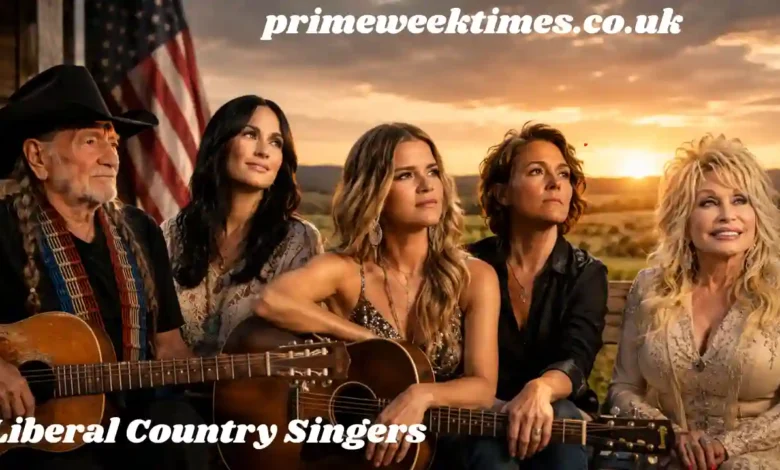
Country music has traditionally been associated with themes such as small-town life, family, faith, patriotism, independence, and traditional American values. However, the world of country music has never been politically uniform. Alongside conservative voices, there have always been artists who support progressive causes, speak openly about social issues, advocate for equality, or simply challenge assumptions about what country music should represent. These performers are often described as Liberal Country Singers, a phrase used to identify country artists whose public views, activism, or music tend to align with liberal or progressive ideas.
The conversation around Liberal Country Singers has become particularly interesting as country music continues to expand its audience. Modern country artists frequently discuss subjects that extend beyond traditional love songs and rural storytelling. Issues involving LGBTQ+ equality, racial inclusion, women’s rights, environmental protection, immigration, healthcare, economic inequality, and political polarization sometimes appear in interviews, performances, charitable work, and songwriting. As a result, listeners increasingly want to understand which country singers have progressive perspectives and how those perspectives influence their careers.
It is important to remember that political identity is not always simple. Some artists openly identify as liberal, while others support individual progressive causes without adopting a specific political label. Some musicians avoid politics entirely but have expressed views that audiences interpret as progressive. For this reason, the term Liberal Country Singers can describe a broad spectrum rather than a strict political category. The artists discussed in this article represent different approaches to politics, activism, social responsibility, and personal expression within country and country-adjacent music.
What Does Liberal Country Singers Mean?
The phrase Liberal Country Singers generally refers to country music performers whose publicly expressed political or social positions are considered liberal, progressive, or left-leaning. This can include musicians who openly criticize conservative political movements, support Democratic candidates, advocate for LGBTQ+ rights, promote environmental causes, defend reproductive rights, or speak about racial and social equality.
However, being considered a Liberal Country Singer does not necessarily mean that an artist agrees with every liberal political position. Musicians are individuals with complicated beliefs, and their views can change over time. One singer may be strongly involved in environmental activism while remaining relatively quiet about other political issues. Another may focus on LGBTQ+ equality but avoid party politics. Someone else may simply encourage people to treat others with compassion and respect.
This distinction matters because political labels can sometimes make discussions about musicians unnecessarily narrow. Country music is ultimately an artistic form, and a singer’s political views represent only one part of their identity. Their songwriting, voice, performances, personal experiences, and relationship with their audience remain equally important.
Why Liberal Country Singers Stand Out
The presence of progressive artists in country music is significant because the genre is frequently portrayed as politically conservative. That stereotype overlooks the diversity of country audiences and the wide variety of perspectives represented by country musicians.
Country music has always been built around storytelling. Artists sing about people facing hardship, families dealing with change, workers trying to make a living, communities rebuilding after disasters, relationships, loneliness, hope, and dreams. These subjects can naturally lead to conversations about broader social questions.
Liberal Country Singers often use this storytelling tradition to introduce different perspectives. Instead of delivering a political speech, they may tell a story about an outsider looking for acceptance or a person struggling because of economic circumstances. The message can be subtle rather than explicitly partisan.
This approach allows progressive country musicians to reach listeners who may not agree with them politically. Music can create emotional connections before political disagreements even enter the conversation. In that sense, country music can serve as a bridge between people with different backgrounds and beliefs.
Willie Nelson and a Long History of Progressive Country
When discussing Liberal Country Singers, Willie Nelson is one of the most recognizable names associated with progressive causes. Willie Nelson has spent decades combining country music with activism, environmental concerns, agricultural issues, and support for various progressive causes.
Nelson’s public image has never fit neatly into the conventional Nashville mold. His career developed alongside the outlaw country movement, which challenged some of the established expectations surrounding mainstream country music. His music emphasized independence and authenticity, qualities that also shaped his public persona.
One of Nelson’s most recognizable areas of activism has involved environmental and agricultural issues. His support for family farmers and sustainable agriculture helped demonstrate how a country musician could become involved in political and economic conversations without abandoning the genre’s cultural roots.
His political identity has also been influenced by his interest in individual freedom, environmental responsibility, and social causes. Nelson’s career illustrates that progressive country music is not necessarily a recent phenomenon. Artists have been expressing unconventional political perspectives within country music for generations.
Kacey Musgraves and a More Inclusive Country Image
Kacey Musgraves has become one of the most prominent modern examples associated with progressive country music. Her songwriting frequently challenges rigid expectations surrounding relationships, identity, morality, and social acceptance.
Musgraves gained attention for songs that questioned traditional assumptions about relationships and encouraged listeners to approach people with greater openness. Her willingness to address subjects that were sometimes considered controversial within mainstream country music helped establish her as an artist willing to take creative risks.
Her music often emphasizes individuality. Rather than presenting country life as a single traditional experience, Musgraves has explored a broader vision in which different kinds of people can find belonging. That perspective has attracted listeners who appreciate country music but do not necessarily identify with conservative cultural expectations.
Her career demonstrates how the country genre has changed over time. Younger audiences often expect artists to address contemporary social realities, and Musgraves has shown that progressive themes can coexist with country songwriting, traditional instruments, and Southern storytelling.
Maren Morris and Speaking Against Industry Stereotypes
Maren Morris is another major name frequently included in discussions of Liberal Country Singers. Morris has been outspoken about social and political subjects and has criticized aspects of the country music industry that she believes promote exclusion or intolerance.
Her public statements regarding LGBTQ+ acceptance, political polarization, and the treatment of marginalized communities have made her a prominent progressive voice within the broader country music conversation.
Morris has also been willing to challenge stereotypes about what country music represents. Her position has been particularly notable because mainstream country music remains closely connected to cultural and political debates in the United States.
Rather than avoiding controversy, Morris has frequently used her public platform to express her beliefs. That has created both support and criticism, illustrating the risks artists face when they become politically outspoken.
Her example also highlights an important reality: Liberal Country Singers can become part of larger cultural debates simply by refusing to remain silent. For some musicians, political expression becomes an extension of personal authenticity.
Brandi Carlile and Advocacy Through Music
Brandi Carlile occupies a somewhat broader musical space that includes folk, Americana, rock, and country influences, but she is frequently discussed in conversations about progressive country and roots music.
Carlile has been a visible advocate for LGBTQ+ equality and other social causes. Her career demonstrates how country-adjacent music can provide a platform for progressive perspectives while remaining deeply connected to American roots traditions.
Her songwriting often focuses on vulnerability, family, identity, love, and personal struggle. These themes have allowed her to connect with audiences across traditional genre boundaries.
Carlile’s importance to discussions about Liberal Country Singers is also connected to representation. Her success demonstrates that artists can be openly themselves while participating in the larger American roots music tradition. For many listeners, that visibility has helped broaden their understanding of who belongs within country and Americana culture.
Dolly Parton and the Complexity of Political Labels
Dolly Parton is a fascinating example because she is often associated with compassionate and inclusive values, yet she has historically been careful about presenting herself as a conventional partisan political figure.
Parton’s public image emphasizes kindness, generosity, education, community support, and helping people regardless of background. Her philanthropic efforts have made her one of the most widely respected figures in American entertainment.
She has also expressed support for LGBTQ+ people and has promoted messages of acceptance. At the same time, she has frequently avoided turning her public identity into a straightforward partisan political brand.
This makes her an important example when discussing Liberal Country Singers because it demonstrates that progressive values and partisan political identity are not always the same thing. An artist can support inclusion, charity, equality, and compassion without presenting themselves as a political activist.
Parton’s career shows why labels should be used carefully. Rather than asking whether every artist fits perfectly into a liberal or conservative category, it can be more useful to examine the specific values they express.
The Role of LGBTQ+ Representation in Country Music
One of the most important areas where progressive country musicians have influenced the genre is LGBTQ+ representation.
Country music has sometimes been criticized for having a narrow image of relationships and family. Liberal Country Singers and country-adjacent artists have challenged that image by openly supporting LGBTQ+ listeners and performers.
Representation matters because music can create a sense of belonging. When artists openly acknowledge different forms of love, identity, and family, listeners who may have felt excluded from traditional country culture can see themselves reflected in the genre.
Artists such as Brandi Carlile have been particularly significant in this area, while other musicians have expressed support through public statements, performances, collaborations, and charitable activities.
The increasing visibility of LGBTQ+ themes in country music also reflects changes in the audience. Modern country listeners come from many different communities and expect the genre to reflect that diversity.
Women and Progressive Voices in Country Music
Women have historically played an essential role in country music, but female artists have also faced expectations regarding appearance, songwriting, behavior, and subject matter.
Many Liberal Country Singers who are women have challenged these expectations by writing about independence, relationships, sexuality, professional ambition, social pressure, and personal identity.
Kacey Musgraves and Maren Morris are particularly notable because both have used their music and public platforms to question traditional expectations. Their work demonstrates that women in country music can address controversial subjects while maintaining successful mainstream careers.
Progressive country music can therefore be understood not only through party politics but also through artistic freedom. When women have greater control over the stories they tell, country music becomes capable of representing a wider range of experiences.
Environmentalism and Country Music
Environmental issues are another area where progressive country musicians have historically been active. Country music has deep connections to rural landscapes, agriculture, farming, hunting, outdoor recreation, and the natural environment. This gives country artists a unique relationship with environmental conversations.
Willie Nelson’s support for family farmers and sustainable agriculture is an important example. Environmental activism does not always have to be framed around abstract political debates. For country musicians, it can involve protecting farmland, supporting rural communities, preserving natural resources, and promoting responsible agriculture.
This connection between country music and environmentalism can be especially powerful because many rural communities directly experience changes in weather, agriculture, water availability, and land use.
Liberal Country Singers who discuss environmental issues therefore have an opportunity to connect national political conversations with everyday experiences.
Liberal Country Singers and Political Polarization
The rise of politically outspoken musicians has also created challenges. Country music audiences are not politically identical, and a singer who publicly supports progressive ideas may receive criticism from listeners who disagree.
Some fans believe musicians should avoid politics altogether. Others argue that artists have every right to use their platforms to express their opinions.
This debate reflects a larger question about celebrity culture. When an artist becomes famous, should they simply entertain, or should they use their influence to discuss social problems?
There is no universal answer. Some artists prefer to keep politics separate from music, while others see political expression as an important part of their identity.
For Liberal Country Singers, political openness can strengthen connections with certain audiences while creating distance from others. This tension is especially visible in country music because the genre has such a strong connection to American cultural and political identity.
Why Some Liberal Country Singers Avoid Political Labels
Not every artist who supports progressive causes wants to be called a liberal musician. There are several reasons for this.
First, political labels can overshadow music. An artist may worry that interviews will focus more on political statements than songwriting.
Second, labels can divide audiences. A musician who wants to appeal to people across the political spectrum may intentionally avoid identifying with a specific party.
Third, individual beliefs can be complicated. Someone might support environmental protection but hold conservative views on another issue. Another artist may support LGBTQ+ rights but dislike partisan politics.
This complexity is one reason the term Liberal Country Singers should be understood as a general search category rather than a rigid classification system.
How Social Media Changed Political Conversations in Country Music
Social media has made it easier for country musicians to communicate directly with fans. In previous generations, political statements were often filtered through interviews, magazines, television appearances, or major news organizations. Today, an artist can share a thought with millions of people almost instantly.
This has increased both the visibility and consequences of political expression.
A short statement can generate enormous discussion. Supporters may praise the artist, while critics may call for boycotts or accuse the musician of abandoning the genre’s traditional values.
For Liberal Country Singers, social media provides an opportunity to advocate for causes without depending on traditional media. At the same time, it can create pressure to respond to every major political event.
Modern country artists therefore have to balance authenticity, privacy, career considerations, and their relationship with their audience.
The Difference Between Liberal Country Singers and Progressive Country Music
The terms Liberal Country Singers and progressive country music are related but not identical.
A Liberal Country Singer is an individual artist whose publicly expressed beliefs may be considered liberal or progressive. Progressive country music, on the other hand, can refer to music that challenges traditional conventions, explores social issues, or experiments with cultural expectations.
An artist can create progressive music without being politically liberal. Likewise, a liberal artist can make completely apolitical love songs or traditional country songs.
This distinction helps explain why political classification should never become the only way to understand a musician’s work.
Country Music Is Bigger Than Political Identity
Country music has evolved significantly throughout its history. The genre now includes traditional country, outlaw country, Americana, country-pop, roots music, alternative country, bluegrass-influenced music, and many other styles.
Its audience is equally diverse.
Some listeners enjoy country music because it reminds them of home. Others appreciate the storytelling. Some connect with the emotional honesty of the lyrics, while others enjoy the instrumentation and cultural traditions.
Political identity is only one part of that experience.
Liberal Country Singers contribute to this diversity by demonstrating that country music can contain progressive perspectives without losing its connection to storytelling and American roots.
The Future of Liberal Country Singers
The future of Liberal Country Singers will likely be shaped by changing audiences, evolving cultural expectations, and the growing diversity of country music.
Younger listeners often expect artists to speak openly about social issues. Streaming platforms have also made it easier for independent musicians with unconventional perspectives to find audiences without relying entirely on traditional Nashville structures.
As country music continues to expand internationally, the definition of the genre may become even more diverse.
Future artists may be less interested in choosing between political categories and more interested in telling authentic stories about their own experiences. Some will probably become outspoken activists, while others will continue to keep their politics private.
What seems certain is that political and social diversity will remain part of the country music landscape.
Final Thoughts on Liberal Country Singers
Liberal Country Singers represent an important and increasingly visible part of the country music world. From Willie Nelson’s long-standing activism to Kacey Musgraves’ inclusive songwriting, Maren Morris’s outspoken public positions, Brandi Carlile’s advocacy, and Dolly Parton’s emphasis on compassion and acceptance, progressive ideas have appeared in many different forms within country and roots music.
These artists demonstrate that country music cannot be reduced to a single political identity. The genre contains traditionalists, conservatives, liberals, independents, activists, politically cautious performers, and musicians who simply prefer to focus on their art.
The most interesting aspect of Liberal Country Singers is therefore not simply which political label an artist receives. It is how musicians use their voices to discuss identity, equality, community, freedom, environmental responsibility, acceptance, and personal experience.
Country music has always been about telling stories. As society changes, the stories being told naturally change as well. Progressive country artists are part of that evolution, helping demonstrate that a genre rooted in tradition can still make room for new perspectives.
Ultimately, the continued presence of Liberal Country Singers shows that country music belongs to a broad community of listeners and creators. Political differences may remain, but music has the unusual ability to bring people together around shared emotions, experiences, and stories. That balance between tradition and change is one of the reasons country music continues to remain culturally relevant.
ALSO READ : Dark Moon Memorabilia V Stock: A Detailed Guide to Dark Moon Memorabilia V Stock and Its Collectible Appeal