
houlder Press Machine Guide for Better Shoulder Training
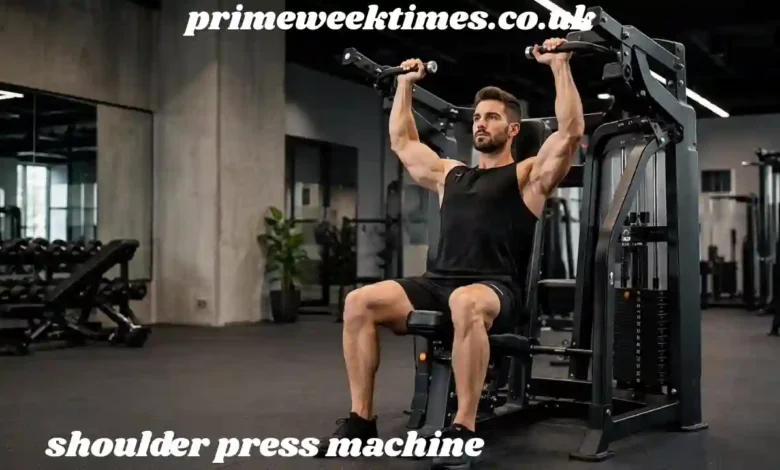
The shoulder press machine is one of the most familiar pieces of strength-training equipment found in commercial gyms, fitness centers, and increasingly in home gyms. It is designed to help people develop stronger shoulders through a controlled overhead pressing movement. Unlike free-weight exercises that require the lifter to stabilize dumbbells or a barbell throughout the entire range of motion, a shoulder press machine follows a fixed or semi-fixed movement path. This can make the exercise easier to learn, more comfortable for beginners, and useful for experienced lifters who want to focus heavily on the shoulder muscles without worrying as much about balance.
A well-designed shoulder press machine can become a valuable part of a complete resistance-training program. It primarily works the deltoid muscles of the shoulders while also involving the triceps and upper chest. Because the machine supports the movement path, many people find it easier to maintain consistent technique from one repetition to the next. This is especially helpful when training close to muscular fatigue, when maintaining control with free weights may become more difficult.
At the same time, using a shoulder press machine effectively requires more than simply sitting down and pushing the handles overhead. Seat position, grip placement, posture, range of motion, resistance selection, and training frequency all influence the results. Poor setup can reduce the effectiveness of the exercise and may place unnecessary stress on the shoulder joints or lower back. Understanding how the machine works and how to adjust it for the individual can make shoulder training safer, more comfortable, and more productive.
This detailed guide explains what the shoulder press machine is, how it works, the muscles it targets, its major benefits, correct exercise technique, common mistakes, training recommendations, variations, and how it compares with other shoulder exercises.
What Is a Shoulder Press Machine?
A shoulder press machine is a resistance-training machine designed to imitate the overhead pressing movement used in exercises such as the seated dumbbell shoulder press or barbell overhead press. The user normally sits against a backrest, grips two handles near shoulder level, and presses upward until the arms are nearly extended.
Different machines use different resistance systems. Many gym machines use a weight stack connected to the handles through cables, belts, or pulleys. Plate-loaded machines require the user to place weight plates onto loading pegs. Some modern machines use independent lever arms, allowing the left and right sides to move separately.
Regardless of the design, the main purpose of the shoulder press machine is to provide resistance while the user presses overhead.
One important difference between a machine and free weights is the amount of stabilization required. During a dumbbell shoulder press, the lifter must control the weights in several directions. On most machines, the path of movement is partially controlled by the equipment. The user can therefore concentrate more heavily on pushing forcefully and contracting the target muscles.
This characteristic does not automatically make machines better or worse than free weights. They simply provide a different training stimulus. Machines can be particularly helpful for muscle-building workouts, beginners, high-repetition training, and situations where a lifter wants to safely approach muscular fatigue.
Muscles Worked by the Shoulder Press Machine
The shoulder press machine mainly targets the deltoids, which are the large muscles covering the shoulder joint. However, several other upper-body muscles assist during the pressing movement.
The deltoid muscle is divided into three major sections: the anterior deltoid, lateral deltoid, and posterior deltoid.
The anterior deltoid, located at the front of the shoulder, performs a large amount of the work during overhead pressing. When the handles are pushed upward, the front deltoids help lift the upper arms.
The lateral deltoids, located along the sides of the shoulders, also contribute significantly. Developing these muscles can help create the appearance of broader shoulders.
The posterior deltoids, found at the back of the shoulders, are generally less active during pressing movements than during exercises such as reverse flyes or rows. However, they still contribute to shoulder stability.
The triceps are another major muscle group involved in the exercise. As the user presses the handles upward, the elbows extend. The triceps are responsible for producing much of this elbow extension.
The upper portion of the pectoralis major, commonly called the upper chest, may also assist depending on the angle of the machine. Machines with a slightly reclined backrest may involve more upper-chest activation than machines where the user sits completely upright.
Muscles surrounding the shoulder blades and upper back also help maintain proper alignment and stability throughout the exercise.
Because several muscles contribute to the movement, the shoulder press machine is considered a compound exercise rather than an isolation movement.
Benefits of Using a Shoulder Press Machine
One reason the shoulder press machine remains popular is its combination of simplicity, stability, and effectiveness.
Easier to Learn
Beginners often find machine-based exercises easier to understand than free-weight movements. The machine guides the user through a predetermined path, reducing the need to coordinate several directions of movement at once.
A beginner can therefore focus on learning how to press correctly without worrying about balancing two dumbbells overhead.
Greater Stability
The seat and backrest provide support while the machine controls much of the movement path. This additional stability can help the user concentrate on the shoulder muscles.
People who find free-weight presses difficult because of balance or coordination may feel more confident using a machine.
Helpful for Muscle Growth
Muscle growth requires sufficient resistance, training volume, and progressive overload. A shoulder press machine makes it relatively easy to control these variables.
For example, someone using a weight-stack machine can increase the resistance simply by moving the selector pin to the next plate. This allows small and measurable increases over time.
Machines are also useful for higher-repetition sets because users can continue training close to muscular fatigue without needing to stabilize heavy free weights.
Consistent Range of Motion
When properly adjusted, a machine provides a repeatable movement pattern. Each repetition can follow approximately the same path.
This consistency can help lifters monitor improvements in strength and muscular endurance.
Convenient Weight Changes
Weight-stack shoulder press machines allow resistance to be changed quickly. This is particularly useful for drop sets, warm-up sets, or workouts involving multiple repetition ranges.
Instead of removing or adding weight plates, the user simply changes the position of the selector pin.
Useful When Training Alone
Heavy barbell pressing may require additional caution when performed without a training partner. A shoulder press machine can feel more manageable because the user can normally return the handles to the starting position if a repetition cannot be completed.
This does not eliminate the need for safe technique, but it can make machine training more convenient for individuals who exercise alone.
How to Set Up a Shoulder Press Machine Correctly
Proper setup is one of the most important parts of using the shoulder press machine.
Before starting, the user should adjust the seat so the handles are positioned approximately around shoulder height. If the seat is too high or too low, the pressing angle may become uncomfortable.
The back should remain supported against the backrest. The feet should be placed firmly on the floor or on the machine’s foot supports if provided.
The handles should be easy to reach without excessively stretching the shoulders backward. A user should not have to force the elbows far behind the torso simply to reach the starting position.
Some machines offer multiple grip choices. A neutral grip positions the palms facing inward, while a traditional grip may position the palms facing forward. Both can be useful, but some individuals find the neutral grip more comfortable for their shoulders.
Before loading heavy resistance, it is sensible to perform several repetitions with a light weight. This allows the user to determine whether the machine’s movement path feels natural.
Correct Shoulder Press Machine Technique
Correct technique helps ensure that the target muscles perform most of the work.
Begin by sitting firmly against the backrest. Keep the chest naturally lifted without excessively arching the lower back.
Grip the handles securely. The wrists should remain relatively straight rather than bending backward.
Take a controlled breath and brace the abdominal muscles slightly.
Press the handles upward by extending the elbows and moving the upper arms overhead. The motion should remain smooth rather than explosive.
Continue pressing until the arms are nearly straight. The elbows do not necessarily need to be aggressively locked at the top.
Pause briefly before lowering the handles.
Bring the weight back down slowly until the handles return near shoulder level. Maintain muscular control throughout the lowering phase.
Avoid allowing the weight stack to crash down between repetitions. Maintaining tension throughout the set keeps the muscles working and encourages better control.
Choosing the Right Weight
One of the most common mistakes with the shoulder press machine is using more resistance than can be controlled.
A heavy weight may look impressive, but excessive resistance often causes poor technique. The user may arch the back dramatically, shorten the range of motion, or push unevenly.
A better approach is to select a weight that allows every repetition to be performed smoothly.
For muscle-building workouts, many people perform sets somewhere between approximately 6 and 15 repetitions, although other repetition ranges can also be effective.
A beginner might start with a resistance that allows around 10 to 15 controlled repetitions. Once the person can complete all planned sets with good technique, the resistance can gradually be increased.
Progressive overload does not require large jumps in weight. Even small increases can produce meaningful improvements when applied consistently.
Common Shoulder Press Machine Mistakes
Proper machine setup does not automatically guarantee proper technique. Several errors can reduce the effectiveness of the exercise.
Excessive Lower-Back Arching
When the resistance becomes too heavy, some users lean backward and create a large arch in the lower back.
A small natural curve is normal, but excessive arching changes the movement and may place unnecessary stress on the lower back.
Keeping the abdominal muscles slightly engaged can help maintain a stronger position.
Using Momentum
Fast, uncontrolled repetitions may reduce muscular tension and make the exercise less effective.
The handles should be pressed with control rather than bounced or jerked upward.
Lowering Too Far
Some lifters lower the handles until the elbows move significantly behind the body. Depending on the individual’s mobility and the machine design, this may feel uncomfortable.
The user should choose a range of motion that feels natural and controlled.
Partial Repetitions
The opposite problem is using an unnecessarily short range of motion.
Performing only tiny presses at the top of the movement may reduce the total muscular stimulus unless partial repetitions are being used intentionally as part of an advanced training technique.
Lifting the Hips
Heavy resistance can cause some users to lift their hips away from the seat. This often indicates that the weight is too heavy.
Keeping the hips and back supported helps maintain a stable pressing position.
Bending the Wrists
The wrists should generally remain aligned with the forearms.
Allowing the wrists to bend excessively backward may create discomfort and weaken the pressing position.
Shoulder Press Machine for Beginners
The shoulder press machine can be an excellent introduction to shoulder strength training.
A beginner does not need complicated programming. Two or three working sets can provide an effective starting point.
For example, a new lifter might perform two sets of 10 to 12 repetitions using a comfortable resistance. As strength and confidence increase, the lifter could progress to three sets or slightly heavier resistance.
Beginners should focus primarily on learning correct technique.
Increasing weight should come after the exercise can be performed smoothly through a comfortable range of motion.
Rest periods of approximately one to two minutes between moderate sets are often sufficient for beginners, although longer rest periods can be used when heavier weights are involved.
Shoulder Press Machine for Muscle Growth
Experienced lifters often use the shoulder press machine as a hypertrophy exercise.
Because the machine provides stability, users can focus strongly on the sensation of the deltoid muscles working.
For muscle growth, moderate and higher repetition ranges are commonly used. A lifter might perform three or four sets of 8 to 15 repetitions.
However, there is no requirement to stay within one specific repetition range. Lower repetitions with heavier resistance and higher repetitions with lighter resistance can both contribute to muscle development when the sets are sufficiently challenging.
The key factors are consistent training, appropriate resistance, enough total volume, and gradual progression.
Advanced lifters sometimes use techniques such as drop sets. After completing a challenging set, the resistance is reduced immediately and additional repetitions are performed.
Machines are particularly convenient for this technique because the resistance can often be changed quickly.
Shoulder Press Machine vs Dumbbell Shoulder Press
Both exercises train many of the same muscles, but they create different demands.
The shoulder press machine provides greater stability because the movement path is guided. This allows the user to concentrate strongly on producing force.
The dumbbell shoulder press requires each arm to stabilize its own weight. This may increase the involvement of smaller stabilizing muscles and requires greater coordination.
Dumbbells also allow each lifter to choose a more natural movement path. The hands can rotate slightly throughout the press, which some people find comfortable.
However, heavy dumbbells can become difficult to position before the first repetition. A machine eliminates much of this setup challenge.
Neither option needs to replace the other. Many effective programs include both.
Shoulder Press Machine vs Barbell Overhead Press
The barbell overhead press is commonly used for overall pressing strength.
Unlike the machine version, a standing barbell press requires significant whole-body stabilization. The abdominal muscles, lower back, glutes, and legs must help stabilize the torso.
The shoulder press machine, particularly when seated with a backrest, removes much of this stabilization requirement.
Someone focused on developing general athletic strength may prioritize barbell pressing. Someone focused more heavily on shoulder muscle growth may appreciate the stability of a machine.
Many lifters perform barbell presses earlier in a workout and use machine presses later when the stabilizing muscles are already fatigued.
Shoulder Press Machine vs Lateral Raises
These exercises should not necessarily be viewed as competitors because they emphasize different movements.
The shoulder press machine is a compound pressing exercise that strongly involves the anterior deltoids and triceps.
Lateral raises are more isolated and place greater emphasis on the lateral deltoids.
Someone trying to develop balanced shoulders will often benefit from combining pressing exercises with lateral raises.
For example, a workout might include shoulder press machine sets followed by dumbbell lateral raises and reverse flyes.
This combination trains the shoulders through several different movement patterns.
Different Types of Shoulder Press Machines
Not every shoulder press machine feels the same.
Selectorized Shoulder Press Machine
This is the traditional weight-stack machine found in many gyms.
The user selects resistance by inserting a pin into the desired position on the weight stack.
These machines are convenient and easy to adjust.
Plate-Loaded Shoulder Press Machine
Plate-loaded machines use standard weight plates.
They often provide a heavier, more strength-focused feel and are popular in bodybuilding and powerlifting-oriented gyms.
Independent-Arm Shoulder Press Machine
Independent lever arms allow each side to move separately.
This can help prevent the stronger arm from completely compensating for the weaker side.
Some independent machines also allow alternating repetitions.
Converging Shoulder Press Machine
A converging design allows the handles to move slightly inward as they travel upward.
Some users find this movement path more natural than a completely fixed vertical path.
Neutral Grip vs Overhand Grip
Grip position can influence comfort and muscle involvement.
With an overhand grip, the palms generally face forward. This position is common on traditional shoulder press machines.
With a neutral grip, the palms face inward toward each other.
Some people find the neutral grip more comfortable because it can allow the elbows to remain slightly closer to the body.
Individuals with limited shoulder mobility may prefer this position, although comfort varies from person to person.
The best grip is generally the one that allows a smooth pressing movement without discomfort.
How Often Should Someone Use the Shoulder Press Machine?
Training frequency depends on the individual’s overall workout program.
Someone following a full-body workout plan might use the shoulder press machine two or three times per week with moderate volume.
Someone following a bodybuilding-style split may train shoulders once or twice per week.
Recovery should always be considered.
The shoulder muscles are also involved in many chest exercises, including bench presses and incline presses. Therefore, shoulder training volume should be considered alongside chest training.
Performing a large amount of pressing every day may not provide enough recovery for most people.
Example Shoulder Workout Using a Shoulder Press Machine
A straightforward shoulder workout might begin with the shoulder press machine as the primary compound exercise.
The person could perform three sets of 8 to 12 repetitions.
Afterward, lateral raises could be performed for three sets of 12 to 15 repetitions.
Reverse flyes could then target the rear deltoids.
A final exercise such as face pulls or another upper-back movement could be added to support shoulder stability.
The exact exercises and volume should depend on experience, goals, and the rest of the weekly training program.
How to Progress on the Shoulder Press Machine
Progress does not always mean adding more weight.
A person can progress in several ways.
The most obvious method is increasing resistance. For example, someone who can comfortably perform 12 repetitions with a certain weight may increase the resistance slightly.
Another method is increasing repetitions. A lifter might begin with eight repetitions and gradually work toward twelve using the same weight.
Additional sets can also increase training volume.
Improving technique is another form of progress. Performing slower, more controlled repetitions through a better range of motion can make the same resistance more challenging.
Rest periods can also be manipulated, although reducing rest should not cause technique to deteriorate.
Keeping a workout log can make progress easier to monitor.
Warm-Up Before Using a Shoulder Press Machine
A proper warm-up can prepare the muscles and joints for pressing.
General movement can be performed first to increase body temperature.
After that, light shoulder movements can help prepare the upper body.
Before performing heavy working sets on the shoulder press machine, one or two lighter warm-up sets can be useful.
For example, if someone intends to use a challenging weight for ten repetitions, the first warm-up set could be performed with very light resistance.
A second warm-up set could use moderate resistance for fewer repetitions.
The goal is to prepare the shoulders without creating unnecessary fatigue before the main sets begin.
Is the Shoulder Press Machine Safe?
For most healthy individuals, the shoulder press machine can be a safe strength-training exercise when performed with suitable resistance and proper technique.
However, machines are not automatically safe simply because they guide the movement.
The user’s body proportions may not perfectly match the machine’s design. Seat adjustment therefore becomes extremely important.
Any movement that causes sharp pain, joint discomfort, or unusual sensations should not simply be pushed through.
People with existing shoulder injuries or medical limitations may require individualized advice from a qualified healthcare or rehabilitation professional before performing overhead pressing exercises.
Training discomfort caused by muscle fatigue is different from sharp joint pain.
Recognizing this difference is an important part of responsible strength training.
Who Can Benefit From the Shoulder Press Machine?
A wide variety of gym users can benefit from the shoulder press machine.
Beginners may appreciate the predictable movement path.
Bodybuilders can use it to place substantial training volume on the deltoids.
Experienced strength athletes may use machines as accessory exercises after heavier free-weight movements.
Older adults participating in appropriately designed resistance-training programs may also benefit from machine exercises because they provide stability and straightforward resistance adjustments.
People training alone may prefer machine presses when performing difficult sets.
The exercise can therefore fit many different training styles.
Should the Shoulder Press Machine Be the Main Shoulder Exercise?
The answer depends on the person’s goals.
For someone primarily interested in building shoulder muscle, the shoulder press machine can absolutely serve as a major pressing exercise.
Someone focused on improving barbell overhead press strength would still need to practice the barbell movement.
An athlete whose sport requires significant stabilization may benefit from incorporating more free-weight exercises.
Most recreational lifters do not need to choose only one exercise.
A balanced program can include machines, dumbbells, barbells, cables, and bodyweight movements.
Each provides slightly different advantages.
Tips for Getting Better Results
Consistency is more important than constantly changing exercises.
Someone using the shoulder press machine should focus on improving performance gradually over weeks and months.
The machine should be adjusted properly before every workout.
Repetitions should remain controlled.
The resistance should be challenging enough to stimulate progress without forcing poor technique.
Shoulder training should also include exercises for the lateral and rear deltoids rather than relying entirely on pressing.
Adequate protein intake, overall nutrition, sleep, and recovery also influence muscle development.
No machine can compensate for poor recovery or inconsistent training.
Frequently Asked Questions About the Shoulder Press Machine
Does the shoulder press machine build big shoulders?
The shoulder press machine can contribute significantly to shoulder development when combined with progressive resistance, sufficient training volume, good nutrition, and consistent training.
For balanced shoulder development, it is usually helpful to combine pressing with lateral and rear-delt exercises.
Is the shoulder press machine good for beginners?
Yes. Its guided movement path makes it easier for many beginners to learn compared with free-weight overhead presses.
Beginners should still start with light resistance and focus on correct positioning.
Does the shoulder press machine work the chest?
The main target is the shoulders, but the upper chest may assist during the movement, particularly on machines with a slightly reclined seat.
Does the shoulder press machine work the triceps?
Yes. The triceps extend the elbows during the pressing movement and therefore play an important supporting role.
How low should the handles go?
The handles can generally return to around shoulder level, although the exact position depends on the machine design and the user’s mobility.
The movement should remain comfortable and controlled.
Should the elbows lock at the top?
The arms can approach full extension, but aggressively snapping the elbows into a locked position is unnecessary.
Maintaining control is more important than forcing an extreme position.
Can the shoulder press machine replace dumbbell presses?
It can serve as the primary shoulder pressing exercise, particularly for muscle-building goals. However, dumbbells provide additional stabilization demands and movement freedom, so many lifters benefit from using both.
Final Thoughts on the Shoulder Press Machine
The shoulder press machine is a practical, effective, and versatile piece of training equipment for developing shoulder strength and muscular size. Its guided movement path reduces some of the balance requirements associated with dumbbell and barbell pressing, allowing users to concentrate more directly on the muscles performing the exercise.
The machine primarily targets the front and side portions of the deltoids while also involving the triceps and upper chest. When the seat is adjusted correctly and the exercise is performed through a comfortable range of motion, the movement can become an excellent foundation for shoulder training.
The greatest benefits come from using the shoulder press machine with patience and consistency. Selecting manageable resistance, performing controlled repetitions, maintaining proper posture, and gradually increasing the training challenge will usually produce better results than simply trying to move the heaviest possible weight.
The machine also works best as part of a complete shoulder program. Pressing exercises heavily involve the front deltoids, while lateral raises, reverse flyes, rows, and similar movements can provide additional work for the side and rear portions of the shoulders. This creates a more complete approach to upper-body development.
Whether someone is stepping into a gym for the first time or has years of strength-training experience, the shoulder press machine can offer meaningful benefits. Beginners can use it to learn overhead pressing mechanics in a stable environment, while experienced lifters can use it to increase training volume and push the shoulder muscles close to fatigue.
Ultimately, the shoulder press machine is not simply a beginner’s alternative to free weights. It is a legitimate strength-training tool that can support muscle growth, improve pressing strength, and add variety to an upper-body workout. When combined with sensible programming, correct technique, adequate recovery, and progressive overload, it can remain useful throughout many different stages of a person’s fitness journey.
ALSO READ : Trachelospermum Jasminoides: Complete Guide to Growing and Caring for Star Jasmine