
Sea Bunny – Appearance, Habitat, Diet, Behavior, and Facts
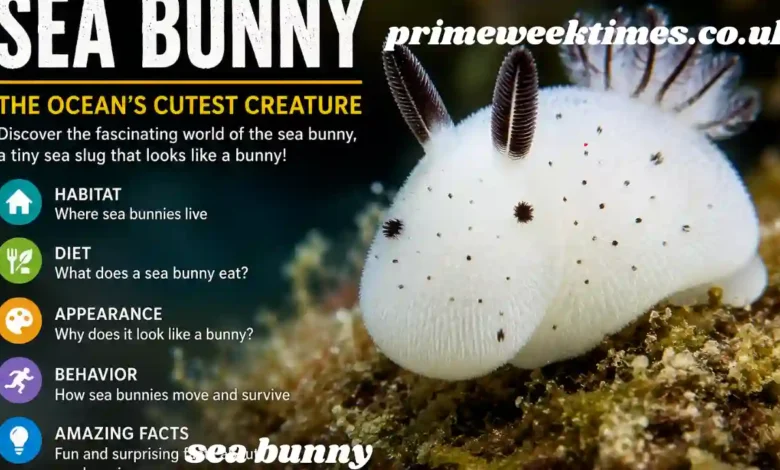
The ocean contains countless animals that look almost unreal, and the sea bunny is one of the most charming examples. With a small, rounded body, soft-looking surface, and two structures on its head that resemble rabbit ears, this tiny marine creature has attracted attention from nature enthusiasts around the world. Despite its adorable nickname, the sea bunny is not related to rabbits at all. It is a type of nudibranch, commonly described as a shell-less marine gastropod or sea slug. Its unusual appearance provides an excellent example of how evolution can produce forms that humans naturally associate with familiar land animals.
The sea bunny became especially popular because close-up photographs make it appear fluffy, expressive, and almost toy-like. In reality, many of the features that give it its rabbit-like appearance have important biological functions. The structures that resemble ears help it sense chemicals in the water, while the feather-like structure toward the rear of its body plays a role in respiration. These adaptations allow the animal to survive and locate food in its underwater environment.
Although the sea bunny is tiny, understanding it opens the door to a much larger discussion about nudibranchs, marine biodiversity, adaptation, camouflage, chemical defenses, ocean ecosystems, and the extraordinary variety of animals living below the surface. The following guide explores what the sea bunny is, why it looks the way it does, where it lives, what it eats, how it survives, and why such a small creature has earned such enormous public interest.
What Is a Sea Bunny?
The name sea bunny is a popular nickname commonly associated with Jorunna parva, a species of nudibranch. Nudibranchs are marine gastropod mollusks known for their bright colors, unusual shapes, and lack of an external adult shell. They are related, in a broad biological sense, to snails and other gastropods rather than to mammals such as rabbits.
Calling the animal a sea bunny is therefore based entirely on its appearance. When viewed closely, its rounded body looks somewhat like the body of a miniature rabbit. Two sensory structures rise from its head and resemble long ears. Depending on the individual and lighting conditions, the animal may appear white, yellowish, brownish, or covered in contrasting dark markings.
One of the reasons the sea bunny looks particularly cute in photographs is the scale at which it is normally shown. Macro photography magnifies an animal that is actually very small. Without magnification, a person might easily overlook one among rocks, sponges, coral structures, or other features of the seafloor.
The sea bunny belongs to a large and diverse group of animals that demonstrate how varied marine gastropods can become. While many people picture snails when they hear the word gastropod, nudibranchs often have no visible shell at all. Instead, their bodies may display exposed respiratory structures, sensory organs, striking textures, and elaborate patterns.
Its tiny size does not make the sea bunny biologically simple. Like other nudibranchs, it has specialized organs for sensing its surroundings, finding food, breathing, moving, reproducing, and protecting itself. What appears to humans as an adorable miniature rabbit is actually a highly adapted marine invertebrate.
Why Does the Sea Bunny Look Like a Rabbit?
The resemblance between a sea bunny and a rabbit is accidental rather than evolutionary imitation. The animal did not develop rabbit-like characteristics because it needed to resemble a rabbit. Instead, people interpret its natural anatomy through familiar visual patterns.
The most obvious rabbit-like feature is the pair of projections found near the front of its body. These structures are called rhinophores. Rhinophores function as sensory organs. They help nudibranchs detect chemical information in the surrounding water, assisting them in tasks such as locating food and interpreting their environment.
To human eyes, however, rhinophores can look remarkably similar to a pair of bunny ears. Their upright position strengthens this visual illusion.
The body surface also contributes to the effect. The sea bunny may appear covered in tiny fuzzy projections, giving it a soft or furry appearance when photographed under magnification. It is important to understand that the animal does not have mammalian fur. Its surface consists of biological structures belonging to a marine mollusk.
Toward the rear of the body is another distinctive feature that can sometimes be mistaken for a little tail or decorative tuft. This feathery structure contains external gills that allow the nudibranch to exchange gases with the surrounding water.
Together, the rounded body, upright rhinophores, textured surface, and rear gills create an appearance that humans naturally interpret as rabbit-like. It is a wonderful example of visual similarity occurring between completely unrelated animals.
How Big Is a Sea Bunny?
One of the most surprising facts about the sea bunny is its small size. Photographs often make it look much larger because photographers use macro lenses to capture tiny details. In real life, sea bunnies are generally only a small number of millimeters to roughly a couple of centimeters long, depending on the individual and stage of development.
That means a sea bunny can be shorter than the width of a human finger.
Its miniature size helps explain why most people never encounter one, even if they visit areas where nudibranchs live. Spotting small marine invertebrates requires patience, good visibility, and careful observation. Divers and underwater photographers often develop a trained eye for identifying tiny movements, unusual textures, and patterns that reveal the presence of nudibranchs.
Small size can also provide advantages. A tiny animal can hide within complicated underwater habitats, move across the surfaces of its food sources, and occupy spaces unavailable to larger organisms.
At the same time, being small creates challenges. A sea bunny must avoid predators and environmental disturbances while obtaining enough food to survive. Its body structure, chemical defenses, and behavior all contribute to meeting those challenges.
The tiny scale of the sea bunny makes its detailed anatomy even more impressive. Features that look large and expressive in photographs exist on an animal that may fit comfortably on the tip of a finger.
Where Does the Sea Bunny Live?
The sea bunny is a marine animal and spends its entire life in saltwater environments. It has been associated particularly with waters of the Indo-Pacific region, including areas around parts of East and Southeast Asia. Nudibranch distribution can vary according to water conditions, habitat availability, food sources, currents, and other ecological factors.
Sea bunnies are bottom-dwelling animals. Rather than swimming continuously through open water, they typically move across submerged surfaces. Their habitat may include rocky areas, reefs, sponge-covered surfaces, and other parts of the seafloor where suitable food is available.
Food availability is especially important because many nudibranch species have specialized diets. Instead of eating almost anything they encounter, they may depend heavily on particular prey organisms. As a result, the presence of those food sources can influence where nudibranchs are found.
Temperature and water quality may also play important roles. Like other marine invertebrates, sea bunnies exist within ecosystems shaped by salinity, oxygen levels, currents, pollution, sediment, and changes in ocean temperature.
Their habitat demonstrates why protecting marine environments involves more than conserving large animals. Tiny species depend on complex networks of organisms and environmental conditions. Damage to a reef, sponge community, or coastal habitat can affect organisms that many people have never even seen.
What Does a Sea Bunny Eat?
The sea bunny is not an herbivore grazing on underwater plants as its rabbit nickname might suggest. Nudibranchs are generally carnivorous, and Jorunna parva is associated with feeding on marine sponges.
Sponges may appear simple and plant-like, but they are animals. They live attached to underwater surfaces and filter food particles from the surrounding water. For certain nudibranchs, sponges provide an important food source.
The relationship between nudibranchs and their prey can be highly specialized. A species may be adapted to recognize, consume, and digest particular organisms that other animals avoid.
Marine sponges can contain chemical compounds that make them less attractive to many potential predators. Some nudibranchs are capable of consuming sponge tissue despite these chemical defenses. Even more interestingly, certain nudibranch species can make use of chemicals obtained through their diet as part of their own defensive strategy.
The exact ecological relationships can be complicated, but the broader lesson is clear: the sea bunny participates in a food web rather than simply existing as a decorative ocean animal. It consumes other organisms and may itself face predation.
Understanding what a sea bunny eats helps reveal how interconnected marine ecosystems are. The survival of one small nudibranch may depend on the survival of the sponge communities that provide its food.
How Does the Sea Bunny Move?
A sea bunny moves in the manner typical of many sea slugs. Instead of walking on legs, it uses a muscular underside called the foot. Waves of muscular movement allow the animal to glide slowly across underwater surfaces.
Its motion may appear almost effortless when viewed closely. A thin layer of mucus can assist movement, reducing friction as the animal travels across rocks, sponge surfaces, and other materials.
The sea bunny is not built for speed. Its survival strategy does not depend on rapidly escaping predators through powerful swimming. Instead, its protection may involve small size, concealment, chemical defenses, and the ability to live among complicated underwater structures.
Slow movement is common among many gastropods. When an animal’s food source does not move rapidly, speed may not provide a major advantage. A nudibranch feeding on stationary organisms such as sponges can afford to travel relatively slowly.
Its careful movement also allows sensory structures to continuously collect information about the surroundings. As it glides forward, the rhinophores help detect chemical signals that may indicate food or environmental changes.
Watching a sea bunny move can change the way people interpret its appearance. In still photographs it may resemble a tiny plush rabbit, but in motion it clearly behaves like the marine gastropod that it is.
The Purpose of the Sea Bunny’s “Ears”
The structures commonly called the sea bunny’s ears are actually rhinophores, and they are among the most important features on its body.
Rhinophores are sensory organs specialized for detecting chemicals dissolved in seawater. They may help a nudibranch recognize nearby food sources, other members of its species, potential reproductive partners, and various environmental signals.
Because visibility underwater can be limited, chemical sensing is extremely valuable. Marine organisms release molecules into the surrounding water, and currents can carry these chemical traces. An animal capable of detecting them may gain important information about what exists nearby.
The rhinophores often have textured surfaces that increase their sensory area. Their shape may vary among nudibranch species, but the pair found on the sea bunny contributes strongly to its famous appearance.
If people think of smell as a useful comparison, they can begin to understand the role of rhinophores, although the actual sensory biology differs from human smell.
What humans interpret as cute bunny ears are therefore sophisticated biological tools. They represent one of many examples in which an animal’s appearance is directly connected to survival.
How Does a Sea Bunny Breathe?
Another noticeable feature of the sea bunny is the flower-like or feathery structure located toward the back of its body. These structures are its external gills.
The word nudibranch itself relates to the concept of exposed or “naked” gills. Unlike animals that hide respiratory structures inside the body, many nudibranchs display highly visible gills.
Water passes around these delicate structures, allowing oxygen to enter the animal’s tissues while carbon dioxide moves out. The large surface area created by branching shapes helps make gas exchange more efficient.
To someone unfamiliar with nudibranch anatomy, the gills may appear decorative. They might even look like a tiny flower or tail. Their actual function, however, is essential to survival.
The exposed nature of the gills illustrates how different marine respiration can be from breathing on land. A sea bunny does not have lungs like a rabbit or human. It obtains oxygen directly from seawater through specialized body structures.
Clean, oxygenated water is therefore crucial for marine animals that rely on aquatic respiration. Major changes in water quality can create serious problems for organisms whose entire respiratory system depends on their surrounding environment.
Does a Sea Bunny Have a Shell?
Adult sea bunny nudibranchs do not carry the obvious external shell associated with conventional snails. The loss or extreme reduction of the adult shell is one of the defining characteristics of nudibranchs.
This raises an interesting question: if shells provide protection, why would an animal survive without one?
Evolution does not always preserve a structure simply because it can be useful. When alternative defenses provide sufficient protection, maintaining a heavy shell may become less necessary. Nudibranchs have developed numerous strategies for surviving without the permanent external shells seen in many other gastropods.
These strategies can include camouflage, warning coloration, chemical defenses, specialized diets, small size, or biological mechanisms that allow them to obtain defensive substances from prey.
Without a large external shell, nudibranchs can also develop flexible and elaborate body shapes. The sea bunny’s exposed gills, rhinophores, textured surface, and rounded body are all part of this distinctive shell-less design.
Its appearance shows that being soft-bodied does not necessarily mean being defenseless.
How Does the Sea Bunny Protect Itself?
At first glance, the sea bunny appears extremely vulnerable. It is small, slow-moving, soft-bodied, and lacks a protective external shell. Yet nudibranchs have survived for millions of years by developing alternative forms of defense.
Chemical protection is particularly important among many species. Nudibranchs may produce defensive chemicals themselves or obtain compounds from organisms they consume. These substances can make them unpleasant or potentially harmful for predators to eat.
Visual appearance may also contribute to survival. Some nudibranchs use camouflage to blend with their surroundings, while others display bold colors that may function as warnings.
A sea bunny’s small size can provide another layer of protection. Tiny animals can hide among complex structures where larger predators may have difficulty detecting or reaching them.
Its slow movement therefore should not automatically be viewed as a weakness. Evolution has given the animal strategies that do not require outrunning attackers.
The sea bunny is a good reminder that defensive strength in nature comes in many forms. Armor, teeth, claws, and speed are only a few possibilities. Chemical biology can be just as powerful.
Sea Bunny Colors and Patterns
Photos of the sea bunny do not always show the same coloration. Some individuals appear white or pale with dark spots, while others may look yellowish, brownish, or somewhat different depending on natural variation, lighting, photographic conditions, and surrounding habitat.
This variety sometimes creates confusion online because viewers expect every sea bunny to look exactly like the most famous photographs.
Marine animals can display considerable variation within a species. Age, environment, genetics, diet, illumination, and photography can all influence how colors appear to human observers.
Underwater photography adds another complication. Water absorbs different wavelengths of light as depth increases. Artificial lighting can restore colors that would otherwise look muted, while camera settings can further influence the final image.
Therefore, a bright macro photograph may not perfectly represent how a sea bunny looks to a diver under natural underwater lighting.
Nevertheless, its combination of textures, contrasting spots, rounded form, and upright rhinophores produces the recognizable appearance that made it famous.
Sea Bunny Reproduction
Like many nudibranchs, the sea bunny has a reproductive system very different from that of mammals. Nudibranchs are generally simultaneous hermaphrodites, meaning an individual possesses both male and female reproductive organs.
This does not normally mean that reproduction occurs completely alone. Two compatible individuals can mate and exchange reproductive material.
Being hermaphroditic may provide an evolutionary advantage for animals that are small and scattered across large marine environments. When encounters with other members of the same species are relatively uncommon, the ability to reproduce with any mature individual encountered can increase reproductive opportunities.
After mating, nudibranchs typically lay groups of eggs, often arranged in ribbons, spirals, or other gelatinous formations attached to underwater surfaces.
The eggs eventually develop through early life stages before becoming recognizable adult nudibranchs. During development, marine currents may influence where young animals eventually settle.
Reproduction allows sea bunny populations to persist even though individual nudibranchs usually have relatively short life spans compared with many larger animals.
Are Sea Bunnies Dangerous to Humans?
The sea bunny is not an animal people need to fear. It is tiny and has no interest in attacking humans.
However, that does not mean people should handle wild sea bunnies. Marine organisms can be extremely delicate, and touching them may injure their bodies or disturb protective mucus coatings.
There is also a broader conservation principle involved. Animals observed while diving, snorkeling, or exploring coastal environments are usually best left where they are found.
Picking up a sea bunny simply for a photograph could expose it to stress, physical damage, temperature changes, or separation from its food source.
Some nudibranchs also contain defensive compounds obtained from their prey, providing another reason that unnecessary handling should be avoided.
The best way to enjoy a sea bunny is through careful observation and responsible underwater photography.
Why Did the Sea Bunny Become So Popular?
The sea bunny achieved international popularity largely because of its appearance in close-up photography and online media. Humans naturally respond strongly to features that resemble familiar animals, especially animals associated with cuteness.
The upright rhinophores look like ears. The rounded body resembles a tiny rabbit. Dark markings can sometimes create the illusion of facial features. Its textured surface looks soft enough to touch.
Together, these traits create an instantly memorable animal.
Its popularity also reflects the power of macro photography. Many extraordinary marine creatures are too small to appreciate easily with the naked eye. High-quality close-up images reveal structures, patterns, and colors that would otherwise remain unnoticed.
The sea bunny therefore became something larger than an internet curiosity. For many people, seeing one for the first time creates interest in nudibranchs, marine biology, underwater photography, and ocean conservation.
A photograph of one tiny animal can introduce someone to an entire ecosystem.
Sea Bunny and Other Nudibranchs
The sea bunny may be one of the most famous nudibranchs, but it is only one member of an extraordinarily diverse group.
Nudibranch species can resemble leaves, flowers, dragons, sheep, flames, lace, or brightly colored abstract sculptures. Their colors range from nearly transparent to intense combinations of blue, orange, purple, yellow, red, black, and white.
Some species blend almost perfectly with their prey or habitat. Others display colors so bright that hiding appears to be the last thing they are attempting.
Their body structures can include elaborate appendages called cerata, exposed gills, decorative ridges, unusual rhinophores, and complex surface patterns.
Different nudibranch species may specialize in feeding on sponges, hydroids, corals, sea anemones, bryozoans, eggs, or even other sea slugs.
The sea bunny is therefore part of a much larger evolutionary story about specialization and marine diversity. Its rabbit-like appearance is fascinating, but the biology shared with other nudibranchs is arguably even more remarkable.
Can You Keep a Sea Bunny as a Pet?
Because the sea bunny looks adorable, some people naturally wonder whether it can be kept in a home aquarium. In practice, specialized nudibranchs are generally poor choices for ordinary marine aquariums.
The greatest challenge is diet. Many nudibranchs require specific prey species, and maintaining a reliable supply of suitable live food can be extremely difficult.
A sea bunny cannot simply be fed ordinary fish flakes or general aquarium food. If its natural food source is unavailable, the animal may slowly starve even if the aquarium appears healthy.
Water quality is another major concern. Tiny marine invertebrates can be sensitive to changes in temperature, salinity, oxygen, contaminants, and chemistry.
They may also have relatively short life spans, meaning even excellent aquarium care cannot turn them into long-lived household pets.
For these reasons, sea bunnies are far better appreciated in their natural environment or through responsible photography than collected for casual aquarium ownership.
The Ecological Importance of Small Marine Animals
The popularity of the sea bunny can help people understand an important environmental lesson: an ecosystem’s value is not determined by the size or fame of its animals.
Public discussions about ocean conservation often focus on whales, sharks, dolphins, sea turtles, and large coral reefs. Those organisms are important, but they depend on complicated ecological networks containing enormous numbers of smaller species.
Sponges filter seawater and provide food or habitat for other organisms. Nudibranchs feed on sponges and other invertebrates. Fish may feed on smaller animals. Microorganisms recycle nutrients. Algae and microscopic plankton support broader food webs.
Remove enough small pieces from this network and larger systems can begin to change.
The sea bunny may measure only around a centimeter or two, but it participates in interactions involving prey, predators, reproduction, competition, microbes, and water chemistry.
Protecting marine biodiversity therefore means protecting entire habitats rather than selecting only the animals humans find impressive.
Threats Facing Sea Bunny Habitats
Like other small marine creatures, the sea bunny depends on healthy ocean environments. Habitat degradation can potentially affect nudibranch populations directly or indirectly.
Pollution is one concern. Chemicals, plastics, sewage, agricultural runoff, and other contaminants can alter coastal ecosystems. Small organisms may be particularly vulnerable because they live directly on underwater surfaces where pollutants can accumulate.
Rising ocean temperatures can also change the distribution of marine species. If sponge communities shift because of temperature changes, nudibranchs that depend on those sponges may also be affected.
Ocean acidification represents another concern for marine ecosystems. Although adult nudibranchs lack the large external shells seen in many gastropods, changes in seawater chemistry can still influence food webs and developmental processes throughout marine communities.
Physical damage to reefs and coastal habitats may remove feeding areas or shelter.
The complicated nature of these relationships makes it difficult to predict exactly how each species will respond to environmental change. What is clear is that maintaining healthy marine habitats gives small specialized animals the best chance of continuing to survive.
Interesting Sea Bunny Facts
The sea bunny offers far more than a cute appearance. Its nickname comes from its resemblance to a rabbit, yet biologically it is a marine gastropod. The apparent ears are sensory structures known as rhinophores, while the feathery structure near the rear consists of external gills.
It moves by gliding on a muscular foot rather than using legs. It is also carnivorous despite sharing a nickname with a plant-eating mammal.
Another fascinating fact is that sea bunnies are hermaphroditic, meaning individuals possess both male and female reproductive organs.
Their apparent fluffiness is also an illusion. What looks like fur in enlarged photographs consists of tiny structures covering the body rather than actual hair.
Perhaps the most surprising fact is simply how small the animal is. Photographs can make it look large enough to hold like a rabbit-shaped toy, yet an actual sea bunny is tiny.
Its fame demonstrates that some of the ocean’s most fascinating discoveries are not giants hiding in deep water. Sometimes they are miniature animals living quietly on the seafloor.
Why Scientists Study Nudibranchs
The sea bunny and other nudibranchs are scientifically interesting for several reasons.
Their diets can reveal relationships between predators and prey. Their chemical defenses may provide insights into natural compounds and ecological interactions. Their coloration helps researchers examine camouflage, warning signals, and evolutionary adaptation.
Nudibranch distribution can also provide information about marine biodiversity. Changes in where particular species are observed may reflect changes in water conditions, prey availability, ocean currents, or habitat quality.
Their reproductive biology and developmental stages offer additional areas of research.
Taxonomy is another important field because identifying nudibranch species can be difficult. Animals that look similar may belong to different species, while members of the same species can sometimes vary significantly in appearance.
Modern research combines physical observation with genetic techniques to better understand these relationships.
The popularity of the sea bunny can therefore benefit science indirectly. When people become interested in a visually appealing animal, they may begin learning about the broader biological questions surrounding it.
How to Observe a Sea Bunny Responsibly
Anyone fortunate enough to encounter a sea bunny while diving should treat the experience as an opportunity to observe rather than interfere.
The animal should not be touched, squeezed, picked up, repositioned, or removed from its habitat simply to improve a photograph.
Underwater photographers can capture impressive images without making direct contact. Patience is especially important because nudibranchs move slowly. Allowing the animal to behave naturally usually produces both more ethical and more informative photographs.
Divers should also avoid damaging surrounding sponges, coral structures, rocks, or other organisms while attempting to photograph a tiny subject.
Good buoyancy control is essential in sensitive habitats. One careless movement can cause more environmental damage than the photograph is worth.
Responsible wildlife observation allows other people and future generations to experience these remarkable animals in their natural surroundings.
Common Misconceptions About the Sea Bunny
Because the sea bunny is widely shared online, several misunderstandings can develop around it.
The first is that it is somehow related to rabbits. It is not. The resemblance is simply visual.
Another misconception is that the structures resembling ears are decorative. In reality, they are functional sensory organs.
Some viewers assume the animal has fur. Its body may look fluffy under magnification, but it does not possess mammalian hair.
People may also assume that such an adorable animal must be harmless to every organism around it. From an ecological perspective, however, the sea bunny is a predator because it consumes other animals such as sponges.
Another misconception is that it would make an easy aquarium pet. Its specialized feeding requirements and delicate biology make captive care challenging.
Understanding these differences makes the animal even more interesting because its true biology is far more complex than its nickname suggests.
What the Sea Bunny Teaches About Ocean Biodiversity
The sea bunny demonstrates how little of the ocean’s visual diversity most people experience during everyday life.
On land, humans regularly encounter birds, insects, mammals, trees, flowers, and other familiar organisms. Underwater environments contain equally remarkable diversity, but much of it remains hidden from anyone who does not dive, study marine biology, or examine underwater photography.
A tiny nudibranch can possess sensory structures, specialized feeding behavior, chemical defenses, reproductive adaptations, and coloration unlike anything commonly seen on land.
Studying such animals challenges the assumption that important wildlife must be large.
Marine biodiversity exists at every scale, from microscopic plankton to enormous whales. The health of ocean ecosystems depends on interactions among organisms of all sizes.
The sea bunny’s greatest contribution to public awareness may therefore be its ability to make people curious. Curiosity about one adorable sea slug can quickly become curiosity about reefs, sponges, mollusks, marine ecology, conservation, and evolutionary biology.
Final Thoughts on the Sea Bunny
The sea bunny is one of the ocean’s most memorable small creatures. Its rounded form, apparent bunny ears, textured body, and miniature size have transformed an obscure nudibranch into an internationally recognized marine animal. Yet the biological reality behind its appearance is far more fascinating than the nickname alone.
It is not a rabbit and does not have fur, paws, or lungs. It is a specialized marine gastropod equipped with rhinophores for sensing chemical signals, external gills for respiration, a muscular foot for movement, and feeding adaptations that allow it to consume marine sponges.
Its small size demonstrates the extraordinary level of complexity that can exist within even the tiniest animals. Every part of its body reflects adaptation to life beneath the sea.
The sea bunny also represents something larger. It shows how a single appealing animal can inspire interest in marine science and conservation. People may first notice it because it looks cute, but learning about its biology quickly reveals complex ecological relationships and remarkable evolutionary adaptations.
From sponge-covered seafloors to the world of underwater macro photography, the sea bunny reminds people that some of nature’s greatest wonders can be extremely small. Protecting the oceans means protecting not only famous whales, dolphins, sharks, and turtles but also the countless tiny organisms that make marine ecosystems diverse and functional.
For anyone fascinated by unusual wildlife, the sea bunny offers the perfect example of why the ocean continues to surprise humanity. Beneath its playful nickname lies a highly specialized nudibranch whose sensory abilities, diet, respiration, reproduction, defenses, and ecological role reveal the extraordinary creativity of life in the sea.
ALSO READ : Socks With Skis: Complete Guide to Comfort, Warmth, and Better Skiing