
james e cartwright: Military Leadership, Strategic Vision, Career and Legacy
james e cartwright and His Place in Modern American Military History
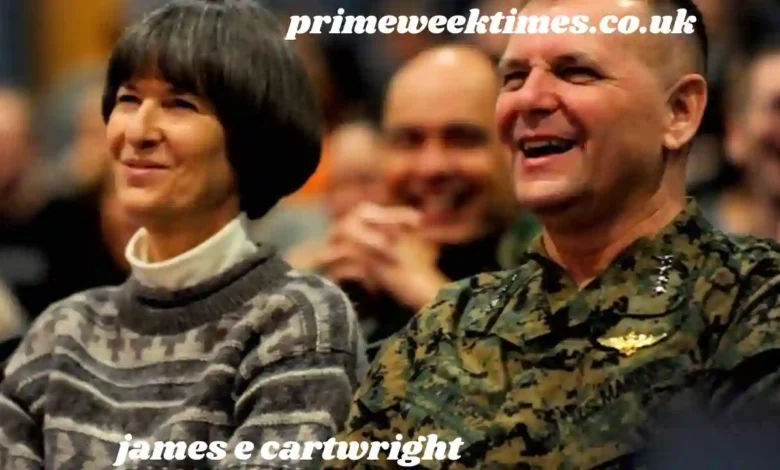
james e cartwright is a retired United States Marine Corps general whose career placed him near the center of some of the most important military, technological, and national security discussions of the early twenty-first century. Rising to the rank of four-star general and eventually becoming Vice Chairman of the Joint Chiefs of Staff, he occupied positions that required not only traditional military leadership but also a sophisticated understanding of nuclear deterrence, missile defense, cyber operations, emerging technology, intelligence, and the changing character of warfare. His long career therefore provides a useful window into an era when the American military was moving from largely conventional ideas of defense toward a much more interconnected world of networks, precision weapons, information systems, space assets, and cybersecurity.
His story is especially notable because it does not fit neatly into the traditional image of a senior military commander. Although james e cartwright was a Marine aviator and spent decades in uniform, much of his reputation at the highest levels of government came from his interest in technology and his willingness to question established assumptions. He became associated with discussions about how the United States should prepare for threats that might not resemble conventional wars of the past. Strategic deterrence, cyber capabilities, missile systems, global strike concepts, and technologically advanced defense programs all became important parts of the professional environment surrounding his leadership.
At the same time, his public record contains significant controversy. Several years after leaving active military service, Cartwright became involved in a federal investigation concerning unauthorized disclosure of classified information. In 2016, he pleaded guilty to making false statements to federal investigators. Before sentencing took place, President Barack Obama granted him a pardon in January 2017. That episode became an unavoidable part of his public biography and complicated the legacy of a man who had previously held one of the most trusted positions in the U.S. national security establishment.
Understanding james e cartwright therefore requires looking at the complete picture. His career included decades of military service, aviation experience, leadership of U.S. Strategic Command, four years as Vice Chairman of the Joint Chiefs of Staff, involvement in major defense-policy discussions, and later legal controversy. Taken together, these chapters explain why his name continues to appear in discussions about American military leadership, technological transformation, strategic deterrence, cybersecurity, and government accountability.
Early Life and the Beginning of a Military Career
James Edward Cartwright was born on September 22, 1949, in Rockford, Illinois. His path toward senior military leadership began during an era of enormous change in American society and defense policy. The Cold War remained a defining feature of international affairs, military aviation was advancing rapidly, and the United States was learning difficult lessons about the limits and possibilities of modern military power.
Cartwright attended the University of Iowa and later entered the United States Marine Corps. What followed was a military career lasting roughly four decades. His development as an officer coincided with major changes in the Marine Corps and the broader Department of Defense. Aircraft became increasingly sophisticated, digital technology entered military operations, precision-guided weapons transformed battlefield planning, and communication systems became more important to command and control.
As a Marine aviator, Cartwright gained direct exposure to the demanding combination of technology, training, judgment, and leadership that military aviation requires. He became associated with fighter aviation and gained experience that helped shape his later interest in sophisticated weapons and technological systems. Aviation officers operate in an environment where human decision-making and complex machinery are closely connected, and this background appears consistent with the technological orientation for which Cartwright would later become widely known.
Career advancement within the military requires far more than technical skill. Officers who reach general rank usually move through increasingly demanding assignments involving command, planning, operations, personnel management, policy, and joint-service cooperation. Cartwright’s progression eventually brought him from Marine Corps aviation into positions where he was addressing challenges affecting the entire U.S. defense establishment rather than a single aircraft, squadron, or military service.
That transition would become one of the defining features of james e cartwright. He increasingly operated at the intersection of military operations, strategic policy, technological innovation, and government decision-making.
Rise Through the United States Marine Corps
The rise of james e cartwright through the Marine Corps reflected both operational experience and an ability to work with complex strategic issues. Over the course of his career, he held command and staff assignments that expanded his responsibilities and exposed him to increasingly broad national security questions.
The Marine Corps has historically emphasized adaptability. Marines may operate from ships, aircraft, temporary bases, or expeditionary positions, and this culture places a strong premium on flexibility. Cartwright’s later approach to strategy often appeared compatible with that mindset. Rather than viewing defense challenges only through established organizational categories, he became known for considering how different technologies and capabilities could be combined.
His aviation background also distinguished him from senior officers whose careers were centered primarily on ground combat. Aviation demands detailed understanding of communications, sensors, weapons, navigation, information, logistics, maintenance, and command systems. As military operations became increasingly dependent on networks and data, experience with interconnected technological systems became particularly relevant.
By the time Cartwright reached the senior general-officer ranks, the United States was facing a security environment very different from the one that existed when his career began. The Soviet Union had collapsed, the Cold War had ended, the Gulf War had demonstrated the power of precision warfare, terrorism had emerged as a major national security concern, and military dependence on digital technology was growing rapidly.
Senior leaders now had to consider nuclear weapons alongside terrorism, regional conflict, ballistic missiles, cyber threats, satellites, intelligence networks, and precision strike capabilities. Cartwright became one of the military figures associated with efforts to think about these different challenges as parts of a connected strategic environment.
Leadership of U.S. Strategic Command
One of the most important chapters in the career of james e cartwright began when he became commander of United States Strategic Command, commonly known as USSTRATCOM, in 2004. He remained in the position until 2007.
Strategic Command has responsibilities connected to some of the most consequential capabilities possessed by the United States. Historically, strategic military thinking was strongly associated with nuclear deterrence. During the Cold War, the possibility of nuclear conflict between major powers shaped American defense planning for decades. By the time Cartwright took command, however, strategic threats were becoming more diverse.
The challenge was no longer simply maintaining a credible nuclear deterrent against another nuclear superpower. American planners were also confronting ballistic missile proliferation, cyber vulnerabilities, threats to space-based systems, rapidly developing communications technology, and the possibility that future adversaries could challenge the United States without engaging in traditional large-scale warfare.
Cartwright’s tenure occurred during a period when strategic planners were examining how nuclear and conventional capabilities might coexist within a wider deterrence framework. The idea of strategic power was expanding beyond nuclear weapons alone. Precision conventional weapons, information operations, cyber capabilities, intelligence systems, missile defenses, and other emerging technologies increasingly influenced calculations about deterrence.
This broader approach became strongly associated with Cartwright’s public reputation. He was frequently regarded as a technologically minded senior commander who was willing to reconsider long-standing assumptions.
The importance of this approach becomes clearer when considering how warfare had changed. A military network could be attacked without an enemy crossing a physical border. Satellites could become critical to communications, navigation, intelligence, and precision operations. Computer systems could become both military assets and potential vulnerabilities. Long-range conventional weapons could create strategic effects once associated mainly with nuclear systems.
For leaders such as james e cartwright, strategic planning increasingly required thinking across multiple domains at once.
Technology as a Central Theme in His Leadership
One of the strongest themes associated with james e cartwright is technology. Senior military leadership has always required an understanding of weapons and communication systems, but the technological transformation of warfare accelerated dramatically during Cartwright’s career.
Digital networks changed how commanders received information. Satellite systems became essential to navigation and intelligence. Unmanned aircraft became increasingly important. Cybersecurity moved from being viewed mainly as a technical problem to becoming a major national security concern. Precision-guided weapons improved, sensors became more capable, and enormous quantities of information became available to military decision-makers.
Cartwright became known as an officer particularly comfortable discussing these developments.
His approach reflected an important reality about twenty-first-century defense: possessing powerful individual weapons is not sufficient if military organizations cannot connect information, people, sensors, communication networks, and decision-making systems effectively. Increasingly, the advantage belongs not simply to the force with the largest number of platforms but to the force capable of identifying threats, processing information, making decisions, and acting faster and more accurately.
That systems-oriented way of thinking contributed significantly to Cartwright’s professional reputation.
It also placed him in conversations about defense acquisition. Developing advanced military technology can take many years and cost enormous amounts of money. By the time a system is deployed, technology or strategic conditions may already have changed. This creates a persistent challenge for defense planners: how can a large organization adopt new capabilities quickly while still maintaining reliability, security, accountability, and affordability?
These questions became increasingly important during the years when Cartwright held senior leadership positions.
james e cartwright as Vice Chairman of the Joint Chiefs of Staff
In 2007, james e cartwright was appointed Vice Chairman of the Joint Chiefs of Staff. He served in that role until August 2011.
The Vice Chairman is the second-highest-ranking military officer in the United States Armed Forces. The position places its holder near the center of military advice provided to the president, secretary of defense, National Security Council, and other senior officials.
Cartwright served during an extraordinarily demanding period. The United States remained heavily involved in military operations in Iraq and Afghanistan. Terrorism continued to shape national security policy. Iran’s nuclear program created serious strategic concerns. North Korea remained an important security challenge. At the same time, China was becoming increasingly significant in American long-term defense planning, while cyber threats were receiving much greater attention.
Serving as Vice Chairman required engaging with issues that ranged from immediate military operations to decisions whose consequences could extend decades into the future.
Cartwright served in the position during both the George W. Bush and Barack Obama administrations. Serving across presidential administrations is significant because senior military leaders must provide professional advice regardless of changes in political leadership. They must explain military options while remaining mindful that final national security decisions belong to civilian authorities.
His tenure also placed him inside major debates regarding American strategy in Afghanistan. During the Obama administration, officials considered competing options for addressing the conflict, including decisions over troop levels and the larger purpose of the American mission. Cartwright participated in a national security environment where senior military and civilian officials did not always agree on the best approach.
Such disagreement is not necessarily unusual. Healthy national security decision-making can involve competing assessments from military officers, diplomats, intelligence officials, political leaders, and policy specialists. What matters is whether decision-makers receive realistic options and understand their likely consequences.
Cartwright’s willingness to consider alternatives contributed to his reputation as an independent thinker.
Cybersecurity and a Changing Battlefield
Any examination of james e cartwright also requires attention to cybersecurity. During his time at the highest levels of military leadership, cyber operations were emerging as a major area of defense policy.
Traditional military thinking is often organized around physical domains such as land, sea, and air. Space later became vital because satellites support communications, navigation, early warning, and intelligence. Cyberspace introduced an additional challenge because digital networks can connect military systems, governments, businesses, infrastructure, and individuals across national borders.
A cyberattack may occur without a conventional battlefield. Its source may initially be difficult to identify. The effects can range from espionage and stolen information to disruption of military communications or important infrastructure.
This environment forced military planners to reconsider ideas such as deterrence and retaliation. During the Cold War, deterrence relied partly on convincing an opponent that a devastating attack would produce an unacceptable response. Applying similar logic to cyberspace is far more complicated. Attribution can be uncertain, attackers can hide their identities, and the appropriate response to a digital attack may not always be another digital attack.
Cartwright’s interest in technology made him an important participant in the period when these issues were moving toward the center of American defense planning.
The increasing importance of U.S. Cyber Command and cyber defense during this era reflected a larger transformation. Information networks were no longer simply support systems for military operations. They were becoming a contested environment in their own right.
Strategic Deterrence Beyond the Cold War
Another key area associated with james e cartwright is strategic deterrence.
For much of the second half of the twentieth century, the idea of deterrence was dominated by nuclear competition between the United States and Soviet Union. Both possessed the ability to inflict catastrophic destruction, making the consequences of direct conflict potentially unbearable.
After the Cold War, deterrence became more complicated.
The United States had to consider nuclear powers, emerging nuclear states, regional adversaries, terrorist organizations, cyber attackers, missile threats, and other actors whose motivations and capabilities differed dramatically.
A strategy effective against one opponent might be ineffective against another. A government may be deterred by the threat of military retaliation because it has territory, infrastructure, and political institutions to protect. A decentralized terrorist organization may calculate risk differently. Cyber actors may operate below the threshold normally associated with armed conflict.
Cartwright’s strategic career unfolded during this transition.
This helps explain why concepts involving missile defense, conventional long-range strike capabilities, cyber operations, and improved intelligence became increasingly connected to deterrence discussions. Nuclear weapons remained enormously important, but planners were examining a much broader collection of tools.
Cartwright’s work became associated with this transition from a relatively narrow conception of strategic deterrence toward a more integrated model involving different technologies and military capabilities.
Military Innovation and Institutional Resistance
Innovation inside a large military organization can be difficult.
Armed forces must prepare for threats that have not yet fully emerged while continuing to manage existing operations. They must invest in technologies that may take years to develop, yet avoid spending enormous sums on systems that could become obsolete. They must encourage experimentation while maintaining standards that protect lives and national security.
Senior officials promoting technological change therefore operate in an environment filled with competing priorities.
james e cartwright developed a reputation for challenging established assumptions and supporting unconventional approaches. This could make him influential, but innovation can also create institutional friction.
Military services naturally possess their own cultures, priorities, weapons programs, and ideas about future warfare. The Army, Navy, Air Force, Marine Corps, and other organizations may agree on broad national objectives while disagreeing over how limited resources should be spent.
Should money go toward aircraft, ships, missile defense, cybersecurity, nuclear modernization, unmanned systems, intelligence, ground forces, or emerging technologies?
There is rarely an easy answer.
Leaders who attempt to shift money or authority from established programs toward new ideas can encounter opposition. Cartwright’s career demonstrates how strategic innovation is partly about technology but also about organizations. Developing a new capability requires budgets, personnel, policies, training, doctrine, political support, and cooperation among institutions that may have different interests.
Retirement After Four Decades of Service
james e cartwright retired from the United States Marine Corps on September 1, 2011, ending approximately forty years of active-duty service.
Retirement from military service did not remove him completely from national security discussions. Individuals who have occupied extremely senior military positions often continue contributing through research institutions, advisory roles, consulting, academic discussions, commissions, or policy organizations.
Cartwright remained associated with discussions involving national security, technology, deterrence, and defense innovation. His experience gave him an unusual perspective because he had operated at several levels of military leadership, from aviation to strategic command and eventually the Joint Chiefs of Staff.
His post-military public profile, however, would later be dramatically affected by a federal investigation.
Federal Investigation and Guilty Plea
The most controversial chapter in the public story of james e cartwright emerged several years after his military retirement.
Federal investigators examined unauthorized disclosure of classified national security information. The investigation eventually focused on Cartwright’s interactions involving journalists and on statements he made to federal investigators.
On October 17, 2016, Cartwright pleaded guilty to a federal felony charge of making false statements to investigators in connection with the investigation.
The distinction is important when describing the case accurately. His guilty plea concerned false statements made to federal investigators. Discussions of the episode are sometimes simplified into broader descriptions about classified leaks, but precise language is necessary when explaining criminal proceedings.
The case attracted substantial attention because Cartwright had previously been one of the highest-ranking military officers in the United States and had held access to extraordinarily sensitive national security information.
Senior officials entrusted with classified material operate under strict legal and professional obligations. Protecting sensitive information can involve military operations, intelligence sources, technological capabilities, diplomatic relationships, and the safety of individuals. For that reason, cases involving classified information and statements made during federal investigations receive significant scrutiny.
The guilty plea altered public discussion of Cartwright’s legacy. His earlier career had often been discussed primarily in relation to military innovation, strategic thinking, and technological expertise. The legal case added a very different dimension involving responsibility, classified information, investigative procedures, and accountability.
Presidential Pardon by Barack Obama
The legal case took another major turn shortly before Barack Obama left the presidency.
On January 17, 2017, President Obama granted james e cartwright a full presidential pardon. The pardon occurred before Cartwright was sentenced for the offense to which he had pleaded guilty.
The U.S. Constitution gives presidents broad authority to issue pardons for federal offenses. A presidential pardon does not erase historical events or prevent public discussion of the underlying conduct. Instead, it represents an exercise of executive clemency with important legal consequences.
Cartwright’s pardon generated public discussion because of both his previous position and the national security context surrounding his case.
Supporters could point to his decades of military service and long record in senior national security positions when considering the decision. Critics could emphasize the importance of accountability involving classified information and truthful cooperation with federal investigations.
Those competing reactions illustrate why the episode remains an important component of his biography.
The pardon also makes careful wording particularly important. A complete account should acknowledge both the 2016 guilty plea and the January 2017 presidential pardon rather than presenting only one side of the sequence.
Leadership Style and Reputation for Independent Thinking
Beyond formal positions and controversies, james e cartwright became known for a leadership style associated with technical curiosity and unconventional thinking.
Military organizations depend on discipline and established procedures, but senior strategy also requires people willing to question whether existing systems remain appropriate for future threats. The difficulty is finding the correct balance between innovation and stability.
Change too slowly, and an organization risks becoming unprepared for emerging threats. Change too quickly, and it may abandon proven capabilities before reliable alternatives exist.
Cartwright’s reputation suggests that he was often inclined toward experimentation and technological adaptation.
That characteristic helped distinguish him in national security circles. His professional identity was not based solely on his rank or aviation background. He became associated with the idea that senior military leadership needed to understand networks, information, computers, missile technology, space capabilities, and advanced weapons as deeply as it understood traditional platforms.
Today, that argument may appear obvious. Modern military operations depend heavily on software, satellites, digital communications, data analysis, cyber defense, unmanned platforms, and networked sensors. During earlier stages of this transformation, however, pushing these subjects higher on the institutional agenda could require considerable effort.
In that sense, Cartwright’s career reflected a broader change in what military expertise meant.
Why james e cartwright Remains Relevant
The continuing relevance of james e cartwright comes from several overlapping themes.
First, his career illustrates the technological transformation of the American military. He entered service during an era dominated by Cold War structures and retired during an era defined by counterterrorism, unmanned systems, cyber operations, precision warfare, and global digital networks.
Second, his leadership at U.S. Strategic Command places him within the history of American nuclear and strategic deterrence policy. The commander’s responsibilities involve questions with potentially enormous consequences, requiring careful understanding of technology, adversaries, escalation, and national policy.
Third, his tenure as Vice Chairman of the Joint Chiefs of Staff placed him directly within national security decision-making during years of continuing wars and strategic transition.
Fourth, his later legal case demonstrates how questions of secrecy and accountability remain relevant even after officials leave government service. Access to sensitive information creates responsibilities that can continue beyond retirement.
Finally, the presidential pardon adds another constitutional and political dimension to his story. It connects his biography not only to military history but also to presidential clemency and debates over how long public service, individual conduct, law, and executive authority should interact.
A Career Reflecting the Evolution of Modern Warfare
Perhaps the most useful way to understand james e cartwright is to place his career beside the transformation of warfare that occurred during his lifetime.
When he entered military service, many of the technologies central to today’s battlefield either did not exist or existed only in primitive forms. Modern global computer networks had not yet reshaped society. GPS had not become an everyday military and civilian tool. Unmanned aircraft had not assumed their modern role. Cyber warfare was not a major public defense category. Artificial intelligence had not become a central strategic discussion.
By the time Cartwright retired, almost every one of those areas had become relevant to military planning.
The transformation was not merely technical. It changed organizational relationships and decision-making.
A satellite can support a pilot, ship, infantry unit, intelligence analyst, and command center simultaneously. A cyber vulnerability in a civilian system can create national security consequences. A piece of software can affect the usefulness of extremely expensive military hardware. Information gathered by one organization can alter decisions made by another thousands of miles away.
Modern warfare is increasingly about connections.
Cartwright’s fascination with technological integration therefore reflected a larger structural change in defense strategy.
Lessons From the Career of james e cartwright
There are several broader lessons that can be drawn from the career of james e cartwright without turning his biography into either uncritical praise or simple condemnation.
One is that military leadership evolves with technology.
A successful officer in one era may need a different range of knowledge than a successful officer in another. Physical courage, discipline, leadership, and operational judgment remain essential, but senior commanders increasingly need enough technological understanding to evaluate cyber threats, artificial intelligence, information systems, autonomous weapons, satellites, and other advanced capabilities.
A second lesson concerns institutional change.
Large organizations rarely transform simply because a new technology appears. People must determine how that technology fits within existing structures, budgets, laws, responsibilities, and strategies. Those questions often create disagreements.
A third lesson concerns accountability.
Reaching a senior position does not remove the obligations attached to sensitive government information or interactions with investigators. Cartwright’s 2016 guilty plea made that reality part of his public legacy.
A fourth lesson concerns complexity.
Public figures who spend decades in national service rarely have careers that can be accurately summarized as entirely successful or entirely unsuccessful. Achievements, strategic contributions, disagreements, mistakes, and controversies may all coexist.
That is particularly true for james e cartwright.
Public Legacy and Historical Assessment
Historical assessments of senior military officials often evolve over time. Immediate judgments tend to focus on particular decisions or controversies, while later evaluations place careers within a broader institutional and strategic context.
For james e cartwright, any serious assessment is likely to include his contribution to discussions about military technology, his leadership of U.S. Strategic Command, his term as Vice Chairman, his involvement in the transformation of American defense thinking, and the federal case that followed his retirement.
His technological orientation may be especially significant when viewed from today’s perspective.
Cybersecurity is now firmly embedded in national defense planning. Space has become increasingly prominent as a military domain. Unmanned and autonomous systems continue to develop. Artificial intelligence is influencing intelligence analysis, targeting, logistics, communications, and strategic competition. Hypersonic weapons and advanced missile systems have become major subjects of defense policy.
Many of these developments reinforce the broader principle that Cartwright emphasized during his senior leadership years: national defense can no longer be understood by looking at individual weapons or military services in isolation.
At the same time, the controversy surrounding his conduct reminds observers that strategic expertise and professional achievement do not place any official beyond scrutiny.
Both elements belong in the historical record.
james e cartwright in the Broader Story of U.S. National Security
The career of james e cartwright intersects with several major chapters in recent American history.
He served during the final decades of the Cold War and witnessed the transition that followed the Soviet Union’s collapse. He remained in uniform as the United States adjusted to regional conflicts and increasingly sophisticated precision warfare. He held senior command as terrorism and irregular warfare became major priorities after the attacks of September 11, 2001. He participated in strategic discussions while Iraq and Afghanistan dominated military operations.
At the same time, he helped lead a defense establishment preparing for an entirely different category of future challenges.
Cyber threats, ballistic missiles, nuclear proliferation, space vulnerabilities, advanced conventional strike systems, and rapidly changing technologies demanded attention even while American forces were fighting ongoing wars.
This tension remains familiar in military planning. Leaders must manage today’s conflict while simultaneously preparing for tomorrow’s.
Resources devoted to current operations cannot automatically be devoted to future modernization. Yet delaying modernization can leave a country vulnerable years later.
Cartwright operated repeatedly within this tension, making his career useful for understanding the demands placed on senior military planners during periods of rapid technological change.
Conclusion
james e cartwright built a long and consequential career in the United States Marine Corps, ultimately reaching the rank of four-star general and serving in two of the most influential military positions in the country. His command of U.S. Strategic Command placed him at the center of strategic deterrence, nuclear policy, missile defense, and emerging security challenges. His service as Vice Chairman of the Joint Chiefs of Staff brought him into national-level decision-making during years marked by wars, terrorism, technological transformation, and changing geopolitical competition.
One of the clearest characteristics of his career was an interest in technology and integration. He became associated with efforts to think beyond traditional divisions between weapons, services, and military domains. Cybersecurity, information networks, advanced strike systems, missile defense, space capabilities, and technological innovation all formed part of the strategic environment in which he worked.
His biography also contains serious controversy. The 2016 guilty plea for making false statements to federal investigators became a major part of his post-military public record. President Barack Obama’s pardon in January 2017 changed the legal course of the case but did not remove the episode from historical discussion.
For that reason, the story of james e cartwright is best understood as a complex one. It combines four decades of military service with senior strategic leadership, technological experimentation, institutional influence, legal controversy, and presidential clemency.
His career also reflects something larger than one individual’s professional journey. It mirrors the transformation of American military strategy from the Cold War world of nuclear superpower competition toward a security environment shaped by cyber operations, global networks, precision technologies, space systems, unconventional threats, and rapidly evolving forms of deterrence.
As military technology continues to change, questions that occupied leaders during Cartwright’s career remain highly relevant. How should nations adapt established military institutions to emerging technologies? How can innovation be accelerated without sacrificing reliability and accountability? How should cyber, nuclear, conventional, and space capabilities interact? And how should officials entrusted with extraordinary access and authority be held responsible for their decisions?
ALSO READ : Matthew Wright – Biography, Career, The Wright Stuff and Life