
Combine B1 and MSM Together: Benefits, Uses, Safety, and What You Should Know
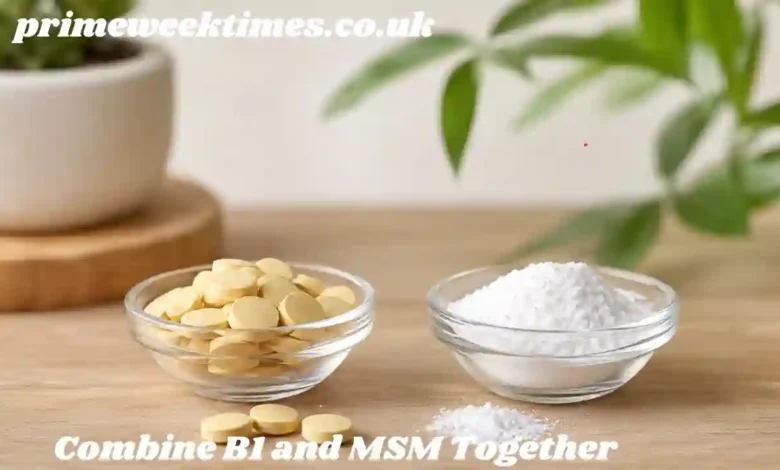
The question of whether you can Combine B1 and MSM Together has become interesting for people who are exploring nutritional supplements for energy, general wellness, muscles, joints, and everyday health. Vitamin B1, also known as thiamine, and MSM, short for methylsulfonylmethane, are very different substances with different roles in the body. B1 is an essential vitamin that participates in energy metabolism and normal cellular function, while MSM is a sulfur-containing compound commonly marketed as a dietary supplement, particularly for joint and exercise-related support. Because they work through different biological pathways, some people wonder whether taking them together offers a special advantage.
In general, there is no well-established reason that vitamin B1 and MSM cannot be taken together by a healthy adult when used appropriately. However, that does not automatically mean that combining them produces a proven “synergistic” effect. Research on vitamin B1 is much more established because thiamine is an essential nutrient with clearly defined physiological functions. Research on MSM is more limited and has focused heavily on areas such as osteoarthritis symptoms and musculoskeletal discomfort. The National Center for Complementary and Integrative Health notes that there is still not enough research to reach firm conclusions about MSM for osteoarthritis.
Understanding the difference between these two supplements is therefore important before deciding whether to Combine B1 and MSM Together. Rather than viewing them as a single treatment, it is more accurate to consider what each substance does individually, why someone might use it, what the research actually shows, and what safety considerations should be kept in mind.
What Is Vitamin B1?
Vitamin B1, commonly called thiamine, is an essential water-soluble vitamin. The body needs it to help convert food into usable energy and to support normal growth, development, and cellular function. According to the U.S. National Institutes of Health Office of Dietary Supplements, thiamine plays an important role in turning the food a person eats into the energy the body needs.
Because the body does not store large amounts of thiamine, regular dietary intake is important. Vitamin B1 can be obtained from foods such as whole grains, fortified breads and cereals, meat, fish, legumes, seeds, and nuts. Pork is particularly rich in thiamine. A varied diet can provide the vitamin B1 required by most people without the need for a high-dose supplement.
Thiamine is particularly relevant to energy metabolism because several enzymes involved in carbohydrate metabolism depend on thiamine-related compounds. In simple terms, eating carbohydrates, fats, and proteins gives the body raw materials for energy production, while vitamins such as B1 help the biochemical machinery process those nutrients.
This is why vitamin B1 is sometimes associated with energy, metabolism, nervous-system function, and overall nutritional health. However, taking additional B1 when someone already gets enough from food does not necessarily translate into dramatically higher energy. A vitamin generally helps correct or prevent inadequate intake rather than acting like a stimulant.
What Is MSM?
MSM stands for methylsulfonylmethane. It is an organic sulfur-containing compound that is commonly sold as a dietary supplement. MSM has attracted attention primarily because of its potential relationship with joint comfort, exercise recovery, and musculoskeletal health.
MSM should not be confused with DMSO, although the two compounds are chemically related. DMSO is dimethyl sulfoxide, whereas MSM is methylsulfonylmethane. MSM is commonly taken orally as a dietary supplement, while DMSO has been studied and used in different contexts. The distinction matters because evidence for one compound should not automatically be transferred to the other.
Research into MSM has included studies involving osteoarthritis and other musculoskeletal complaints. However, the evidence is not strong enough to say that MSM definitely treats arthritis or reliably produces a particular health outcome. NCCIH currently states that very little research has been conducted on MSM and that conclusions about its usefulness for osteoarthritis cannot yet be made confidently.
Earlier systematic reviews have produced mixed findings. One review found some positive evidence from MSM trials but emphasized that the evidence was not definitive and that questions remained about appropriate dosage and longer-term safety. Another meta-analysis concluded that available evidence did not demonstrate a clinically meaningful reduction in osteoarthritis pain, illustrating why MSM research should be interpreted cautiously rather than as proof of effectiveness.
Can You Combine B1 and MSM Together?
For many healthy adults, there is no well-established direct interaction that makes the combination of vitamin B1 and MSM inherently inappropriate. They are chemically and biologically different compounds, and they are not commonly considered a standard combination therapy.
However, “can they be taken together?” and “should they be taken together?” are two different questions.
The first question concerns compatibility. The second concerns whether combining them provides a meaningful benefit. At present, there is not strong clinical evidence showing that taking B1 and MSM together creates a unique benefit that either supplement would not provide separately.
That means a person should avoid assuming that combining B1 and MSM automatically creates a powerful joint-health, energy, anti-inflammatory, or recovery formula. The available evidence does not establish such a claim.
The more reasonable approach is to look at the reason for using each supplement. If someone has inadequate vitamin B1 intake, correcting that nutritional gap makes sense. If someone is considering MSM for joint or exercise-related purposes, the evidence and individual circumstances should be considered separately.
Why Might People Want to Combine B1 and MSM Together?
There are several reasons someone might search for information about Combine B1 and MSM Together. One possibility is general wellness. Another is interest in energy and physical activity. Some people may also be interested in joint comfort and recovery.
Vitamin B1 is directly involved in normal energy metabolism. MSM, meanwhile, has been investigated for musculoskeletal symptoms. Because these areas overlap with common wellness goals, it is easy to imagine that combining the two might provide broader support.
For example, an individual interested in exercise may think of B1 as supporting normal energy metabolism while considering MSM for muscles or joints. But this is a conceptual combination rather than a proven therapeutic pairing.
The distinction is important. A supplement may have a legitimate biological role without providing an extra benefit when consumed in larger quantities. Likewise, a compound can have promising research without having enough evidence to justify strong health claims.
B1 and Energy Metabolism
One of the strongest reasons vitamin B1 is included in nutritional discussions is its role in energy metabolism. Thiamine helps the body process nutrients so they can contribute to energy production.
People sometimes describe B vitamins as “energy vitamins,” but this phrase can be misleading. B1 does not function like caffeine or another stimulant. Instead, it participates in normal biochemical reactions that help the body use nutrients.
If someone has inadequate thiamine intake, ensuring sufficient intake can support normal physiological function. The recommended amount depends on age and sex. For adults, the NIH Office of Dietary Supplements lists 1.2 mg per day for men and 1.1 mg per day for women, while needs differ for children, teenagers, pregnancy, and breastfeeding.
This is one reason it is useful to distinguish between meeting nutritional requirements and taking very large amounts. More is not automatically better.
MSM and Joint Health
MSM is often discussed in connection with joints because it has been studied in people experiencing osteoarthritis and musculoskeletal discomfort.
Some clinical trials have reported improvements in symptoms among people using MSM, while other evidence has been less convincing. A systematic review found that the available MSM evidence was positive in some trials but not definitive.
More recent research has continued to examine dietary supplements for osteoarthritis, but researchers still emphasize limitations in evidence quality. A 2025 network meta-analysis found potentially promising results for several supplements, including MSM, but rated the overall evidence quality as low and called for better-designed trials.
Therefore, MSM may be worth researching as a supplement option for certain adults, but it should not be presented as a proven cure for arthritis or joint disease.
Is There a Proven B1 and MSM Synergy?
At present, there is no strong clinical evidence demonstrating a specific synergy between vitamin B1 and MSM.
Synergy would mean that taking the two together produces an effect greater than what would reasonably be expected from their individual effects. Establishing that requires controlled research directly comparing the combination with the individual substances and an appropriate placebo or control group.
The existing research does not establish such a relationship. Most MSM studies have focused on MSM itself or on combinations involving other supplements, rather than specifically testing vitamin B1 plus MSM.
Therefore, claims that B1 and MSM “work better together” should be treated cautiously unless they are supported by appropriately designed human clinical trials.
What About Taking B1 With MSM for Exercise?
Exercise is another situation in which someone may consider combining the two supplements.
Vitamin B1 is relevant to normal energy metabolism, making adequate intake important for people who exercise. However, having enough vitamin B1 does not mean that taking extra B1 will automatically increase athletic performance.
MSM has also been investigated in relation to exercise and physical discomfort. Some research has examined MSM in people with musculoskeletal conditions, including low back pain. A safety analysis of a randomized controlled study examined MSM use over 16 weeks and monitored several laboratory and physiological measures.
Still, evidence for performance enhancement is not strong enough to treat MSM as an essential sports supplement.
A sensible approach is to focus first on adequate calories, protein, carbohydrates, hydration, sleep, and a balanced diet. Supplements should generally complement those foundations rather than replace them.
What About Taking B1 With MSM for Joint Discomfort?
This is one of the more common reasons someone may consider the combination.
Theoretically, the two supplements have different roles: B1 supports normal nutrient metabolism, while MSM has been investigated for musculoskeletal symptoms. But there is no established evidence that B1 itself adds a special joint-related effect when paired with MSM.
If someone has persistent joint pain, swelling, stiffness, reduced movement, or an injury, the underlying cause should be evaluated instead of relying exclusively on supplements. Joint symptoms can have many causes, including osteoarthritis, injuries, inflammatory diseases, overuse, and other medical conditions.
MSM should therefore be viewed as a supplement that has been studied for symptoms, not as a replacement for diagnosis or appropriate medical treatment.
How Should B1 and MSM Be Taken?
There is no universally established “B1 plus MSM” dosing protocol because the combination has not been sufficiently studied as a specific therapy.
Vitamin B1 requirements are relatively small compared with the quantities used in some supplement products. The appropriate intake depends on age, sex, life stage, diet, and individual circumstances.
MSM products can contain substantially larger amounts than vitamins such as B1. Research studies have used different amounts and durations, which is one reason it is difficult to establish a single evidence-based dose for every person.
Rather than copying a dose from a study or an online recommendation, it is better to follow the product label and discuss supplement use with a qualified healthcare professional when there are medical conditions, medications, pregnancy, or other special circumstances.
Does Taking Them Together Improve Absorption?
There is currently no established reason to believe that taking vitamin B1 and MSM together significantly improves the absorption of either compound.
Absorption is affected by many factors, including the chemical form of a supplement, food intake, individual physiology, and interactions with other substances. There is no established B1-MSM absorption advantage that consumers should assume exists.
This is another example of why a combination should not automatically be described as superior simply because two ingredients are placed in the same supplement routine.
Potential Side Effects and Safety Considerations
Vitamin B1 is generally considered safe at recommended nutritional amounts, and the NIH Office of Dietary Supplements notes that no established upper limit has been set for thiamine because there are not enough data to determine an amount above which adverse effects would be expected in the general population.
That does not mean every high-dose supplement is necessary or appropriate. Individual circumstances still matter.
MSM is also generally tolerated in clinical research, but people can experience unwanted effects from supplements, and long-term evidence remains more limited than for established nutrients such as vitamin B1. Some MSM studies have monitored gastrointestinal and other potential adverse effects, while research continues to investigate longer-term use.
Anyone who experiences unusual symptoms after starting a supplement should stop and seek appropriate professional advice, especially if symptoms are severe or persistent.
Who Should Be More Careful?
Certain people should be particularly cautious before deciding to Combine B1 and MSM Together.
People who take prescription medicines should discuss supplement use with a pharmacist or physician, particularly if they use several medications or have chronic health conditions. Pregnancy and breastfeeding are also situations where supplement decisions should be discussed with a healthcare professional.
People with kidney or liver problems should not assume that a supplement is automatically safe simply because it is sold without a prescription. Similarly, individuals preparing for surgery should tell their healthcare team about all supplements they use.
Children and teenagers should not independently experiment with adult supplement regimens. Their nutritional requirements are different, and supplement use should be guided by a parent or guardian and an appropriate healthcare professional.
Food Sources of Vitamin B1
Before reaching for a supplement, it is useful to understand how much vitamin B1 can be obtained from food.
Whole grains and fortified grain products can contribute thiamine to the diet. Meat and fish are also sources, while legumes, nuts, and seeds can contribute meaningful amounts. Pork is particularly well known as a dietary source of thiamine.
A varied diet can therefore provide vitamin B1 without requiring large supplemental doses.
This is especially relevant because the purpose of supplementation should generally be connected to an actual nutritional need or a clearly defined goal. If dietary intake already meets requirements, taking more does not necessarily create an additional benefit.
Is MSM Found in Food?
MSM is different from vitamin B1 because it is not an essential vitamin with a standard recommended daily allowance.
It is present naturally in very small amounts in some foods and biological systems, but most people who specifically use MSM as a supplement consume it in concentrated supplemental form.
The lack of a conventional daily requirement is another reason consumers should be cautious about treating MSM like an essential vitamin. It is a supplemental compound that has been studied for specific potential uses, but its role is not equivalent to that of an essential nutrient such as thiamine.
B1 Deficiency Is Different From General Fatigue
One important issue is the tendency to connect tiredness with vitamin B1 supplementation.
Fatigue can have many causes, including inadequate sleep, insufficient food intake, stress, dehydration, anemia, illness, medication effects, and other nutritional deficiencies. Taking B1 simply because someone feels tired does not establish that thiamine deficiency is the cause.
Vitamin B1 deficiency can cause serious problems, but those situations are different from ordinary tiredness in an otherwise healthy person. Anyone experiencing unexplained, persistent, or worsening fatigue should consider discussing the symptom with a healthcare professional rather than relying solely on supplements.
MSM Should Not Replace Medical Treatment
Similarly, people should not use MSM as a substitute for appropriate medical treatment.
For example, someone with persistent knee pain might assume that MSM is enough because some studies have investigated it for osteoarthritis. However, pain can result from many different problems, and treatment depends on the diagnosis.
NCCIH emphasizes that evidence for MSM in osteoarthritis remains insufficient to reach firm conclusions.
This means MSM may be considered as part of a broader discussion about complementary approaches, but it should not be presented as a guaranteed solution.
What Research Says About MSM Overall
The scientific picture surrounding MSM is mixed.
Some earlier controlled studies reported improvements in osteoarthritis symptoms, and systematic reviews have identified signals suggesting that MSM may have some benefit. However, other analyses have found effects that were small, inconsistent, or uncertain in clinical importance.
A major issue is the relatively limited number of high-quality studies compared with the enormous amount of marketing material surrounding supplements.
This difference between scientific evidence and marketing claims is important. A supplement can have plausible biological properties and still require considerably more research before researchers can confidently say how effective it is, who benefits most, what dose is appropriate, and how safe long-term use is.
What Research Says About Combining B1 and MSM
The most important limitation is that there is not a strong body of clinical research specifically examining Combine B1 and MSM Together.
That means researchers cannot confidently say that the combination produces a particular benefit for energy, joint health, inflammation, athletic performance, or recovery.
The absence of evidence does not necessarily prove that the combination has no benefit. It simply means that the evidence is insufficient to make a strong claim.
This is an important distinction when reading supplement articles online. “No evidence of a special combination benefit” is not the same as “the combination is dangerous.” Likewise, “both ingredients have been studied individually” does not prove that combining them produces an enhanced effect.
Practical Approach to Combining B1 and MSM
If a healthy adult is considering taking both, the practical approach is to evaluate each supplement separately.
First, consider why vitamin B1 is being used. Is there a dietary deficiency, a recommendation from a healthcare professional, or simply an expectation of more energy? If the goal is general nutrition, meeting normal dietary requirements may be sufficient.
Next, consider why MSM is being used. If the goal involves joint comfort, look at the quality of the evidence and whether symptoms should first be medically evaluated.
Then check the labels carefully. Look at the amount of B1, the amount of MSM, additional ingredients, serving size, and suggested use.
Finally, consider the overall supplement routine. Taking multiple products can unintentionally lead to duplicated ingredients or unnecessarily high doses.
Common Mistakes to Avoid
One common mistake is assuming that “natural” automatically means risk-free. Natural substances can still produce side effects or interact with medications.
Another mistake is believing that more B1 automatically means more energy. Vitamin B1 supports normal metabolism, but it is not a stimulant.
A third mistake is assuming that MSM has been proven to treat arthritis. Current evidence does not justify such a broad claim. NCCIH specifically notes that there is not enough research to reach conclusions about MSM’s effectiveness for osteoarthritis.
A fourth mistake is assuming that combining two supplements automatically creates synergy. Combination benefits need to be demonstrated through research.
Final Thoughts on Combine B1 and MSM Together
The idea to Combine B1 and MSM Together is understandable because the two supplements are associated with different areas of health. Vitamin B1 is an essential nutrient involved in energy metabolism and normal cellular function, while MSM is a sulfur-containing supplement that has been investigated mainly for musculoskeletal and joint-related concerns.
For many healthy adults, there is no established reason that these two substances must be separated, but there is also no strong evidence proving that taking them together creates a special synergistic effect. Vitamin B1 has a well-established nutritional role, while the evidence for MSM remains more uncertain.
The best way to approach the combination is therefore with realistic expectations. Use vitamin B1 to meet nutritional needs rather than expecting stimulant-like effects, and view MSM as an optional supplement whose potential benefits remain under investigation. If the purpose is persistent pain, fatigue, weakness, or another ongoing symptom, identifying the underlying cause is more important than simply adding supplements.
Ultimately, Combine B1 and MSM Together may be reasonable for some adults as part of an individual supplement routine, but the combination should not be promoted as a proven treatment or guaranteed health booster. A balanced diet, regular physical activity, adequate sleep, appropriate medical care, and evidence-based treatment remain the foundation of good health.
FAQs About Combine B1 and MSM Together
Can You Combine B1 and MSM Together?
For many healthy adults, there is no well-established direct interaction that makes vitamin B1 and MSM inherently incompatible. However, the combination itself has not been adequately studied to prove a special synergistic benefit.
What Is B1 Used For?
Vitamin B1, or thiamine, helps the body convert food into energy and supports normal cellular function, growth, and development. It is an essential nutrient that can be obtained from foods such as whole grains, fortified foods, meat, fish, legumes, nuts, and seeds.
What Is MSM Commonly Used For?
MSM is commonly marketed as a dietary supplement for joint and musculoskeletal support. Research has examined its potential effects on osteoarthritis and other forms of discomfort, but current evidence is not strong enough to establish MSM as a proven treatment.
Does Combining B1 and MSM Improve Joint Health?
There is currently no strong evidence showing that combining vitamin B1 and MSM specifically improves joint health. MSM has been studied for osteoarthritis symptoms, but researchers continue to describe the evidence as limited or uncertain.
Should You Talk to a Doctor Before Taking B1 and MSM Together?
If you take prescription medicines, have a chronic medical condition, are pregnant or breastfeeding, are preparing for surgery, or are considering supplements for persistent symptoms, it is sensible to discuss the combination with a qualified healthcare professional. Individual circumstances can change whether a supplement is appropriate.
ALSO READ : How Old Are the Tren Twins? Age, Birthday, Background and Rise to Fame