
10 x 40 Loading Dock with Climate Control Storage: Features, Benefits, Uses, and Complete Guide
Introduction to 10 x 40 Loading Dock with Climate Control Storage
A 10 x 40 Loading Dock with Climate Control Storage is a practical storage and loading solution designed for businesses, warehouse operators, distributors, contractors, and individuals who need additional space with convenient access for moving goods. Combining a dedicated loading area with climate-controlled storage can make handling, organizing, and protecting valuable inventory considerably easier. The 10 x 40 dimensions provide a long and relatively narrow storage layout, making it suitable for storing equipment, commercial supplies, packaged products, furniture, seasonal merchandise, and other materials that require organized storage.
Modern businesses increasingly need storage facilities that offer more than an ordinary warehouse room or traditional storage unit. Temperature fluctuations, humidity, dust, moisture, and poor ventilation can affect the quality of stored products. A climate-controlled environment helps address some of these concerns by maintaining more consistent indoor conditions. When this type of storage is combined with a loading dock, businesses can benefit from an arrangement that supports both inventory protection and everyday transportation activities.
The concept of a 10 x 40 loading dock with climate control storage is especially relevant for companies that receive regular shipments, prepare outgoing orders, manage sensitive inventory, or need a convenient location for temporary and long-term storage. The loading dock provides a designated area for transferring goods between transportation vehicles and the storage facility, while the enclosed storage space offers an environment designed to reduce exposure to extreme environmental conditions.
Understanding the dimensions, layout, equipment, environmental controls, security features, and operational benefits of this storage arrangement can help potential users determine whether it meets their requirements. Although individual facilities may have different designs, the combination of a 10 x 40 storage area, convenient loading access, and climate management creates an adaptable solution for many commercial and personal storage needs.
What Is a 10 x 40 Loading Dock with Climate Control Storage?
A 10 x 40 loading dock with climate control storage generally refers to a storage arrangement featuring approximately 10 feet of width and 40 feet of length, combined with a loading or unloading area and environmental control features. The total enclosed storage footprint would be approximately 400 square feet if the dimensions describe the interior floor area.
This configuration offers a long rectangular layout that can accommodate different types of stored materials. Its dimensions make it particularly useful for organizing inventory along the length of the unit, creating separate sections for different products, and maintaining a practical walkway for accessing stored items.
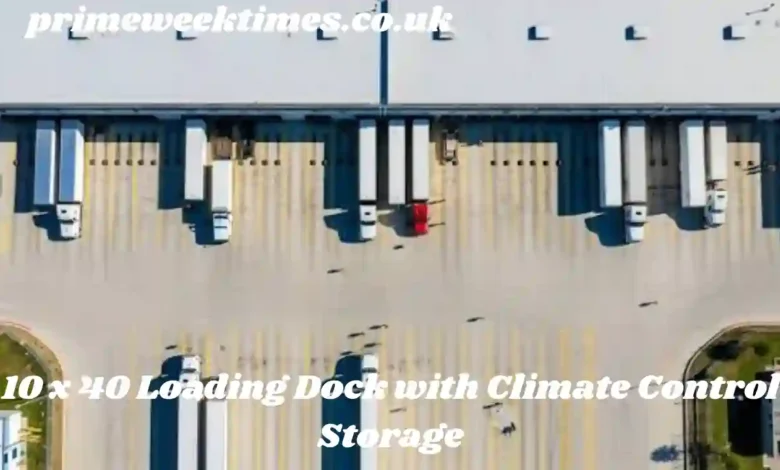
The loading dock component is designed to make the movement of goods more convenient. Depending on the facility, it may include a raised platform, loading bay, overhead door, dock-leveler equipment, vehicle access, or a designated unloading area. Not every 10 x 40 storage facility includes all these features, so users should confirm the actual loading arrangements before selecting a property.
The climate control component focuses on maintaining more stable indoor temperature and humidity conditions than an ordinary unconditioned storage space. Heating, cooling, ventilation, insulation, and humidity management may all contribute to the overall environment.
Together, these features provide a storage solution that can support businesses dealing with products that may be affected by temperature changes or excessive moisture. It is important to understand that climate-controlled storage is not automatically equivalent to refrigerated storage, freezer storage, or a specialized temperature-controlled distribution warehouse. The actual temperature and humidity capabilities depend on the equipment and operating specifications of the individual facility.
Understanding the 10 x 40 Storage Dimensions
Dimensions are among the most important considerations when evaluating a 10 x 40 loading dock with climate control storage. A space measuring 10 feet wide and 40 feet long provides approximately 400 square feet of floor area. This layout offers considerable usable length while maintaining a relatively compact width.
The rectangular design can be helpful when storing long equipment, shelving systems, boxed merchandise, furniture, maintenance supplies, or business inventory. Users can arrange shelving against the side walls and reserve a central walkway for accessing different storage sections.
The 10-foot width requires careful planning because large objects, deep shelving, and equipment can quickly reduce available movement space. For example, installing shelving on both sides may create a narrow central aisle. Businesses should consider the dimensions of their largest items before deciding how to organize the interior.
The 40-foot length provides opportunities to divide the storage space into different operational zones. One end could accommodate frequently accessed supplies, while another section could hold seasonal inventory or equipment that is needed less often. This arrangement may improve organization and reduce the time required to locate products.
Another important consideration is whether the advertised 10 x 40 dimensions represent interior measurements or exterior building dimensions. Wall thickness, insulation, structural columns, and other building elements may reduce the actual usable floor area.
Before renting, purchasing, or constructing a facility, users should verify the clear interior dimensions, ceiling height, door opening measurements, and available loading space. These measurements can determine whether the facility can accommodate the intended inventory and transportation equipment.
How the Loading Dock Component Works
The loading dock is an important part of the overall arrangement because it provides a dedicated location for transferring products and materials between vehicles and the storage facility. Instead of carrying goods through an ordinary entrance, users can benefit from a loading area designed around transportation and material-handling activities.
A conventional commercial loading dock may feature a raised concrete platform that aligns with the cargo floor of delivery trucks. Depending on the building design, it may also include dock doors, bumpers, dock seals, weather protection, and mechanical or hydraulic dock-leveling systems.
A dock-leveler helps bridge the height difference between the loading platform and the vehicle. This can make it easier to move pallets and wheeled equipment between the truck and the building. However, the equipment must be suitable for the vehicles and loads being handled.
For smaller storage facilities, the loading arrangement may be simpler. Some properties provide ground-level access through a wide roll-up door, while others offer a shared loading bay that tenants can use according to facility policies.
A properly designed loading area can reduce unnecessary handling and make receiving and dispatching products more organized. It can also help businesses establish a predictable process for checking deliveries, moving goods into storage, and preparing outgoing shipments.
The loading dock should be evaluated separately from the climate-controlled storage area. A climate-controlled interior does not guarantee that the loading platform is temperature-controlled. In many facilities, the loading area remains exposed to outdoor conditions, making insulated doors, dock seals, and prompt handling important considerations.
Why Climate Control Matters in Storage Facilities
Climate control is one of the most valuable features of specialized storage because environmental conditions can influence the condition of many stored materials. Extreme heat, cold, humidity, and rapid temperature changes may damage certain products or reduce their useful life.
Ordinary storage spaces may experience significant seasonal temperature changes. During hot weather, indoor temperatures can rise considerably, particularly in buildings with metal roofing, inadequate insulation, or limited ventilation. During colder periods, stored materials may be exposed to low temperatures and condensation.
Climate-controlled storage attempts to reduce these variations through heating and cooling systems, insulation, ventilation, and other environmental management equipment.
Temperature management is particularly important for products that have specific manufacturer-recommended storage conditions. Certain electronics, packaged goods, furniture, documents, and specialty materials may require a more stable environment than an ordinary storage unit can provide.
Humidity control is equally important. Excessive moisture can contribute to corrosion, mold development, material deterioration, and damage to packaging. A properly maintained climate-controlled facility can help reduce these risks, although it cannot eliminate every environmental hazard.
Businesses should understand that different materials have different storage requirements. Some products need controlled room temperature, while others require refrigeration, freezing, or tightly regulated humidity. A general climate-controlled facility may not satisfy the requirements of highly sensitive inventory.
For this reason, users should obtain the facility’s documented temperature and humidity operating ranges before storing valuable or sensitive materials.
Major Benefits of a 10 x 40 Loading Dock with Climate Control Storage
A 10 x 40 loading dock with climate control storage offers several potential benefits for businesses and individuals who need an organized storage environment with convenient loading access.
Better Protection for Stored Inventory
One of the primary advantages is the ability to store suitable products in a more consistent indoor environment. Temperature fluctuations and excessive humidity can affect many types of materials, particularly when they remain in storage for extended periods.
Climate management may help protect furniture finishes, electronic equipment, packaging materials, paper products, and certain commercial supplies. The actual level of protection depends on the facility’s operating conditions and the sensitivity of the stored products.
Convenient Loading and Unloading
A dedicated loading area can make receiving and dispatching products more efficient. Employees and delivery personnel can move goods between vehicles and storage areas without relying entirely on standard pedestrian entrances.
This arrangement may be especially helpful for companies that regularly receive cartons, equipment, pallets, or bulk merchandise.
Organized Inventory Management
The long rectangular layout provides an opportunity to establish separate storage zones. Businesses can organize products by category, shipment date, department, or frequency of use.
A planned shelving system can make it easier to identify inventory and maintain an organized environment.
More Efficient Use of Available Space
The 400-square-foot layout can provide a useful balance between storage capacity and building footprint. Businesses that do not require a large warehouse may find this configuration suitable for a smaller inventory operation.
Support for Business Operations
A combination of loading access and climate management can support several operational activities, including receiving supplies, storing products, preparing orders, and managing seasonal inventory.
Reduced Exposure to Environmental Changes
An enclosed, insulated storage environment with suitable climate equipment can reduce exposure to outdoor temperature changes and moisture-related problems. This can be valuable for materials that are sensitive to environmental conditions.
Businesses That Can Benefit from This Storage Arrangement
Different industries have different storage requirements, but a 10 x 40 loading dock with climate control storage can be useful in several commercial settings.
E-Commerce and Online Retail Businesses
Online retailers often need space for receiving products, organizing stock, and preparing customer orders. A 10 x 40 storage unit can provide a dedicated location for merchandise without requiring an entire warehouse.
Shelving can be arranged to separate products by category, size, or order frequency. A loading area can support incoming supplier deliveries and outgoing shipments.
Businesses selling clothing, accessories, household products, and other suitable merchandise may find this arrangement useful, provided the climate conditions meet their inventory requirements.
Electronics and Technology Companies
Electronic equipment and accessories can be affected by moisture, condensation, dust, and inappropriate storage temperatures. A controlled indoor environment may help protect certain products during storage.
Companies handling computer components, networking accessories, cables, office technology, and related equipment may benefit from organized climate-controlled storage.
However, sensitive electronic products should always be stored according to their manufacturers’ environmental recommendations.
Furniture and Interior Design Businesses
Furniture retailers, interior designers, and renovation companies often need space for furniture pieces, decorative accessories, samples, and materials.
A long storage layout can accommodate different furniture categories while providing access for moving larger objects. Climate management may also help reduce the risk of moisture-related damage to certain wood products and upholstery materials.
Pharmaceutical and Medical Supply Businesses
Some medical supplies and pharmaceutical products require specific environmental conditions. A climate-controlled facility may be appropriate for certain non-refrigerated supplies, depending on their storage specifications.
However, products requiring validated cold-chain storage, refrigeration, freezing, or continuous temperature monitoring must use facilities specifically designed and approved for those purposes.
Businesses in this sector should verify regulatory requirements, temperature records, security arrangements, and monitoring procedures before selecting a storage location.
Contractors and Construction Companies
Contractors frequently need additional space for tools, equipment, replacement materials, and project supplies. A 10 x 40 storage arrangement can provide an organized location for these items.
Climate-controlled storage may be useful for certain adhesives, finishes, electronic instruments, and specialty materials when their manufacturers recommend controlled conditions.
Hazardous, flammable, or restricted materials must be stored according to applicable safety requirements and facility policies.
Wholesale and Distribution Businesses
Small distributors may use this arrangement to store packaged inventory and manage regular deliveries. The loading area can simplify the movement of goods, while organized interior storage can help employees locate products more quickly.
The suitability of the facility depends on shipment volume, pallet requirements, vehicle access, and available handling equipment.
Important Climate Control Features to Look For
Not every climate-controlled storage facility provides the same level of environmental management. Businesses should evaluate the actual equipment and operating specifications rather than relying only on the phrase climate-controlled.
Heating and Cooling Systems
A reliable heating and cooling system helps maintain indoor temperatures within a designated operating range. Users should ask about the system’s capacity, maintenance schedule, operating hours, and temperature monitoring arrangements.
A facility that maintains temperatures throughout the year may be more suitable for products that are sensitive to seasonal changes.
Insulation and Building Construction
Insulation plays an important role in maintaining indoor conditions. Insulated walls, ceilings, doors, and roofs can help reduce unwanted heat transfer between the storage interior and the outside environment.
Building construction also affects energy efficiency and the ability of climate equipment to maintain consistent conditions.
Humidity Management
Humidity management is especially important for products that can absorb moisture or deteriorate in damp environments.
Some facilities use dehumidification equipment, ventilation systems, or humidity monitoring devices. Users should confirm whether humidity is actively controlled or simply affected by the general heating and cooling system.
Temperature Monitoring
Temperature monitoring provides useful information about the actual storage environment. Digital sensors, thermostats, and monitoring systems can help facility operators identify unusual changes.
Businesses storing sensitive products may need documented temperature records, alerts, or continuous monitoring rather than occasional manual checks.
Air Circulation and Ventilation
Proper air circulation helps distribute conditioned air throughout the storage area. Poor airflow can create temperature differences between corners, shelving areas, and locations near exterior walls.
Ventilation arrangements should also be suitable for the materials being stored and should not introduce unwanted humidity or contaminants.
Loading Dock Design and Essential Equipment
The loading dock should be designed around the type of transportation vehicles, cargo, and material-handling equipment used by the business.
A raised loading platform may be appropriate for delivery trucks, while ground-level access may be more practical for smaller vehicles and individual storage users.
Important equipment and design features can include:
- Overhead or roll-up loading doors.
- Dock bumpers for protecting building structures.
- Dock-leveler systems where required.
- Weather seals around dock doors.
- Adequate lighting for loading operations.
- Non-slip flooring and clearly marked walkways.
- Pallet jacks and suitable handling equipment.
- Safety barriers and vehicle-positioning arrangements.
- Appropriate drainage around exterior loading areas.
The dimensions of the loading door should be checked before moving large equipment or inventory into the facility. A storage space may offer 400 square feet of interior floor area but still be unsuitable for certain products if the entrance is too narrow or the ceiling is too low.
Businesses should also confirm whether loading access is private, shared, scheduled, or restricted to particular operating hours.
How to Organize a 10 x 40 Climate-Controlled Storage Space
Effective organization can significantly improve the usefulness of a 10 x 40 storage area. Because the unit is relatively narrow and long, a structured arrangement is usually more practical than placing products wherever space is available.
The first step is to identify the inventory categories and determine how frequently each category will be accessed.
Frequently used products should generally be placed near the entrance, while seasonal or less frequently required items can be stored toward the rear. This reduces unnecessary movement through the storage area.
Shelving can be installed along one or both walls, depending on the dimensions of the products and the required walkway width. Heavy objects should be stored on lower shelves, while lighter products can be placed higher when safe and appropriate.
Clearly labeled storage boxes and inventory identification systems can make product retrieval easier. Businesses can also maintain a digital inventory record showing the location, quantity, and condition of stored items.
Aisles should remain clear, and products should not block electrical panels, fire safety equipment, ventilation outlets, or emergency exits.
It is also important to leave adequate space around climate-control equipment and avoid storing products directly against walls where doing so could interfere with airflow or create moisture-related concerns.
Security Considerations for Climate-Controlled Loading Dock Storage
Security is another important factor when selecting a storage facility. Businesses may store valuable equipment, merchandise, documents, and other assets that require protection against unauthorized access.
A suitable facility may include controlled entry systems, security cameras, exterior lighting, individual unit locks, alarm systems, and access records.
The loading dock deserves particular attention because delivery areas may create additional access points. Secure dock doors, access restrictions, and suitable monitoring can help reduce security risks.
Businesses should also establish internal procedures for checking deliveries, recording inventory movements, and controlling access to stored goods.
Insurance coverage should be reviewed carefully. A climate-controlled storage facility does not automatically guarantee protection against theft, fire, flooding, equipment failure, or damage to stored inventory.
Before signing a storage agreement, users should review insurance requirements, liability limitations, emergency procedures, and the facility’s responsibility for maintaining environmental conditions.
Common Uses for a 10 x 40 Loading Dock with Climate Control Storage
The versatility of this arrangement makes it suitable for different types of storage activities.
Retail businesses can use it to hold excess inventory, seasonal merchandise, packaged products, and promotional materials. The loading area can support regular stock deliveries and make product movement more convenient.
Office-based businesses may use the space for furniture, archived documents, equipment, and additional supplies. Climate management may be particularly useful for paper-based materials and selected electronic equipment.
Event management companies can store decorations, lighting equipment, display materials, portable furniture, and reusable event supplies. An organized loading area can simplify preparation for upcoming events.
Small manufacturing companies may use the facility for components, packaging materials, tools, and finished products. However, the suitability of the environment depends on the specific materials and their storage requirements.
Property management companies and contractors may also find the configuration useful for maintenance supplies, replacement equipment, and project materials.
For individuals, the space may provide additional room for household belongings, furniture, personal equipment, and items that require a more stable indoor environment.
Factors That Affect the Cost of Climate-Controlled Storage
The cost of a 10 x 40 loading dock with climate control storage can vary significantly depending on the location, building quality, available equipment, and rental agreement.
One major factor is the local property market. Storage facilities in busy commercial areas or locations close to transportation routes may have higher rental costs than properties in less central areas.
Climate-control equipment also influences operating expenses. Heating, cooling, insulation, humidity management, and monitoring systems require installation, maintenance, and electricity.
Loading dock features can add to the cost as well. Properties with raised docks, mechanical levelers, private loading areas, and specialized access equipment may charge more than facilities with basic ground-level entrances.
Other cost considerations include:
- Interior storage dimensions and ceiling height.
- Security systems and access arrangements.
- Electricity and utility charges.
- Maintenance and facility management.
- Insurance requirements.
- Loading and unloading fees.
- Rental duration and payment terms.
- Additional services and equipment availability.
Businesses should compare the total cost of occupancy rather than looking only at the advertised monthly rental price. A facility with slightly higher rent may offer better value if it includes suitable loading equipment, reliable climate management, security, and convenient operating hours.
How to Choose the Right 10 x 40 Loading Dock with Climate Control Storage
Selecting the right facility requires evaluating both the storage environment and the loading arrangements.
Start by calculating the amount of space required. Prepare an inventory list that includes the dimensions of large objects, the number of pallets or boxes, and any equipment that needs to be stored.
Next, identify the environmental conditions required for the inventory. Products that need a specific temperature or humidity range should not be placed in a general-purpose climate-controlled unit without confirming that the facility can meet those requirements.
Inspect the loading area and verify that delivery vehicles can access the property safely. Check door dimensions, loading platform height, vehicle maneuvering space, and equipment availability.
Review the building’s insulation, heating and cooling systems, ventilation, and monitoring procedures. Ask how the facility handles equipment breakdowns and unexpected temperature changes.
Security should also be evaluated. Look for controlled access, suitable lighting, surveillance, and clear procedures for reporting incidents.
Finally, review the rental agreement carefully. Confirm the monthly cost, utility charges, access hours, insurance conditions, permitted storage materials, maintenance responsibilities, and cancellation terms.
Taking these steps can help businesses avoid selecting a facility that appears suitable in advertisements but does not meet their actual operational needs.
Maintenance Requirements for Climate-Controlled Storage
Regular maintenance is necessary to keep a climate-controlled storage facility operating effectively. Heating and cooling equipment should be inspected according to the manufacturer’s recommended maintenance schedule.
Air filters should be checked and replaced when necessary. Dirty filters can reduce airflow and make it more difficult for climate systems to maintain their intended operating conditions.
Humidity monitoring equipment should also be checked regularly, especially in facilities that store moisture-sensitive products.
Loading dock doors, seals, hinges, levelers, and safety equipment require periodic inspection. Damaged seals may allow outside air and moisture to enter, affecting indoor environmental conditions.
Flooring and drainage systems should be kept in good condition. Water entering the storage area can damage inventory and create additional maintenance problems.
Businesses using the space should also inspect their own inventory periodically. Even in climate-controlled conditions, packaging damage, leaks, pests, and improper storage arrangements can create problems.
A consistent maintenance routine helps improve reliability and can reduce the likelihood of unexpected operational interruptions.
Safety Practices for Loading Dock Operations
Loading docks involve moving vehicles, heavy goods, equipment, and employees working in relatively confined spaces. Proper safety procedures are therefore essential.
Vehicles should be positioned correctly before loading or unloading begins. Drivers and warehouse personnel should follow established communication procedures to prevent accidental vehicle movement.
Dock edges should be clearly identified, and appropriate protective barriers should be used where required. Employees should receive training in the safe operation of pallet jacks, forklifts, and other material-handling equipment.
Heavy items should be moved using appropriate lifting equipment rather than relying on unsafe manual handling methods.
Walkways should remain free of boxes, packaging materials, cables, and other obstacles. Adequate lighting is important for identifying hazards during early morning, evening, or indoor loading operations.
Fire safety is equally important. Storage areas should maintain suitable fire protection equipment, clear access routes, and compliance with applicable building and fire safety requirements.
Businesses must also confirm that stored materials are permitted under the facility’s safety policies and local regulations.
Is a 10 x 40 Loading Dock with Climate Control Storage Suitable for Small Businesses?
For many small businesses, a 10 x 40 loading dock with climate control storage can be a practical alternative to leasing a larger commercial warehouse.
A 400-square-foot layout may provide sufficient space for a limited inventory operation, particularly when products are organized efficiently using appropriate shelving.
Small online stores, local distributors, repair businesses, and specialty retailers may use the facility to separate their inventory from their primary workplace.
The loading arrangement can make it easier to receive regular deliveries, while climate management may help protect products that require more stable indoor conditions.
However, the suitability of the space depends on the business model. Companies handling large volumes of pallets, oversized machinery, heavy manufacturing equipment, or frequent high-volume deliveries may need a larger warehouse with dedicated loading infrastructure.
Businesses should also consider future growth. A facility that meets current requirements may become too small as inventory levels and delivery volumes increase.
A practical decision should account for current storage requirements, expected expansion, operating costs, transportation needs, and the environmental conditions required for the products.
Common Mistakes to Avoid When Renting or Using This Storage Space
One common mistake is assuming that every climate-controlled storage facility maintains the same temperature and humidity levels. Facilities can differ considerably in their equipment and environmental capabilities.
Another mistake is focusing only on the advertised 10 x 40 dimensions without checking the actual interior measurements. Shelving, structural elements, door openings, and ceiling height can affect usable capacity.
Some businesses also underestimate the importance of loading access. A facility may have sufficient interior space but lack the vehicle access or equipment required for regular shipments.
Poor inventory organization can create additional problems. Without clear labeling and storage zones, employees may spend unnecessary time searching for products.
Ignoring humidity requirements is another potential issue. Heating and cooling alone do not necessarily provide precise humidity control.
Businesses should also avoid storing products that require refrigeration or specialized environmental conditions in a general climate-controlled unit unless the facility is specifically equipped for those needs.
Finally, users should never overlook security, insurance, fire safety, and maintenance responsibilities when comparing facilities.
Future Potential of 10 x 40 Loading Dock with Climate Control Storage
The demand for flexible storage and distribution arrangements continues to be influenced by e-commerce, smaller business operations, inventory management, and changing supply-chain requirements.
Businesses increasingly need storage solutions that can accommodate regular deliveries without requiring the expense of a large warehouse.
A 10 x 40 loading dock with climate control storage represents one possible approach to meeting these requirements. Its relatively compact footprint can be useful for companies that need dedicated storage and practical loading access in a smaller commercial setting.
Technology may also improve the way these facilities operate. Digital temperature sensors, remote monitoring, automated access systems, security cameras, and inventory management software can help facility operators and tenants maintain better oversight.
Energy-efficient heating and cooling equipment may also help reduce operating expenses while supporting more consistent indoor conditions.
Future facilities may increasingly combine flexible storage layouts, improved loading equipment, and more advanced environmental monitoring.
However, the long-term usefulness of any facility will depend on its construction quality, equipment reliability, maintenance standards, and ability to meet the specific needs of its users.
Frequently Asked Questions About 10 x 40 Loading Dock with Climate Control Storage
1. What does a 10 x 40 loading dock with climate control storage mean?
A 10 x 40 loading dock with climate control storage generally describes a storage arrangement measuring approximately 10 feet wide and 40 feet long, with loading access and an environmentally controlled indoor storage area. If these are interior measurements, the storage space provides approximately 400 square feet of floor area.
2. How much space does a 10 x 40 climate-controlled storage unit provide?
A 10 x 40 storage unit provides approximately 400 square feet of floor space. The actual usable area may be smaller depending on wall thickness, structural elements, shelving, and other building features.
3. What can be stored in a 10 x 40 loading dock with climate control storage?
Suitable items may include packaged merchandise, furniture, electronics, business inventory, office supplies, equipment, and certain specialty materials. The products must be compatible with the facility’s actual temperature and humidity conditions.
4. Does climate-controlled storage protect items from humidity?
Climate-controlled facilities may help manage humidity through dehumidification, ventilation, and environmental monitoring. However, not every facility offers dedicated humidity control, so users should confirm its actual capabilities.
5. Is a loading dock necessary for climate-controlled storage?
A loading dock is not essential for every storage operation, but it can make receiving and dispatching goods easier. Businesses handling regular deliveries, large products, or palletized inventory may particularly benefit from dedicated loading access.
6. Is a 10 x 40 storage facility suitable for a small business?
Yes, it may be suitable for small businesses that need organized inventory storage, regular loading access, and a more stable indoor environment. Its suitability depends on inventory volume, equipment requirements, and delivery frequency.
7. What is the difference between climate-controlled and refrigerated storage?
Climate-controlled storage generally maintains a more consistent indoor temperature and may include humidity management. Refrigerated storage is specifically designed to maintain lower temperatures for products that require cold storage. The two are not interchangeable.
8. What features should I check before renting a 10 x 40 loading dock with climate control storage?
Important features include actual interior dimensions, ceiling height, loading door measurements, vehicle access, insulation, heating and cooling equipment, humidity management, temperature monitoring, security, and maintenance arrangements.
9. Can furniture and electronics be stored in climate-controlled storage?
Many types of furniture and electronics can be stored in suitable climate-controlled environments. However, their manufacturer-recommended temperature and humidity conditions should be followed to reduce the risk of damage.
10. Is a 10 x 40 loading dock with climate control storage worth considering?
It can be worth considering for businesses and individuals who need approximately 400 square feet of organized storage, convenient loading access, and more stable indoor environmental conditions. The final decision should depend on the facility’s specifications, rental cost, security, and intended use.
Final Thoughts on 10 x 40 Loading Dock with Climate Control Storage
A 10 x 40 Loading Dock with Climate Control Storage combines a practical storage footprint with loading convenience and environmental management. With approximately 400 square feet of potential interior space, this configuration can support small businesses, retailers, contractors, distributors, and individuals who need an organized location for storing suitable products and equipment.
ALSO READ : Kennedy Funding Ripoff Report: Complaints, Lawsuits, Facts, and What Borrowers Should Know