
Trachelospermum Jasminoides: Complete Guide to Growing and Caring for Star Jasmine
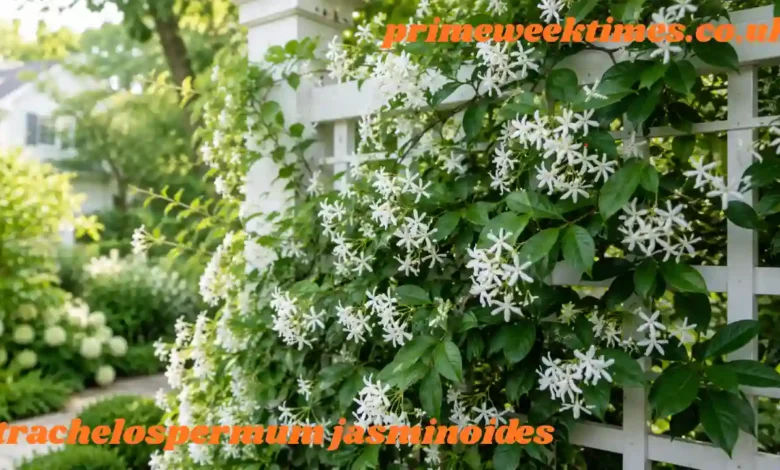
Trachelospermum jasminoides is one of those plants that can completely transform a garden without demanding constant attention. Known for its glossy evergreen foliage, strongly scented white flowers, and flexible climbing habit, this attractive plant is widely grown on walls, fences, pergolas, trellises, and other garden structures. It can also be trained as ground cover or grown in large containers, making it useful for both traditional gardens and smaller outdoor spaces.
Although its flowers strongly resemble jasmine and carry an equally appealing fragrance, trachelospermum jasminoides is not a true jasmine. It belongs to the Apocynaceae family and is commonly called star jasmine, Confederate jasmine, or Chinese star jasmine. The botanical name remains important because it helps gardeners distinguish this species from other plants that may also be sold under common jasmine names.
One of the main reasons trachelospermum jasminoides has become so popular is its combination of ornamental beauty and practicality. During the warmer months, clusters of small white pinwheel-shaped flowers appear among the dark green leaves. Their fragrance can be noticeable from a considerable distance, particularly during warm evenings. Even when the flowers have finished, the dense evergreen foliage continues to provide visual interest.
For gardeners looking for a climbing plant that combines flowers, fragrance, evergreen leaves, and manageable maintenance requirements, trachelospermum jasminoides is an excellent option. Understanding its preferred growing conditions, watering needs, pruning habits, and seasonal behavior can help the plant remain healthy and attractive for many years.
What Is Trachelospermum Jasminoides?
Trachelospermum jasminoides is an evergreen woody climbing plant native to parts of eastern and southeastern Asia. Over time, it has become widely cultivated in gardens throughout regions with mild and warm climates. Its ability to climb, spread, and produce dense foliage allows it to serve both decorative and practical purposes in landscape design.
The plant develops long, flexible stems that naturally seek support. When these stems encounter a trellis, fence, railing, pergola, or similar structure, they can be trained upward and outward. Unlike plants that cling directly to walls using adhesive pads or specialized roots, young trachelospermum jasminoides plants often benefit from being tied or guided onto their support.
Mature leaves are generally thick, smooth, and glossy with a deep green appearance. New growth may emerge in a lighter shade before darkening as it matures. Depending on climate and exposure, some leaves can develop bronze, purple, or reddish tones during colder weather. This seasonal color change can add another decorative feature to the plant.
The most recognizable characteristic of trachelospermum jasminoides is its flowers. Each flower normally consists of five narrow petals arranged in a twisted star or pinwheel shape. The flowers usually begin opening from late spring into summer, although exact flowering periods depend on local climate and growing conditions.
Why Trachelospermum Jasminoides Is Called Star Jasmine
The common name star jasmine comes from the shape and fragrance of the flowers. Their white, star-like appearance immediately creates an association with traditional jasmine plants, while their strong sweet fragrance reinforces the similarity.
Botanically, however, trachelospermum jasminoides belongs to a different plant family from true jasmines. True jasmine species generally belong to the genus Jasminum within the olive family, Oleaceae. Trachelospermum belongs to the Apocynaceae family.
For home gardeners, this botanical distinction does not reduce its appeal. In many landscapes, star jasmine is selected specifically because it provides a jasmine-like fragrance while also offering evergreen foliage and a vigorous climbing habit.
The name trachelospermum jasminoides is therefore useful when purchasing plants because it identifies the exact species. Garden centers may use several common names, and the botanical name helps prevent confusion.
Appearance of Trachelospermum Jasminoides
A healthy trachelospermum jasminoides creates a dense mass of attractive foliage. The leaves normally grow opposite one another along the stems and have a smooth, leathery texture. Their glossy surface reflects light, giving established plants a polished appearance.
During spring and early summer, fresh growth often gives the plant a more vibrant green appearance. As the new stems mature, the foliage darkens and contributes to a dense evergreen screen.
The flowers provide the plant’s most dramatic seasonal display. They appear in clusters and are generally pure white when fully open. Some buds may show creamy tones before opening. Each individual flower is relatively small, but a mature plant can produce such large numbers that the overall effect becomes impressive.
The fragrance is another major feature. A flowering plant positioned near a patio, doorway, garden path, or seating area can perfume the surrounding space. Because scent becomes particularly noticeable during warm weather, many gardeners intentionally grow trachelospermum jasminoides near places where people spend time outdoors.
How Large Can Trachelospermum Jasminoides Grow?
Trachelospermum jasminoides can eventually become a substantial climber if provided with suitable conditions and support. Its final dimensions depend on climate, soil fertility, pruning, available space, and how it is trained.
Young plants may initially appear slow-growing because they spend time establishing their root systems. Once established, growth usually becomes stronger. Long stems can then be trained across fences, trellises, walls, pergolas, and arches.
Regular pruning allows gardeners to control the eventual size. Without pruning, established plants can cover surprisingly large areas. This makes trachelospermum jasminoides particularly useful when a permanent evergreen screen is required.
Gardeners working with smaller spaces can still grow the plant successfully. Careful pruning and container cultivation can restrict its size while allowing the flowers and fragrance to remain the main attraction.
Best Position for Trachelospermum Jasminoides
Choosing the right location is one of the most important decisions when planting trachelospermum jasminoides. The plant performs best in a bright position with reasonable warmth and protection.
Full sun can encourage strong flowering, especially in climates where summer temperatures are moderate. However, the plant can also tolerate partial shade. A location receiving several hours of sunlight each day often provides an excellent balance between foliage growth and flower production.
A sheltered position can be especially valuable in colder regions. Strong, freezing winds can damage foliage and young stems. Planting trachelospermum jasminoides near a protected wall or fence may create a warmer microclimate and reduce exposure.
The direction of the wall can also influence growth. South-facing and west-facing locations often receive more warmth and sunlight, while east-facing positions may receive gentler morning sun. North-facing areas can sometimes be suitable, but flowering may be reduced if the plant receives insufficient light.
Soil Requirements for Trachelospermum Jasminoides
Trachelospermum jasminoides prefers fertile, well-drained soil. Drainage is particularly important because constantly waterlogged soil can place stress on the roots.
A good garden soil containing organic matter generally provides suitable conditions. Adding well-rotted compost or other organic material before planting can help improve soil structure, nutrient availability, and moisture retention.
Heavy clay soil can often be improved by incorporating organic material and ensuring excess water has somewhere to drain. Extremely sandy soil may benefit from compost because organic material helps retain moisture and nutrients.
The plant is adaptable enough to tolerate a range of soil conditions once established. However, providing better soil at the beginning can encourage stronger root development and healthier long-term growth.
How to Plant Trachelospermum Jasminoides
Proper planting helps trachelospermum jasminoides establish more quickly. Before removing the plant from its pot, watering the root ball can reduce stress and make the roots easier to handle.
A planting hole should generally be wider than the existing root system rather than dramatically deeper. The plant can then be positioned at approximately the same soil level it occupied in the nursery container.
After placing the root ball in the hole, surrounding soil should be replaced and gently firmed. Avoid excessive compaction because roots require oxygen as well as moisture.
Water thoroughly after planting. This helps settle soil around the roots and removes large air pockets.
If the plant is being grown against a wall or fence, leaving some distance between the stem and the structure gives the root system access to rainfall and reduces competition from dry soil immediately beside building foundations.
Supporting a Young Trachelospermum Jasminoides
Trachelospermum jasminoides is naturally a climber, but young plants may require help finding their support.
Trellis panels, horizontal wires, wooden frames, pergola posts, and garden arches can all provide appropriate structures. Young stems can be loosely tied to the support using soft garden ties.
The ties should not be pulled tightly around the stems. As stems increase in thickness, tight ties can cause damage. Checking and adjusting ties periodically helps prevent this problem.
Once several main stems have been established, they can be arranged across the support to create a balanced framework. Side shoots will gradually develop from these main branches, producing denser coverage.
Training the plant carefully during its early years can produce a much more attractive mature specimen.
Watering Trachelospermum Jasminoides
Newly planted trachelospermum jasminoides needs regular watering while the root system becomes established.
The soil should remain moderately moist but not constantly saturated. During hot or dry weather, recently planted specimens may require deeper watering several times depending on local conditions.
Established plants usually become more tolerant of short periods of dryness. However, extended drought can reduce growth, cause leaf stress, and negatively affect flowering.
Container-grown plants require more attention because potting soil dries faster than garden soil. During hot summer weather, large established specimens growing in containers may require frequent watering.
A simple way to judge moisture is to check the upper layer of soil. If it feels dry several centimeters below the surface, watering may be required.
Feeding Trachelospermum Jasminoides
A plant growing in healthy garden soil may not require large amounts of fertilizer. Nevertheless, moderate feeding can support vigorous growth and flowering.
An application of balanced fertilizer during spring can provide nutrients as growth resumes. Garden compost or other organic material spread around the root area can also improve the soil gradually.
Container plants generally need feeding more regularly because nutrients are gradually washed from potting compost during watering.
Overfeeding should be avoided. Excessive nitrogen can produce large quantities of lush foliage without delivering a proportionate increase in flowers.
The goal is balanced growth rather than maximum stem production.
When Does Trachelospermum Jasminoides Flower?
Trachelospermum jasminoides generally flowers from late spring through summer. In suitable climates, flowering can continue for an extended period, with occasional additional blooms appearing later in the season.
The timing can vary from one location to another. Warm regions may experience earlier flowering, while plants in cooler climates may begin later.
A well-established specimen typically produces more flowers than a recently planted one. Young plants sometimes need time to settle before delivering their best display.
Light is also important. Plants grown in sunny or bright positions generally flower more freely than those placed in deep shade.
The Fragrance of Trachelospermum Jasminoides
For many gardeners, fragrance is the main reason for choosing trachelospermum jasminoides.
The flowers produce a sweet, rich scent that can travel through the garden during warm weather. A large mature specimen covered with flowers can create a noticeable fragrance throughout an outdoor seating area.
Placement therefore matters. Growing the plant beside a patio, porch, entrance, seating area, or frequently used pathway allows people to experience the fragrance more easily.
The scent can also drift through nearby windows and doors, making trachelospermum jasminoides an attractive choice for planting near living spaces.
Because individual preferences regarding fragrance vary, gardeners who are highly sensitive to strong scents may prefer to position very large specimens slightly farther from windows.
Pruning Trachelospermum Jasminoides
Pruning helps control size, improve shape, and prevent trachelospermum jasminoides from becoming overly tangled.
Light pruning is often sufficient. Long or unwanted shoots can be shortened after the main flowering period. Dead, damaged, weak, or badly positioned stems can also be removed.
When pruning a mature climber, it is usually better to maintain the main structural branches while reducing excessive side growth.
Regular light pruning can prevent the need for severe renovation later. A plant that has been ignored for many years may become extremely dense, making pruning more difficult.
Always use clean, sharp pruning tools. Garden gloves are also useful because damaged stems may release a milky sap that can irritate sensitive skin.
Can Trachelospermum Jasminoides Be Grown in Pots?
Trachelospermum jasminoides can grow successfully in containers and is particularly attractive on patios, balconies, terraces, and beside doorways.
A large container provides more stable moisture levels and gives roots room to develop. Good drainage holes are essential.
The container should be filled with a high-quality growing medium suitable for long-term container plants. Adding a support such as a trellis or obelisk allows the stems to climb.
Container-grown plants usually need more frequent watering and feeding than plants grown directly in the ground.
As the plant increases in size, occasional repotting may be necessary. Very large specimens can sometimes be maintained in the same container by replacing some of the old compost and carefully managing feeding and watering.
Growing Trachelospermum Jasminoides on a Wall
Covering a wall is one of the most popular uses for trachelospermum jasminoides.
Before planting, wires or a trellis should be installed to provide support. Horizontal wires spaced across a wall make it easier to spread the main branches evenly.
Training stems horizontally as well as vertically encourages broader coverage. Instead of allowing every shoot to grow straight upward, some stems can be guided sideways.
Over time, side shoots fill the spaces between the main branches and create dense evergreen foliage.
The result can be a living green wall that produces fragrant white flowers during the growing season.
Trachelospermum Jasminoides as Ground Cover
Although it is most commonly seen as a climber, trachelospermum jasminoides can also be allowed to spread across the ground.
Without vertical support, its long stems travel horizontally and can form a thick layer of foliage. This may be useful on slopes, raised banks, or larger planting areas.
Ground-cover plants still require occasional pruning to keep them within their intended boundaries.
The method can create an attractive evergreen carpet, although it requires more space than a vertically trained specimen.
Trachelospermum Jasminoides for Privacy Screening
Dense evergreen foliage makes trachelospermum jasminoides useful for creating privacy.
A strong trellis or fence can support the plant as it develops into a leafy screen. Because the foliage usually remains present throughout the year in suitable climates, it provides longer-lasting coverage than deciduous climbers.
Several plants can be positioned along a large structure if faster or more complete coverage is required.
Patience is important during the establishment stage. Young plants may take time to develop extensive root systems before rapid top growth begins.
Once mature, however, the dense stems can provide substantial screening.
Winter Care for Trachelospermum Jasminoides
Winter performance depends largely on climate and exposure.
In mild conditions, trachelospermum jasminoides remains evergreen and requires little special attention. Leaves may occasionally develop bronze or reddish shades during cold periods.
In colder locations, a sheltered position becomes much more important. Severe frost and cold winds can damage leaves and stems.
Container specimens can be more vulnerable because their roots are exposed to lower temperatures than roots growing in the ground. Moving pots into a sheltered location or protecting containers during severe weather can reduce damage.
A layer of mulch around outdoor plants may also help protect the root area while improving soil conditions.
Why Trachelospermum Jasminoides Leaves Turn Red
Gardeners occasionally become concerned when the green leaves of trachelospermum jasminoides develop reddish, bronze, or purple coloring.
During cold weather, this can be a normal response rather than a sign of disease. Lower temperatures can cause pigments within the leaves to become more visible.
Young leaves may also naturally show bronze coloration before turning green.
However, widespread discoloration combined with poor growth should encourage gardeners to inspect the plant’s growing conditions. Excessively wet soil, prolonged drought, nutrient problems, root damage, or severe cold can all cause stress.
Observing the entire plant rather than focusing on a single leaf usually provides a better indication of whether intervention is necessary.
Why Trachelospermum Jasminoides Leaves Turn Yellow
Yellow leaves can develop for several reasons.
Older leaves naturally turn yellow before falling, particularly as new growth begins. A small number of yellow leaves is therefore not necessarily a concern.
Persistent yellowing across large areas of the plant may indicate problems with watering, drainage, nutrition, or root conditions.
Constantly saturated soil is particularly troublesome because roots need oxygen. Improving drainage may help when waterlogging is responsible.
Container-grown plants can also develop nutrient deficiencies after remaining in the same compost for extended periods.
Correctly identifying the cause before applying fertilizer or increasing watering is important because the wrong treatment may worsen the problem.
Why Trachelospermum Jasminoides Is Not Flowering
A healthy plant that produces leaves but few flowers may simply require more time. Young specimens frequently focus on root and stem development before flowering heavily.
Insufficient sunlight can also reduce flower production. Moving a container plant to a brighter position may help, while established plants in the ground may require pruning of surrounding vegetation that creates excessive shade.
Excessive fertilizer, particularly high-nitrogen feeds, can encourage leaf growth rather than flowering.
Incorrect pruning timing may also remove developing flowering shoots.
In many cases, patience and improved growing conditions lead to better flowering as the plant matures.
Propagating Trachelospermum Jasminoides
Trachelospermum jasminoides can be propagated from cuttings.
Healthy shoots are typically selected from vigorous plants. Sections containing several leaf nodes can be prepared, with lower leaves removed before inserting the cuttings into a suitable propagation medium.
Warmth, humidity, and consistent moisture encourage root development.
Propagation requires patience because not every cutting will root successfully. Taking several cuttings increases the chance of obtaining healthy new plants.
Once roots are established and fresh growth begins, the young plants can gradually be moved into individual containers.
Pests and Problems Affecting Trachelospermum Jasminoides
Trachelospermum jasminoides is generally considered a relatively trouble-free garden plant when grown under suitable conditions.
Occasional insect pests may appear, particularly on plants growing in sheltered locations. Scale insects, aphids, or similar sap-feeding pests can sometimes settle on stems and leaves.
Regular inspection allows problems to be identified before populations become severe.
Many apparent problems are actually related to environmental stress rather than pests. Poor drainage, incorrect watering, severe cold, insufficient light, or limited root space can cause more noticeable damage than insects.
Maintaining appropriate growing conditions is therefore one of the best ways to keep the plant healthy.
Landscaping Ideas With Trachelospermum Jasminoides
The versatility of trachelospermum jasminoides allows it to fit into many styles of garden.
It can soften the appearance of fences and walls by replacing hard surfaces with evergreen foliage. On pergolas, it can create a fragrant overhead canopy. Around entrances, it adds an elegant combination of greenery and seasonal flowers.
The dark leaves also provide an effective background for lighter-colored flowering plants.
In courtyard gardens, a single container-grown specimen can create vertical interest without occupying much ground space.
For larger properties, multiple plants can cover long fences or create privacy around outdoor living areas.
Is Trachelospermum Jasminoides Evergreen?
One of the greatest advantages of trachelospermum jasminoides is its evergreen nature.
In suitable climates, the plant retains most of its leaves throughout the year. This gives it value beyond the flowering season.
During winter, the foliage continues covering walls, fences, and supports when many other garden plants are dormant.
Some leaf drop is normal, particularly as individual leaves age. Very cold weather may also cause greater foliage loss.
However, healthy established plants generally replace lost leaves as growing conditions improve.
How Fast Does Trachelospermum Jasminoides Grow?
Growth rate varies considerably depending on age and growing conditions.
Recently planted specimens often establish slowly. This can sometimes disappoint gardeners expecting immediate coverage.
Once the roots become established, growth usually accelerates. Warm temperatures, good soil, adequate moisture, and sufficient sunlight encourage stronger development.
Regular feeding can help container plants, although excessive fertilizer is unnecessary.
Because mature plants can become vigorous, early training and occasional pruning are worthwhile.
Companion Plants for Trachelospermum Jasminoides
Trachelospermum jasminoides works well with a wide range of ornamental plants.
Its dark evergreen leaves create a useful background for colorful perennials, shrubs, and seasonal flowers.
Plants with contrasting foliage can create particularly attractive combinations. Silver, pale green, burgundy, or variegated leaves can stand out against the glossy green background.
Because trachelospermum jasminoides can eventually develop a large root system, nearby plants should be given adequate soil, water, and growing space.
Container arrangements can also be created by using lower-growing plants around the base of a trained star jasmine.
Advantages of Growing Trachelospermum Jasminoides
Few ornamental climbers provide as many features in one plant.
Trachelospermum jasminoides offers evergreen foliage, fragrant flowers, climbing growth, screening potential, container suitability, and relatively simple maintenance.
Its ability to perform several roles makes it useful where garden space is limited. A single plant can provide vertical greenery, summer flowers, fragrance, and privacy.
It can also be shaped through pruning, meaning gardeners have considerable control over its final appearance.
Once established in the correct location, the plant can remain an attractive feature for many years.
Is Trachelospermum Jasminoides Suitable for Beginners?
Trachelospermum jasminoides can be a good choice for gardeners with limited experience.
Its main requirements are straightforward: adequate light, fertile but well-drained soil, regular watering while establishing, suitable support, and occasional pruning.
The most important mistake to avoid is planting it somewhere permanently waterlogged or extremely exposed to cold conditions.
Beginners may also need to spend some time training young branches onto their support.
Once the main framework has been created, maintenance becomes much easier.
Final Thoughts on Trachelospermum Jasminoides
Trachelospermum jasminoides combines many of the qualities gardeners look for in an ornamental climbing plant. Its glossy evergreen leaves create year-round structure, while masses of white star-shaped flowers produce an impressive seasonal display accompanied by a memorable fragrance.
The plant can climb walls, fences, arches, pergolas, and trellises, but it can also serve as ground cover or grow successfully in large containers. This adaptability makes trachelospermum jasminoides suitable for gardens of many different sizes and designs.
Good drainage, adequate sunlight, reasonable shelter, and consistent watering during establishment provide the foundation for healthy growth. After the plant becomes established, care is generally manageable. Occasional feeding, thoughtful pruning, and basic monitoring for pests or environmental stress are usually enough to maintain an attractive specimen.
Patience is especially important with young plants. Early growth may appear modest while the root system develops, but established trachelospermum jasminoides can become a vigorous and impressive climber. Training its stems from the beginning allows gardeners to create a balanced framework that becomes denser over time.
Its fragrant flowers are perhaps its most memorable feature, making the plant particularly effective near patios, entrances, pathways, windows, and outdoor seating areas. Yet even outside the flowering period, its dense evergreen foliage continues to contribute color, texture, screening, and structure.
ALSO READ : Sea Bunny – Appearance, Habitat, Diet, Behavior, and Facts